

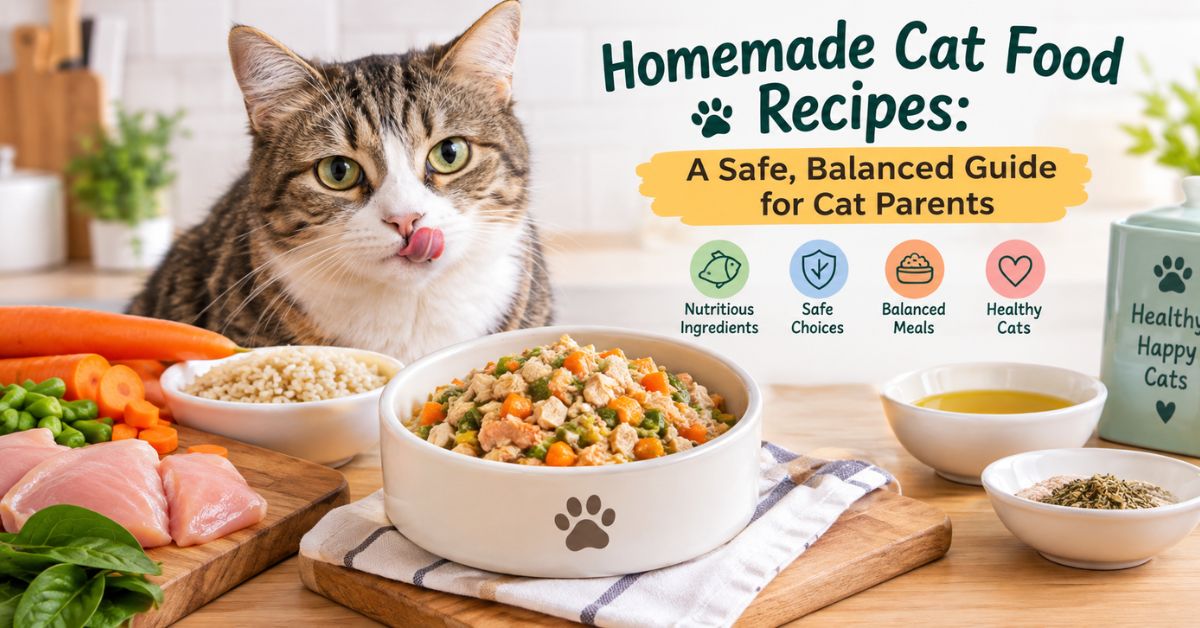
Introduction
You glance at the ingredient list on your cat’s food bag and wonder what half of it actually is. Plenty of cat parents have been there, and it’s usually the moment they start searching for homemade cat food recipes.
The wish to cook for your cat comes from a good place. Fresh ingredients, no mystery fillers, and a cat who comes running when you open the fridge.
Here is the part most recipe blogs skip: cats are unforgiving when a diet is even slightly unbalanced. A meal that looks perfect can quietly lack taurine, calcium, or vitamins, and the damage may take months to show.
This guide walks you through how feline nutrition works, what a safe homemade meal is built from, two base recipe formats, the foods that are dangerous, and how to transition your cat. You’ll also find a vet-safety checklist and answers to the questions cat owners ask most.
Why Cats Have Different Nutritional Needs Than Us (and Dogs)
Before you pick up a skillet, it helps to understand who you’re cooking for. A cat is not a small dog, and she is certainly not a small human.
Cats Are Obligate Carnivores
Cats evolved to eat animal tissue. Their bodies need nutrients that are found naturally in meat, and they can’t make enough of some of them on their own.
Taurine, arachidonic acid, vitamin A, and certain B vitamins must come from the diet. Miss one, and problems follow.
The Taurine Problem
Taurine deficiency is the best-known risk of poorly planned homemade diets. Low taurine can lead to a serious heart muscle disease called dilated cardiomyopathy, and it can also cause retinal damage and blindness.
Cooking destroys some taurine, so cooked recipes need extra attention here. This is one reason balanced homemade cat food recipes always involve a supplement.
High Protein, Low Carbohydrate
Cats thrive on a diet that is rich in protein and moderate in fat, with very few carbohydrates. A pot of rice with a bit of chicken is not a cat meal, even if it smells wonderful.
The Honest Truth About Homemade Diets
I want to be upfront with you, because your cat’s health depends on it. Studies of online homemade pet food recipes have repeatedly found that most of them fail to meet recognized nutritional standards.
That doesn’t mean you shouldn’t cook for your cat. It means the recipe matters more than the intention.
What “Complete and Balanced” Actually Means
A complete and balanced diet supplies every essential nutrient in the right amounts and ratios. Commercial foods are tested against standards set by groups such as AAFCO or FEDIAF.
A homemade diet has to hit the same targets, and you can’t eyeball it. Calcium and phosphorus, for example, need to sit in a specific ratio, and “a little extra chicken” quietly pushes it off balance.
Who Should Skip DIY Diets Without Veterinary Guidance
If your cat has kidney disease, diabetes, pancreatitis, food allergies, or a history of urinary crystals, talk to your vet before changing anything. Homemade Cat Food Recipes The same goes for kittens, pregnant or nursing queens, and senior cats.
These cats have narrow nutritional margins. A recipe that suits a healthy adult could be harmful to them.
Core Ingredients for Homemade Cat Food
Every safe recipe is built from the same handful of components. Think of them as building blocks rather than a menu you can freely remix.
Muscle Meat
This is the foundation. Chicken thigh, turkey thigh, rabbit, and lean beef are common choices.
Dark meat is generally preferred over breast because it has more fat and more taurine. Cook it thoroughly unless you’re working under veterinary guidance for a raw plan.
Organ Meat
Liver and other organs supply vitamin A, B vitamins, and trace minerals. They’re powerful, though, and too much liver can cause vitamin A toxicity.
Follow your recipe’s organ proportions exactly. More is not better here.
A Calcium Source
Meat is low in calcium, and bones are the natural way cats get it. When you cook, bones become brittle and dangerous, so cooked recipes use a measured calcium supplement instead.
Never feed cooked bones. They can splinter and injure your cat’s mouth, throat, or intestines.
A Complete Vitamin and Mineral Supplement
This is the non-negotiable piece. A feline-specific supplement formulated to complete a homemade recipe covers taurine, vitamins, and minerals that food alone can’t reliably provide.
Use the supplement your recipe was designed around, at the amount it specifies. Swapping brands or “eyeballing it” defeats the purpose.
Water
Cats evolved from desert ancestors and often drink very little. Homemade wet food naturally adds moisture, which supports urinary and kidney health.
Two Base Recipe Formats to Discuss With Your Vet

The two formats below show the structure of a safe homemade meal. Please treat them as templates, not finished prescriptions.
Exact gram amounts depend on your cat’s weight, age, and health, and they must be matched to the supplement you choose. A board-certified veterinary nutritionist can calculate this for you, and online services such as BalanceIT (developed by veterinary nutritionists) can generate a balanced recipe for your specific cat.
Recipe Format 1: Cooked Chicken Thigh Base
What goes in:
- Boneless chicken thigh, cooked through
- A small, measured portion of cooked chicken liver
- Egg yolk, cooked
- Water or low-sodium, onion-free cooking liquid
- Feline calcium source and vitamin/mineral/taurine supplement, in the amounts your recipe specifies
How to make it:
- Bake or poach the chicken thighs until fully cooked, with no seasoning, oil, or salt.
- Cook the liver and egg yolk the same plain way.
- Chop or grind everything finely, and add the cooking liquid for a pâté or stew texture.
- Stir in the supplements once the mixture has cooled, since heat can degrade some nutrients.
- Portion into daily servings and refrigerate or freeze right away.
Recipe Format 2: Turkey and Rabbit Rotation
Some cats get bored, or react to one protein. Rotating between turkey thigh and rabbit gives variety while keeping the same structure: muscle meat, measured organ, calcium source, and complete supplement.
Always rebalance the recipe when you change the main protein. Different meats carry different nutrient levels, so the supplement amounts may change too.
Storage and Food Safety
Cats can get food poisoning just like people. Cook meat to a safe internal temperature, and keep your prep surfaces clean.
Refrigerate portions for no more than about three days, and freeze the rest. Thaw in the fridge, never on the counter.
Foods You Must Never Put in Cat Food
Some ingredients that are healthy for us can be dangerous or even deadly for cats. Keep this list handy in your kitchen.
| Ingredient | Why It’s Dangerous | Risk Level |
| Onions, garlic, chives, leeks | Damage red blood cells and cause anemia | High |
| Grapes and raisins | Linked to kidney failure | High |
| Chocolate and caffeine | Toxic to the heart and nervous system | High |
| Xylitol (sweetener) | Can cause dangerous drops in blood sugar and liver injury | High |
| Cooked bones | Splinter and puncture the digestive tract | High |
| Raw fish only (long term) | Can lead to thiamine deficiency | Moderate |
| Dairy milk | Many cats are lactose intolerant | Moderate |
| Excess salt and seasoning | Stress the kidneys and heart | Moderate |
| Dog food | Lacks the taurine and nutrients cats need | Moderate |
How to Transition Your Cat to Homemade Food
Cats are creatures of habit, and a sudden menu change can cause refusal or stomach upset. Go slowly.
The 7 to 10 Day Switch
Start by mixing a small spoonful of the new food into your cat’s current diet. Increase the portion every couple of days while reducing the old food.
If your cat has loose stools or vomits, slow the transition down. Some cats need two weeks or more.
Never Let a Cat Go Hungry
Homemade Cat Food Recipes Cats that stop eating for more than a day or two can develop hepatic lipidosis (fatty liver disease), which is serious. Homemade Cat Food Recipes If your cat refuses the new food entirely, return to the old diet and call your vet.
Warm It Up
Cats love aroma. Warming the food slightly, to about body temperature, makes it far more appealing.
Should You Use Homemade Food, Commercial Food, or a Mix?
There’s no single right answer. Here is how the main options compare.
| Feeding Approach | Pros | Cons |
| Complete commercial wet food | Tested, balanced, convenient | Ingredient quality varies by brand |
| Veterinary-formulated homemade | Full control over ingredients, can suit special needs | Time-consuming, needs exact measuring |
| Random online recipe | Free and easy to find | High risk of deficiencies |
| Homemade topper on commercial food | Adds variety and moisture safely | Keep toppers to about 10 percent of calories |
A homemade topper on a complete commercial diet is a safe middle ground for many households. It lets you share fresh food without risking an unbalanced diet.
When to See a Veterinarian
⚠️ Contact your vet promptly if you notice any of the following, especially after a diet change:
- Refusing food for more than 24 hours
- Repeated vomiting or ongoing diarrhea
- Lethargy, hiding, or unusual weakness
- Rapid or labored breathing, or open-mouth breathing
- Straining in the litter box, crying while urinating, or blood in the urine
- Sudden weight loss or a dull, thinning coat
- Yellow tint to the gums, eyes, or skin
- Difficulty seeing, bumping into objects, or dilated pupils
Breathing trouble, inability to urinate, collapse, or suspected poisoning are emergencies. Go to an emergency clinic right away.
Book a checkup before you start any homemade plan, and schedule regular bloodwork afterward. Your vet can catch subtle nutritional problems long before symptoms appear.
Conclusion
Cooking for your cat is an act of love, and with the right plan it can be a rewarding one. The key is remembering that homemade cat food recipes succeed or fail on nutritional balance, not on how fresh or beautiful the ingredients look.
Start by talking with your vet, use a recipe built by a veterinary nutritionist, and never skip the supplement. If you’d rather ease in, a homemade topper on a complete commercial diet gives your cat the joy of fresh food with a safety net.
Final Thoughts
We hope this guide helps you make confident choices, and you’ll find more practical feeding advice and cat health guides here at Kitty Care Zone. Your cat’s next meal doesn’t have to be perfect, but it should be safe, and now you know how to make it so.
It can be, but only when the recipe is complete and balanced. A well-formulated homemade diet offers fresh ingredients and control, while a poorly planned one can cause serious deficiencies. A high-quality commercial food is often the safer choice.
Yes, provided the recipe meets all of a cat’s nutritional requirements, including taurine, calcium, and vitamins. Daily feeding of an unbalanced meal is risky. Work with a veterinary nutritionist to confirm your plan is complete.
Not as a long-term diet. Chicken and rice is bland and sometimes used briefly for upset stomachs under vet advice, but it lacks essential nutrients and is too high in carbohydrates for regular feeding.
It depends on her weight, age, activity level, and the calorie content of the recipe. A typical adult cat needs roughly 20 to 30 calories per pound of body weight daily, but your vet can give you an exact target.
Yes. Meat alone does not provide the right balance of calcium, taurine, and vitamins. A feline-specific supplement designed for your recipe is essential.

Ali Ahmad /Passionate writer sharing informative, engaging, and easy-to-read articles across different topics. Focused on delivering valuable content that helps readers learn, explore, and stay inspired every day.