

Introduction
Cats are known for their agility, graceful jumps, and playful energy. But as they age, many cats begin to experience stiffness, reduced mobility, and joint discomfort. Even younger cats can develop joint problems due to injuries, obesity, or genetics.
That’s where joint supplements for cats can make a real difference.
These supplements are designed to support cartilage, improve flexibility, and help your cat move more comfortably. For many USA pet owners, joint care has become an important part of keeping cats healthy and active for years.
In this guide, you’ll learn how feline joint supplements work, which ingredients matter most, how to choose the right product, and practical ways to support your cat’s mobility naturally.
Why Joint Health Matters in Cats
Many cat owners assume slowing down is just a normal part of aging. While age plays a role, joint discomfort often contributes to changes in behavior and movement.
Cats are experts at hiding pain. Your cat may still eat normally and behave quietly while struggling with sore joints.
Common signs of joint issues include:
- Difficulty jumping onto furniture
- Hesitation when climbing stairs
- Reduced activity or playfulness
- Limping or stiffness
- Sleeping more than usual
- Irritability when touched
- Trouble using the litter box
According to veterinary experts in the United States, arthritis and joint degeneration are especially common in senior cats over age 10.
Adding joint supplements for cats early may help support long-term mobility and comfort.
Common Causes of Joint Problems in Cats
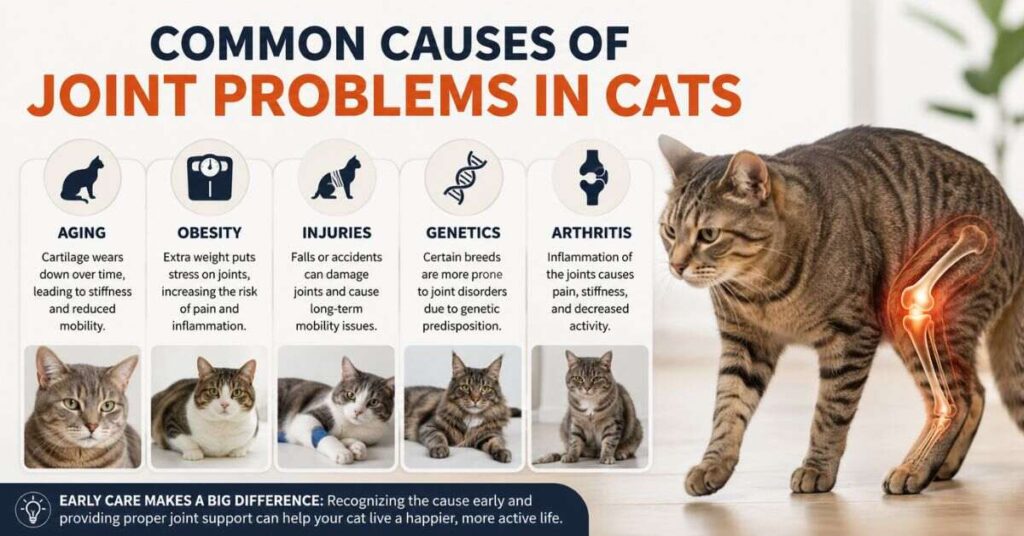
Aging
Cartilage naturally wears down over time. Older cats are more likely to experience stiffness and inflammation.
Obesity
Extra weight puts additional stress on joints. Indoor cats in the USA often struggle with weight gain due to limited activity.
Injury
Past accidents or falls can damage joints and create long-term mobility issues.
Genetics
Certain breeds may have higher risks of joint conditions, including:
- Maine Coon
- Scottish Fold
- Persian
- Himalayan
Arthritis
Owners are often unaware of the prevalence of feline arthritis. It causes inflammation and pain in the joints, making movement uncomfortable.
How Joint Supplements for Cats Work
Most joint supplements for cats contain ingredients that support cartilage health, reduce inflammation, and improve lubrication in the joints.
These supplements are not instant cures. Instead, they provide long-term support when used consistently.
Benefits may include:
- Improved flexibility
- Better mobility
- Reduced stiffness
- Increased activity levels
- Greater comfort during movement
Many cats show improvement within 4–8 weeks of regular use.
Key Ingredients to Look For
Not all supplements are created equal. Choosing a quality product begins with understanding the ingredients.
| Ingredient | Purpose | Benefits |
| Glucosamine | Supports cartilage repair | Helps joint cushioning |
| Chondroitin | Maintains cartilage elasticity | Improves flexibility |
| MSM | Reduces inflammation | Supports comfort |
| Omega-3 Fatty Acids | Anti-inflammatory support | Helps mobility |
| Green-Lipped Mussel | Natural joint support | Contains omega-3s |
| Hyaluronic Acid | Joint lubrication | Improves movement |
| Turmeric | Natural anti-inflammatory | Supports stiffness relief |
Glucosamine for Cats
Glucosamine is one of the most popular ingredients in feline joint care.
It helps maintain healthy cartilage and may slow joint deterioration. Many veterinarians recommend glucosamine supplements for aging cats.
Benefits of Glucosamine
- Supports joint cushioning
- Helps reduce stiffness
- Encourages comfortable movement
- May improve mobility over time
Omega-3 Fatty Acids and Joint Support
Fish oil is commonly included in cat joint supplements because it helps reduce inflammation naturally.
Omega-3 fatty acids may also benefit:
- Skin health
- Coat quality
- Heart health
- Brain function
This makes fish oil supplements a popular multi-benefit option for cat owners.
Types of Joint Supplements for Cats
There are several forms available, and the best option depends on your cat’s preferences.
Soft Chews
Soft chews are convenient and often flavored for easier feeding.
Best for:
- Cats comfortable with treats
- Multi-cat households
Powders
Powders can be mixed into wet food.
Best for:
- Picky cats
- Cats who dislike pills
Liquid Supplements
Liquids are easy to administer directly or mix into food.
Best for:
- Senior cats
- Cats with dental issues
Capsules or Tablets
These provide concentrated doses but can be harder to give.
Best for:
- Cats used to medication routines
How to Choose the Best Joint Supplement
Choosing the right product can feel overwhelming with so many options available in the USA market.
Here are important factors to consider.
Check Ingredient Quality
Look for supplements with clearly listed active ingredients and proper dosage information.
Products containing excessive additives or fillers should be avoided.
Look for Veterinary Approval
Choose brands recommended by veterinarians or manufactured in FDA-registered facilities.
Consider Your Cat’s Age
Kittens, adult cats, and seniors have different nutritional needs.
Senior cats often benefit most from stronger joint support formulas.
Think About Flavor and Ease of Use
Some cats refuse supplements completely if they dislike the taste.
Trial and error may be necessary to find the right option.
Natural Ways to Support Cat Joint Health
Supplements work best when combined with healthy lifestyle habits.
Maintain a Healthy Weight
Obesity places serious pressure on joints.
Tips for weight management:
- Measure food portions carefully
- Avoid overfeeding treats
- Encourage interactive play
- Use puzzle feeders
Provide Gentle Exercise
Daily movement helps maintain flexibility and muscle strength.
Good activities include:
- Wand toys
- Laser pointer play
- Climbing towers
- Food puzzles
Create a Joint-Friendly Home
Changing a few things around the house can make a big difference.
Helpful adjustments:
- Add pet stairs or ramps
- Use low-entry litter boxes
- Provide orthopedic bedding
- Keep food and water easily accessible
Best Age to Start Joint Supplements
Many owners wait until severe stiffness appears before starting supplements.
However, preventive care is often more effective.
Adult Cats
Cats around age 7 may benefit from early joint support.
Senior Cats
Older cats commonly need stronger mobility support and anti-inflammatory care.
Large Breeds
Larger cats or genetically predisposed breeds may benefit earlier.
Signs Your Cat May Need Joint Supplements
Some symptoms are subtle and easy to miss.
Watch for these signs:
- Reduced jumping
- Trouble grooming
- Avoiding stairs
- Stiff movements after naps
- Hiding more frequently
- Reluctance to play
- Changes in litter box habits
If symptoms persist, consult a veterinarian before starting supplements.
Potential Side Effects of Joint Supplements
Most joint supplements for cats are considered safe when used correctly.
However, mild side effects may occur.
Possible side effects include:
- Upset stomach
- Diarrhea
- Reduced appetite
- Vomiting
Always follow dosage instructions carefully.
If your cat has existing medical conditions or takes medication, speak with your veterinarian first.
Joint Supplements vs Prescription Medications
Supplements and medications serve different purposes.
| Supplements | Prescription Medications |
| Support long-term joint health | Treat pain directly |
| Often natural ingredients | Stronger immediate effects |
| Usually fewer side effects | May require monitoring |
| Best for mild to moderate issues | Best for severe pain |
Some cats benefit from using both under veterinary supervision.
Real-Life Example: Indoor Senior Cats
Many indoor senior cats in American households become less active with age.
For example, a 12-year-old indoor cat may:
- Stop jumping onto beds
- Sleep more often
- Avoid climbing cat trees
With consistent use of joint supplements for cats, weight management, and gentle activity, many owners notice improved movement and increased engagement over time.
Tips for Giving Supplements Successfully
Cats can be picky about supplements, but these strategies often help.
Mix with Wet Food
Wet food hides flavors better than dry kibble.
Use Treat Time
Offer supplements during positive routines.
Start Slowly
Introduce small amounts first to help your cat adjust.
Stay Consistent
Daily use matters most for long-term benefits.
Mistakes Cat Owners Should Avoid
Expecting Instant Results
Joint supplements take time to work.
Ignoring Weight Issues
Even the best supplement cannot fully offset obesity-related strain.
Using Dog Supplements
Never give dog joint supplements without veterinary approval.
Some ingredients or doses may be unsafe for cats.
Skipping Vet Checkups
Joint pain can sometimes signal underlying health conditions.
Are Joint Supplements Worth It?
For many cats, yes.
While supplements are not miracle cures, they can significantly improve comfort and quality of life when used properly.
Cats that receive early joint support often stay more active and mobile as they age.
The key is consistency, proper dosing, and choosing high-quality products.
Conclusion
Keeping your cat comfortable and mobile is an important part of long-term feline care. Whether your cat is aging, recovering from injury, or beginning to show signs of stiffness, joint supplements for cats can provide valuable support.
Combined with healthy weight management, regular activity, and veterinary care, the right supplement may help your cat enjoy a happier and more active life.
At KittyCareZone.com, we believe informed pet owners make the best decisions for their furry companions. By understanding feline joint health and choosing quality care solutions, you can help your cat stay comfortable for years to come.
The best supplements usually contain glucosamine, chondroitin, MSM, and omega-3 fatty acids. Your veterinarian can recommend products based on your cat’s needs.
Most kittens do not need joint supplements unless recommended by a veterinarian for specific medical conditions.
Many cats show improvement within 4 to 8 weeks of daily use.
Yes, most are safe when used correctly. Senior cats often benefit the most from mobility support.
No. Supplements help manage symptoms and support joint health, but they do not cure arthritis.

Ali Ahmad /Passionate writer sharing informative, engaging, and easy-to-read articles across different topics. Focused on delivering valuable content that helps readers learn, explore, and stay inspired every day.
1 thought on “Best Joint Supplements for Cats for Better Mobility and Comfort”