

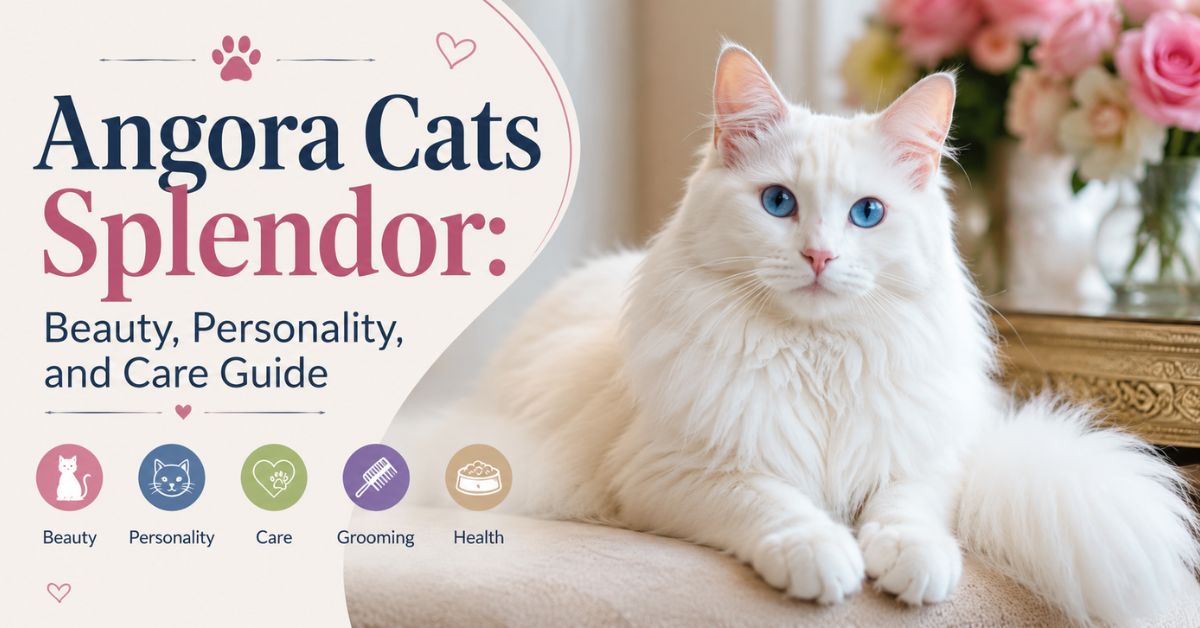
Few cats capture attention quite like the Turkish Angora. With a graceful body, silky coat, expressive eyes, and confident personality, this breed has a natural elegance that is difficult to ignore. The angora cats splendor comes from much more than a beautiful coat it also includes intelligence, athleticism, affection, and a lively personality.
For many cat lovers in the United States, Turkish Angoras are appealing because they combine an elegant appearance with an active and engaging temperament. They are not simply decorative pets. These cats often want to participate in whatever their people are doing.
However, their beauty also comes with responsibilities. Proper grooming, nutrition, exercise, veterinary care, and mental stimulation are all important for keeping an Angora cat healthy.
In this guide, we’ll explore the angora cats splendor, including their appearance, personality, grooming requirements, diet, health considerations, and everyday care.
What Makes Angora Cats So Special?
The Turkish Angora is an old natural breed associated with Turkey, particularly the Ankara region. Over time, the breed became famous for its elegant appearance and flowing coat.
One of the most fascinating things about these cats is that their beauty does not depend on an extremely heavy coat. Their fur is generally fine and silky, giving them a graceful appearance while allowing their athletic body shape to remain visible.
The breed is also known for being intelligent and energetic.
An Angora may happily climb a cat tree, chase a toy across the room, investigate a new object, and then settle down near its favorite person.
That combination of beauty and personality is a major part of the angora cats splendor.
Angora Cats Splendor: Understanding Their Appearance
The appearance of a Turkish Angora is one of its biggest attractions.
These cats typically have a slender, elegant body, long legs, a long tail, and a silky semi-long coat. Their overall appearance is refined without looking fragile.
Coat and Fur
The Turkish Angora’s coat is usually fine and silky. Interestingly, the coat often becomes fuller as the cat matures.
In kittenhood, Angoras have relatively short coats that gradually develop into their more impressive adult coats.
Their fur can come in many colors and patterns. While white Turkish Angoras are particularly famous, the breed is not limited to white cats.
Eyes
Their eyes can be especially striking.
Depending on the individual cat, Turkish Angoras may have blue, green, gold, amber, or other recognized eye colors. Some white cats can also have different-colored eyes, a trait known as odd-eyed coloration.
Body Shape
The breed generally has a graceful, athletic build.
Typical features include:
- Long, slender legs
- A long, elegant tail
- Fine-boned but athletic body
- Wedge-shaped head
- Large, pointed ears
- Expressive eyes
- Silky semi-long fur
This combination gives the breed a distinctive appearance that many owners describe as elegant or almost regal.
Turkish Angora Personality and Temperament
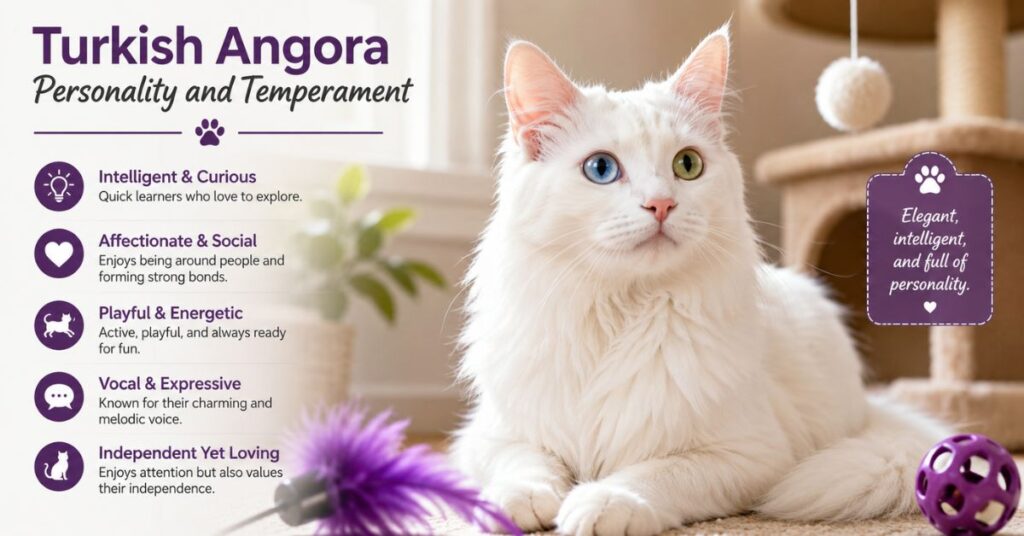
The angora cats splendor isn’t only visual. Their personality is another reason people fall in love with them.
Turkish Angoras are often intelligent, active, curious, and socially engaged. Individual personalities can vary, but many enjoy being involved with their families.
They may follow their owners around the house or investigate household activities.
Are Angora Cats Affectionate?
Many Turkish Angoras form strong relationships with their people.
However, affection does not always mean sitting quietly on someone’s lap for hours.
Some prefer interactive companionship. They may sit beside you, follow you from room to room, or ask for attention when they want it.
If you’re looking for a cat that enjoys interaction and has a strong personality, an Angora can be an excellent match.
Are Angora Cats Intelligent?
Yes. Turkish Angoras are generally considered intelligent cats.
Their intelligence can be entertaining, but it also means they need mental stimulation.
Without enough activity, a bored Angora may find its own entertainment. That could include opening cabinets, knocking objects from shelves, or exploring places you would rather keep off-limits.
Puzzle toys, interactive play, climbing structures, and training can help keep their minds busy.
Angora Cats Splendor and Grooming Needs
Long-haired cats often make potential owners nervous about grooming. Fortunately, Turkish Angoras can be easier to maintain than their glamorous appearance suggests.
Their fine, silky coat usually does not have the dense undercoat associated with some other long-haired breeds.
Still, regular grooming is important.
How Often Should You Groom an Angora Cat?
For many Turkish Angoras, brushing a few times per week can help remove loose hair and prevent tangles.
During periods of heavier shedding, you may need to brush more frequently.
A simple grooming routine can include:
- Gently brush the coat.
- Check for small mats or tangles.
- Inspect the ears.
- Check the eyes for unusual discharge.
- Trim the nails when necessary.
- Praise or treats can be used as rewards for your cat.
Start grooming routines when your cat is young. This can make brushing much easier later.
Does an Angora Cat Shed?
Yes. Like other cats, Turkish Angoras shed.
The amount can vary according to the individual cat, season, environment, and coat characteristics.
Regular brushing can reduce loose hair around your home and help keep the coat looking smooth.
Angora Cat Care: Daily Needs
Owning a beautiful cat is rewarding, but good care goes beyond appearance.
A Turkish Angora needs a balanced diet, fresh water, regular activity, veterinary care, and a stimulating environment.
| Care Area | Recommended Approach | Why It Matters |
| Grooming | Brush regularly | Helps reduce loose fur and tangles |
| Nutrition | Complete, balanced cat food | Supports overall health |
| Exercise | Daily interactive play | Helps maintain fitness |
| Mental stimulation | Puzzle and interactive toys | Prevents boredom |
| Dental care | Regular dental care | Supports oral health |
| Veterinary care | Routine checkups | Helps detect problems early |
| Nail care | Trim as needed | Prevents overgrown nails |
| Environment | Cat trees and safe climbing areas | Supports natural behaviors |
Feeding an Angora Cat
Nutrition plays a major role in maintaining a healthy coat and active body.
Instead of choosing food based only on marketing claims, look for a complete and balanced diet appropriate for your cat’s age and life stage.
Kittens, adults, and senior cats can have different nutritional needs.
What Should Angora Cats Eat?
A good diet should provide appropriate amounts of:
- High-quality protein
- Essential amino acids
- Fat
- Vitamins and minerals
- Adequate moisture
- Calories appropriate for activity level
Wet food can also contribute to daily water intake, while fresh drinking water should always be available.
Avoid making sudden food changes whenever possible. If you need to switch foods, gradually transition your cat over several days unless your veterinarian recommends another approach.
Exercise and Play for Turkish Angoras
A beautiful coat does not mean your Angora wants to spend all day sleeping.
These cats can be quite active.
Daily play can help satisfy their natural instincts while supporting healthy weight and muscle tone.
Try providing:
- Wand toys
- Interactive toys
- Balls
- Puzzle feeders
- Cat trees
- Scratching posts
- Safe climbing spaces
Short play sessions throughout the day can be more practical than expecting one long exercise session.
Why Vertical Space Matters
Turkish Angoras often enjoy climbing and observing their surroundings from elevated locations.
A sturdy cat tree or secure shelf can provide both exercise and mental stimulation.
Make sure elevated areas are stable and positioned safely.
Angora Cats and Family Life
Turkish Angoras can adapt well to family environments when their individual personality and needs are considered.
They may enjoy interacting with adults, older children, and other pets.
However, children should always learn how to handle cats respectfully.
Teach children to:
- Avoid pulling the cat’s tail.
- Let the cat walk away when it wants space.
- Avoid disturbing the cat while eating or sleeping.
- Use gentle handling.
- Play with toys instead of grabbing the cat.
Respecting boundaries helps create a stronger relationship between cats and people.
Are Angora Cats Good Indoor Pets?
Yes. Turkish Angoras can thrive as indoor companions.
Indoor living can protect cats from traffic, predators, fights, parasites, and other outdoor hazards.
However, an indoor cat still needs an interesting environment.
Consider creating a cat-friendly space with:
- Scratching posts
- Comfortable resting areas
- Toys
- Window perches
- Climbing structures
- Hiding spots
An enriched indoor environment can make daily life much more satisfying.
Common Health Considerations
No cat breed is completely free from health concerns.
Responsible owners should schedule routine veterinary examinations and pay attention to changes in behavior, appetite, weight, grooming, litter box habits, and activity.
Some Turkish Angora lines, particularly certain white cats, have been associated with inherited hearing problems. Congenital deafness is more strongly associated with white cats carrying certain genetic traits, so hearing should be considered when evaluating a kitten.
Other health issues can occur in individual cats regardless of breed.
Signs That Need Veterinary Attention
Contact a veterinarian if you notice concerning changes such as:
- Sudden loss of appetite
- Persistent vomiting or diarrhea
- Difficulty breathing
- Major changes in drinking or urination
- Sudden weight loss
- Severe lethargy
- Difficulty walking
- Persistent hiding
- Significant changes in behavior
Cats can hide illness surprisingly well, so unusual changes should not be ignored.
How to Keep an Angora Cat’s Coat Beautiful
The luxurious appearance associated with angora cats splendor starts with overall health.
A beautiful coat is supported by:
- Balanced nutrition
- Regular grooming
- Adequate hydration
- Parasite prevention
- Routine veterinary care
- A low-stress environment
- Appropriate exercise
Avoid bathing your cat unnecessarily. Most healthy cats do a good job of keeping themselves clean.
If your Angora becomes unusually dirty, develops a persistent odor, or has a coat problem, ask your veterinarian whether bathing or another treatment is appropriate.
Angora Cats Splendor: Beauty vs. Personality
It’s easy to focus on the breed’s appearance.
After all, the silky coat, long tail, elegant body, and expressive eyes are hard to overlook.
But the real appeal of a Turkish Angora is the combination of physical beauty and personality.
| Feature | What Owners May Notice |
| Appearance | Elegant and graceful |
| Coat | Fine, silky, semi-long |
| Activity | Often energetic and playful |
| Intelligence | Curious and mentally active |
| Social behavior | Often enjoys interaction |
| Grooming | Moderate routine grooming |
| Personality | Confident, curious, lively |
| Environment | Benefits from enrichment |
This balance is what makes the breed so fascinating.
Tips for New Angora Cat Owners
If you’re considering bringing home a Turkish Angora, prepare your home before the cat arrives.
Before Bringing Your Cat Home
Have these essentials ready:
- Food and water bowls
- Appropriate cat food
- Litter box and litter
- Scratching post
- Comfortable bed
- Interactive toys
- Grooming brush
- Nail clippers
- Secure carrier
- Safe hiding area
Also, inspect your home for potential hazards.
Keep toxic substances, unsafe plants, medications, small objects, and accessible electrical cords away from your cat.
Give Your Cat Time to Adjust
A new cat may need time to become comfortable.
Instead of forcing interaction, allow your Angora to explore gradually.
Provide a quiet area where the cat can retreat when necessary.
Over time, many cats become more confident as they learn that their new environment is safe.
Conclusion
The angora cats splendor is about far more than a gorgeous coat. Turkish Angoras combine elegance, athleticism, intelligence, curiosity, and a strong personality in a truly distinctive package.
Their silky fur benefits from regular grooming, while their active minds need plenty of play and enrichment. A balanced diet, routine veterinary care, safe indoor environment, and respectful interaction can help your cat enjoy a long and fulfilling life.
If you’re fascinated by these graceful cats, remember that their true beauty becomes even more impressive when paired with responsible ownership and excellent care.
For more helpful guides about cat behavior, nutrition, grooming, and health, visit KittyCareZone.com and continue learning how to give your feline companion the best possible life.
Turkish Angoras are known for their elegant appearance, silky semi-long coat, athletic body, intelligence, curiosity, and engaging personality. Their beauty and active temperament make them distinctive companions.
They generally require regular grooming, but their fine coat may be easier to maintain than that of some other long-haired breeds. Their bigger challenge can be providing enough exercise and mental stimulation.
Many Turkish Angoras are social and enjoy interacting with their families. However, temperament varies between individual cats, so personality should always be considered rather than assuming every cat behaves exactly the same way.
Not necessarily. Many can maintain their coat with brushing several times per week, although grooming frequency may need to increase during heavier shedding periods or if the individual cat develops tangles easily.
Yes. They can live happily indoors when provided with appropriate nutrition, veterinary care, exercise, climbing opportunities, play, scratching surfaces, and mental enrichment.

Ali Ahmad /Passionate writer sharing informative, engaging, and easy-to-read articles across different topics. Focused on delivering valuable content that helps readers learn, explore, and stay inspired every day.
1 thought on “Angora Cats Splendor: Beauty, Personality, and Care Guide”