

Introduction
Indoor cats live very different lives compared to outdoor cats. They spend more time resting, grooming, and relaxing inside the home. While this lifestyle keeps them safer from traffic, predators, and disease, it also creates unique nutritional needs.
Many cat owners in the USA assume all cat foods are the same, but feeding an indoor cat the wrong diet can lead to weight gain, digestive problems, hairballs, and low energy levels.
Choosing the best cat food for indoor cats helps support healthy weight, digestion, coat condition, and long-term wellness. Whether you have a playful kitten, a calm adult cat, or a senior companion, the right food makes a huge difference.
This guide covers everything you need to know about indoor cat nutrition, including ingredients to look for, foods to avoid, feeding tips, and how to choose the right option for your feline friend.
Why Indoor Cats Need Specialized Food
Indoor cats burn fewer calories than outdoor cats. Since they are less active, they can gain weight quickly if their food contains too many calories or fillers.
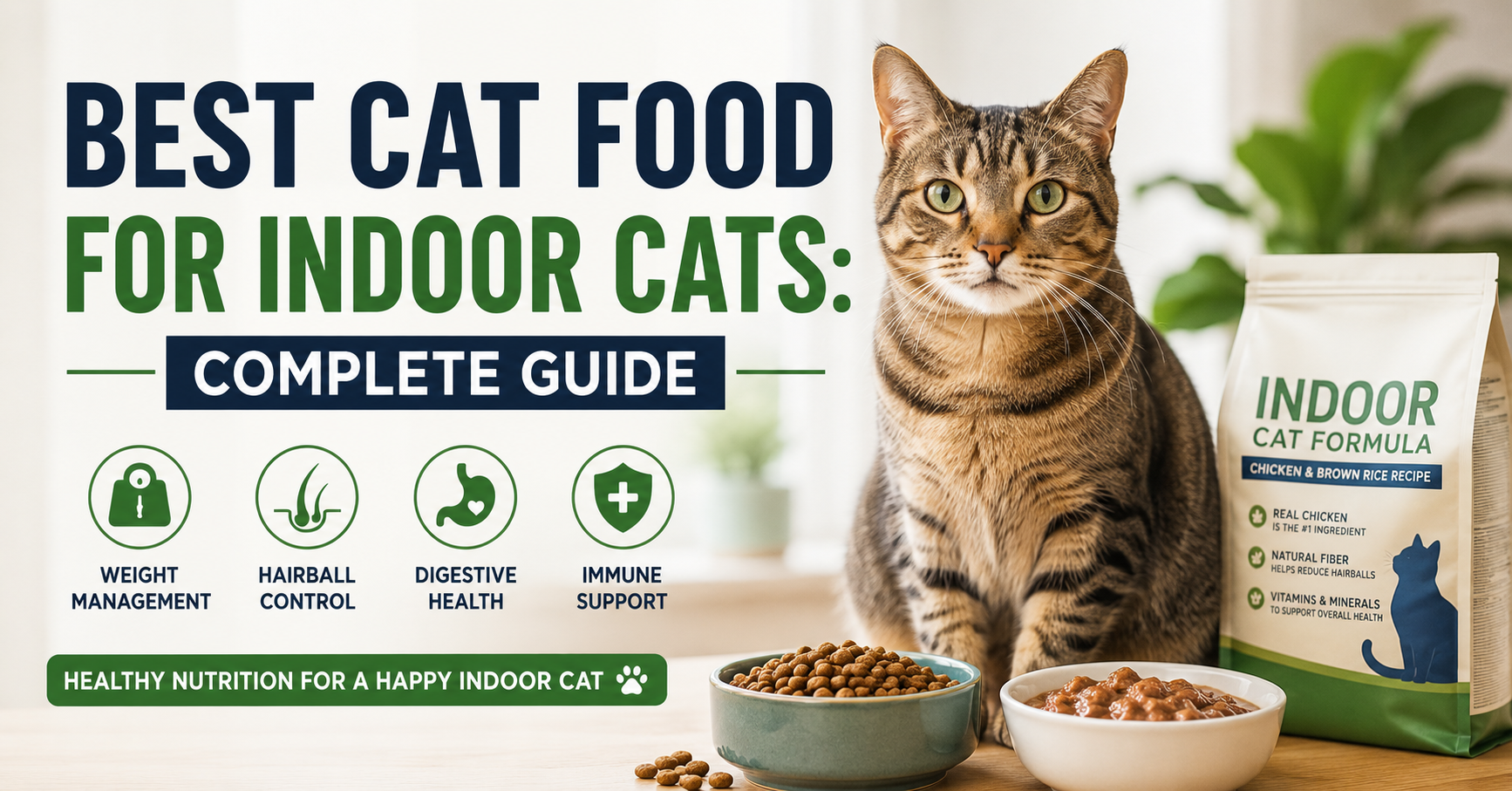
Special indoor cat formulas are designed to:
- Support healthy weight management
- Reduce hairballs
- Improve digestion
- Maintain muscle mass
- Support urinary health
- Keep cats satisfied longer
Indoor cats also tend to groom themselves more often, which increases hairball issues. Many indoor formulas contain fiber blends that help move swallowed hair through the digestive system naturally.
What Makes the Best Cat Food for Indoor Cats?
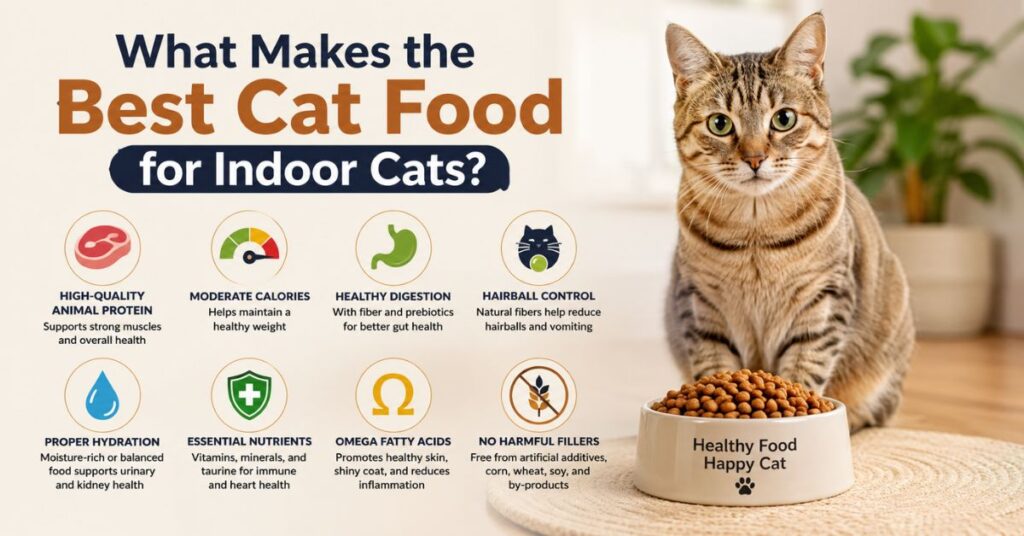
Not every product labeled “indoor cat food” is truly healthy. The best options focus on high-quality nutrition instead of cheap fillers.
Check out these key factors.
High-Quality Animal Protein
Cats are obligate carnivores, meaning they require meat-based protein to survive and thrive.
Look for foods with real protein sources like:
- Chicken
- Turkey
- Salmon
- Duck
- Whitefish
The first ingredient should always be a named animal protein.
Avoid foods where corn, wheat, or soy appear before meat ingredients.
Moderate Calorie Content
Indoor cats don’t need excessive calories. A lower-calorie formula helps prevent obesity while still keeping your cat full and satisfied.
Healthy indoor cat food often includes:
- Lean proteins
- Controlled fat levels
- Added fiber for fullness
Weight gain is one of the biggest health concerns among indoor cats in the USA.
Fiber for Hairball Control
Fiber helps swallowed fur pass through the digestive tract.
Good fiber sources include:
- Pumpkin
- Beet pulp
- Pea fiber
- Psyllium husk
Hairball-control formulas can reduce vomiting and digestive discomfort.
Moisture Content
Cats naturally have a low thirst drive. Wet food helps improve hydration and supports urinary health.
A combination of wet and dry food is often ideal for indoor cats.
Dry Food vs Wet Food for Indoor Cats
Many cat owners wonder which option is better. The truth is that both have benefits.
| Feature | Dry Food | Wet Food |
| Convenience | Easy to store | Requires refrigeration after opening |
| Hydration | Low moisture | High moisture |
| Dental Benefits | Helps reduce plaque slightly | Less dental impact |
| Cost | Usually cheaper | More expensive |
| Weight Control | Easier portioning | Keeps cats fuller longer |
The best cat food for indoor cats often includes a balanced mix of both wet and dry food.
Ingredients to Avoid in Cat Food
Some cat foods look healthy on the packaging but contain poor-quality ingredients.
Avoid foods with:
- Artificial colors
- Artificial preservatives
- Excessive fillers
- Meat by-products with unclear sourcing
- High sugar content
- Too much corn or wheat
These ingredients may contribute to obesity, allergies, or digestive issues.
Best Types of Cat Food for Indoor Cats
Different cats have different nutritional needs. Here are the most common categories.
Weight Control Cat Food
Indoor cats easily become overweight, especially after spaying or neutering.
Weight-control formulas typically include:
- Lower calories
- Higher protein
- More fiber
These foods help cats feel full without overeating.
Best For:
- Lazy indoor cats
- Senior cats
- Overweight cats
Hairball Control Cat Food
Hairball formulas are designed to improve digestion and reduce fur buildup.
These foods often contain:
- Natural fibers
- Omega fatty acids
- Digestive support ingredients
Best For:
- Long-haired cats
- Frequent hairball problems
- Heavy groomers
Grain-Free Cat Food
Some indoor cats are sensitive to grains, although not all cats require grain-free diets.
Grain-free food may help cats with:
- Skin irritation
- Digestive upset
- Food sensitivities
However, grain-free doesn’t automatically mean healthier. Always focus on ingredient quality first.
High-Protein Indoor Cat Food
Protein supports lean muscle and energy levels.
A high-protein indoor formula can help cats stay active while maintaining a healthy body condition.
Great Protein Sources:
- Chicken
- Turkey
- Fish
- Rabbit
How to Choose the Best Cat Food by Age
Cats have different dietary needs throughout life.
Kitten Food for Indoor Cats
Kittens need extra calories and nutrients for growth.
Look for:
- DHA for brain development
- High protein
- Healthy fats
- Calcium support
Indoor kittens still require nutrient-rich food despite lower activity.
Adult Indoor Cat Food
In order to maintain their weight and maintain their health, adult cats need balanced nutrition.
A healthy adult formula should provide:
- Moderate calories
- Quality protein
- Digestive support
Senior Indoor Cat Food
Older cats often become less active and may develop joint or kidney concerns.
Senior formulas commonly include:
- Joint-support ingredients
- Easier-to-digest proteins
- Lower phosphorus levels
- Added hydration support
Signs Your Indoor Cat May Need Better Food
Many cat owners don’t realize poor nutrition is causing common health problems.
Watch for these signs:
- Excessive shedding
- Frequent vomiting
- Hairballs
- Weight gain
- Low energy
- Dull coat
- Bad breath
- Digestive upset
Switching to the best cat food for indoor cats can often improve these issues within weeks.
Common Feeding Mistakes Indoor Cat Owners Make
Even loving cat owners sometimes make feeding mistakes.
Free Feeding All Day
Leaving food out constantly encourages overeating.
Instead:
- Offer measured meals
- Follow feeding guidelines
- Monitor weight regularly
Ignoring Portion Sizes
Many indoor cats only need 200–300 calories daily depending on size and activity.
Overfeeding is extremely common in American households.
Feeding Too Many Treats
Treats should make up less than 10% of daily calories.
Healthy alternatives include:
- Freeze-dried meat treats
- Small cooked chicken pieces
- Vet-approved snacks
Transitioning to a New Cat Food
Changing food too quickly can upset your cat’s stomach.
Use a gradual transition:
| Day | Old Food | New Food |
| 1–2 | 75% | 25% |
| 3–4 | 50% | 50% |
| 5–6 | 25% | 75% |
| 7 | 0% | 100% |
This helps prevent digestive problems and improves acceptance.
Practical Feeding Tips for Indoor Cats
Here are simple ways to improve your cat’s nutrition and lifestyle.
Use Puzzle Feeders
Puzzle feeders encourage activity and mental stimulation.
This helps reduce:
- Boredom
- Fast eating
- Weight gain
Encourage Water Intake
Indoor cats often don’t drink enough water.
Try:
- Cat water fountains
- Multiple water bowls
- Wet food meals
Proper hydration supports urinary health.
Stick to a Feeding Schedule
Cats thrive on routine.
Feeding meals at the same time daily helps:
- Prevent overeating
- Improve digestion
- Reduce begging behavior
How to Read a Cat Food Label
Understanding labels helps you avoid low-quality foods.
Look for:
- Named meat ingredients
- AAFCO nutritional statement
- Protein-rich formulas
- Limited fillers
Be Careful With:
- “Meat meal” without specifics
- Artificial additives
- Excessive carbohydrates
The ingredient list is one of the most important tools for choosing healthy cat food.
Is Expensive Cat Food Always Better?
Not always.
Some premium brands focus heavily on marketing rather than nutrition. A moderately priced food with high-quality ingredients can be healthier than an expensive brand filled with unnecessary fillers.
Focus on:
- Ingredient quality
- Nutritional balance
- Your cat’s health response
Your cat’s energy, digestion, and coat condition are often better indicators than price alone.
Wet Food Benefits for Indoor Cats
Wet food offers several important health benefits.
Better Hydration
Cats naturally get moisture from prey. Wet food mimics this natural hydration source.
Weight Management
Wet food often helps cats feel fuller with fewer calories.
Easier Digestion
Some cats digest wet food more comfortably than dry kibble.
Including wet meals several times weekly can improve overall wellness.
Indoor Cat Nutrition and Obesity
Obesity is one of the biggest health risks for indoor cats in the United States.
Overweight cats are more likely to develop:
- Diabetes
- Joint issues
- Heart problems
- Urinary disease
Maintaining a healthy diet and active lifestyle is essential for long-term health.
Healthy Lifestyle Habits Beyond Food
Food matters, but lifestyle also plays a huge role.
Daily Playtime
Indoor cats need exercise.
Use:
- Wand toys
- Laser pointers
- Climbing trees
- Interactive toys
Even 15–20 minutes daily helps maintain a healthy weight.
Regular Vet Visits
Routine veterinary care helps identify:
- Weight issues
- Dental disease
- Nutritional deficiencies
- Urinary problems
Annual checkups are important even for healthy indoor cats.
Conclusion
Finding the best cat food for indoor cats is one of the most important decisions you can make as a pet owner. A healthy indoor diet supports weight management, digestion, hydration, energy, and overall wellness.
Every cat is different, so it may take some experimentation to find the perfect food for your feline companion. Focus on high-quality ingredients, proper portion sizes, and consistent feeding habits.
At the end of the day, a balanced diet combined with regular exercise and veterinary care can help your indoor cat live a longer, healthier, and happier life.
For more expert cat care guides, nutrition tips, and feline wellness advice, keep visiting KittyCareZone.com.
The best food contains high-quality animal protein, moderate calories, and digestive support ingredients. Many indoor cats benefit from a mix of wet and dry food.
Wet food is highly beneficial because it improves hydration and supports urinary health. Many vets recommend feeding wet food daily if possible.
Most adult indoor cats do well with two measured meals daily. Kittens may need more frequent feeding.
Not necessarily. Grain-free diets may help cats with sensitivities, but overall ingredient quality matters more than avoiding grains.
Weight gain often comes from overfeeding, lack of exercise, or calorie-dense food. Portion control and active playtime can help.
They can, but indoor formulas are usually better because they contain fewer calories and more weight-management support.

Ali Ahmad /Passionate writer sharing informative, engaging, and easy-to-read articles across different topics. Focused on delivering valuable content that helps readers learn, explore, and stay inspired every day.
1 thought on “Best Cat Food for Indoor Cats: Complete Guide”