

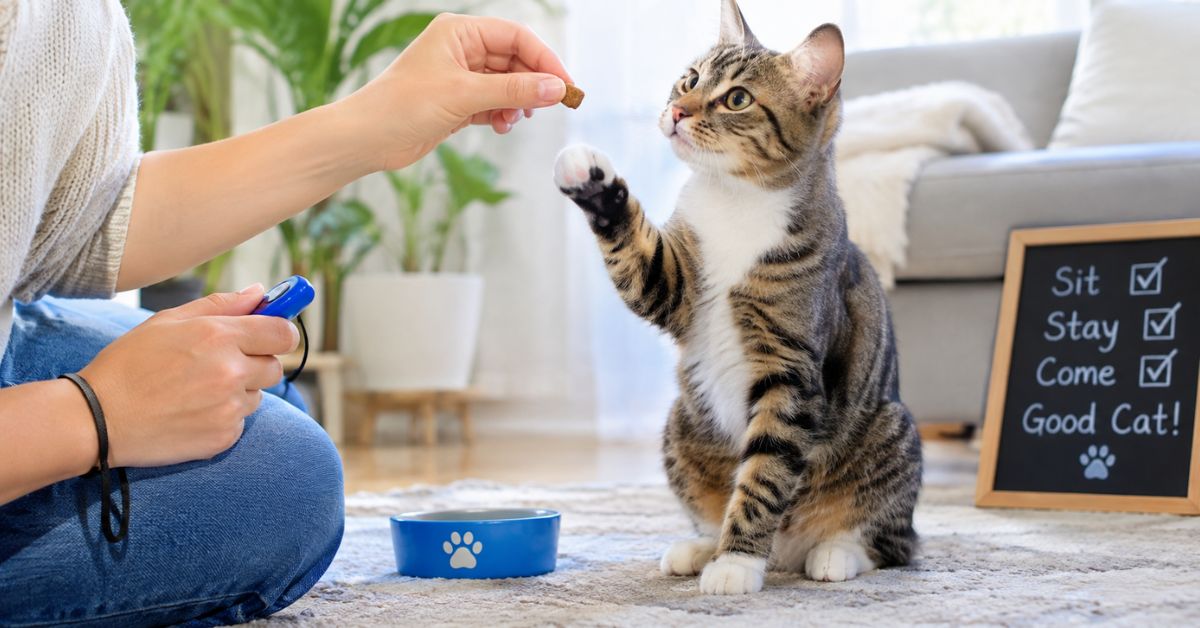
“Cats can’t be trained.” can you train a cat You have probably heard it a hundred times, usually from someone who owns a dog.
So, can you train a cat? Absolutely. Cats learn constantly, and they respond beautifully to the right method.
The trick is that cats don’t work like dogs. They aren’t driven by a wish to please you, so scolding and commands simply don’t land. What works is motivation, patience, and rewards your cat actually cares about.
Training also gives your cat mental exercise, builds confidence, and makes vet visits, carrier time, and nail trims far less stressful. It strengthens your bond too.
In this guide, you’ll learn why cats are trainable, which tools you need, a step-by-step plan for clicker training, how to teach practical skills, and which mistakes to avoid. We’ll also cover when a “training problem” is really a health problem.
Can You Train a Cat? What Science and Experience Tell Us
Yes, cats can learn commands, routines, and even tricks. Many shelters and behavior professionals use training to help cats become calmer and more adoptable.
Cats learn through association. When a behavior is followed by something good, they repeat it.
Why Cats Seem Untrainable
Cats are independent by nature. They don’t have the same history of working alongside humans that dogs do.
They also refuse to work for approval alone. If the reward isn’t worth it, your cat will simply walk away.
That isn’t stubbornness. It’s a cat making a rational choice.
Cats Learn Best Through Positive Reinforcement
Positive reinforcement means rewarding the behavior you want. A treat, a play session, or a bit of attention right after the correct action teaches your cat what pays off.
Punishment does the opposite. Yelling, spraying water, or tapping a cat can create fear and damage trust.
What You Need Before You Start Training
You don’t need much equipment. It is important to have good timing and a motivated cat.
The Right Rewards
Find out what your cat loves most. Many cats go wild for freeze-dried chicken, tuna flakes, or lickable treats.
Use tiny pieces, about the size of a pea. Keep treats small so your cat stays interested without overeating.
A Clicker or Marker Word
A clicker makes a sharp sound when it clicks. The sound tells your cat, “Yes, that exact thing earned a reward.”
If your cat is sensitive to the noise, use a short word like “yes” instead. Consistency is what matters.
The Right Time and Place
Train before mealtime, when your cat is a little hungry. Ensure there are no distractions in the room.
Short sessions work best. Once or twice a day, spend 3 to 5 minutes exercising.
Step-by-Step: How to Clicker Train Your Cat
The most popular and effective method for training cats is clicker training. Here is the basic process.
Step 1: Charge the Clicker
Click, then immediately give a treat. Repeat this 10 to 15 times.
Your cat will soon connect the sound with something wonderful. “Charging the clicker” is the next step.
Step 2: Teach a Simple Target
Put a chopstick or target stick near your cat’s nose. The moment they sniff it, click and treat them.
Next, move the stick a few inches away so they follow it. Many other behaviors are based on targeting.
Step 3: Add a Cue
Once your cat reliably performs a behavior, add a word or hand signal just before it. As your cat begins to sit, say “sit.”.
Over time, the cue becomes the signal to act. Don’t rush this step.
Step 4: Build Gradually
Increase difficulty in tiny increments. Ask for a slightly longer sit or a slightly higher paw lift.
If your cat gets stuck, go back one step. End every session on a success so they stay eager.
What Can You Train a Cat to Do?
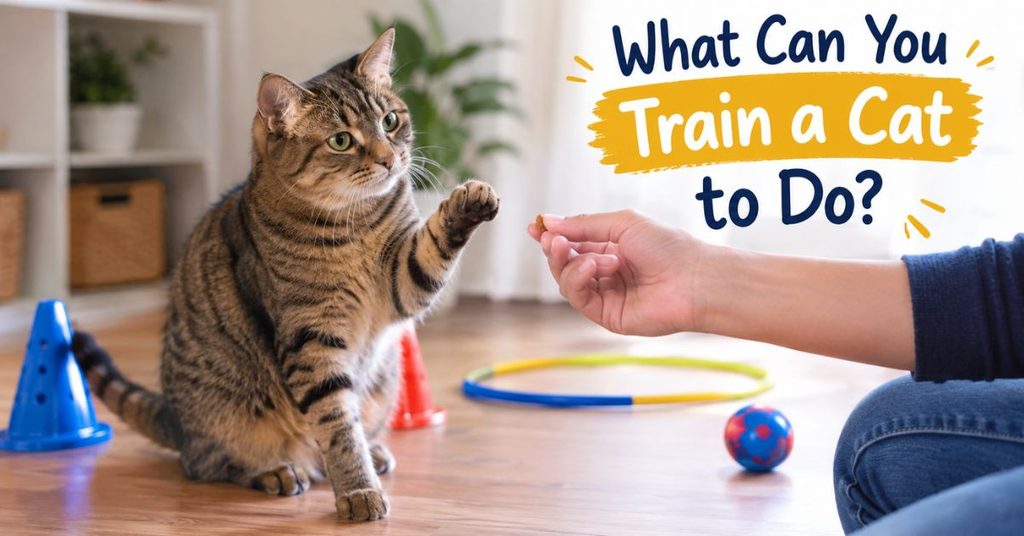
The list is longer than most people expect. Some skills are fun, and others genuinely improve daily life.
Fun Tricks
- Sit and stay: Great for beginners.
- High five or paw shake: Easy with a target stick.
- Spin in a circle: Lure with a treat, then fade the lure.
- Come when called: Valuable and surprisingly easy with food rewards.
Practical Life Skills
- Entering a carrier willingly: Reduces vet-visit stress.
- Accepting nail trims: Reward each small step.
- Using a scratching post: Redirect scratching with praise and treats.
- Leash and harness walking: Possible for confident cats with slow introduction.
Litter Training
Most kittens learn the litter box almost instantly because digging in loose material is instinctive. Place your cat in the box after meals and naps, and praise calm use.
Never punish accidents. Instead, clean thoroughly with an enzyme cleaner and review the box setup.
Cat Training Methods Compared
| Method | How It Works | Best For | Effectiveness |
| Clicker training | Click marks the exact moment of success, followed by a treat | Tricks, recall, carrier training | Very high |
| Lure training | A treat guides the cat into position | Beginners, simple tricks | High |
| Target training | Cat touches a stick with its nose | Moving, vet prep, tricks | High |
| Play-based rewards | Wand toy used as the reward | Food-disinterested cats | Moderate to high |
| Punishment (spray, yelling) | Startles or scares the cat | Not recommended | Poor, harms trust |
Pro Tip: If your cat ignores treats, try play as the reward. A quick wand-toy chase can motivate cats that don’t care about food.
Training a Kitten vs. an Adult Cat
Age affects how fast your cat learns. It does not decide whether they can learn.
Kittens
Kittens learn quickly and are curious about everything. Start early with handling, carrier comfort, and basic manners.
Their attention span is short. Keep sessions under three minutes.
Adult Cats
Adult cats can absolutely learn new skills. They may need more patience and stronger rewards.
Go slowly and let them set the pace. Confident, food-motivated adults often become the best students.
Senior Cats
Older cats can still enjoy gentle training. Low-effort tricks provide mental stimulation and help you notice changes in mobility or behavior.
Common Cat Training Mistakes to Avoid
Most “failed” training comes down to a few fixable errors.
Training Sessions That Are Too Long
Cats get bored or overwhelmed fast. Stop while your cat is still interested.
Poor Timing
If the reward comes late, your cat won’t know what earned it. Click or mark at the exact moment of the behavior.
Using Punishment
Punishment can lead to hiding, aggression, and litter box problems. It teaches fear, not manners.
Ignoring Body Language
A cat with flattened ears, a lashing tail, or dilated pupils is telling you to stop. Pushing forward makes training harder.
Expecting Dog-Like Obedience
Cats may perform on their own schedule. Celebrate progress and accept the occasional “not today.”
When to See a Veterinarian
Sometimes what looks like a training issue is really a medical problem. Cats hide pain, so a sudden change in behavior deserves attention.
Contact your vet if you notice:
- Sudden litter box avoidance or urinating outside the box
- Straining to urinate or frequent unproductive trips (an emergency, especially in male cats)
- Sudden aggression or irritability in a normally calm cat
- Loss of appetite lasting more than a day
- Hiding for long periods or withdrawal
- Flinching or crying when touched or picked up
- Open-mouth breathing at rest (seek emergency care immediately)
- Excessive scratching, grooming, or hair loss
Pain, urinary problems, arthritis, and thyroid disease can all change behavior. Rule out medical causes before blaming training.
This article is educational and does not replace professional veterinary advice. When in doubt, call your vet.
Final Thoughts
So, can you train a cat? You absolutely can, and your cat will probably enjoy it more than you expect. With small treats, short sessions, and plenty of patience, even a shy or senior cat can learn new skills.
Start with one simple behavior this week and celebrate every small win. Training is not about control. It is about building trust and giving your cat a happier, more confident life with you.
For more practical guides on behavior, training, and everyday care, keep exploring Kitty Care Zone, where we help cat parents build stronger bonds with their cats.
Yes. Pair a specific word or sound with a high-value treat, then practice at short distances and gradually increase the range. Always reward your cat generously when they arrive.
Simple behaviors like targeting or sit can take a few days to two weeks. More complex skills may take several weeks, depending on your cat’s age, motivation, and consistency.
Yes, older cats can learn new things at any age. Use soft treats, shorter sessions, and plenty of patience, and check with your vet if mobility seems to be an issue.
Yes. A clicker gives your cat a clear signal that the exact behavior earned a reward, which makes learning faster and less frustrating. If clicks are too loud, a verbal marker works just as well.
Your cat may not be motivated, the session may be too long, or the setting may be distracting. Try higher-value treats, shorter sessions, and a quieter space, and rule out pain or stress with your vet.

Ali Ahmad /Passionate writer sharing informative, engaging, and easy-to-read articles across different topics. Focused on delivering valuable content that helps readers learn, explore, and stay inspired every day.