

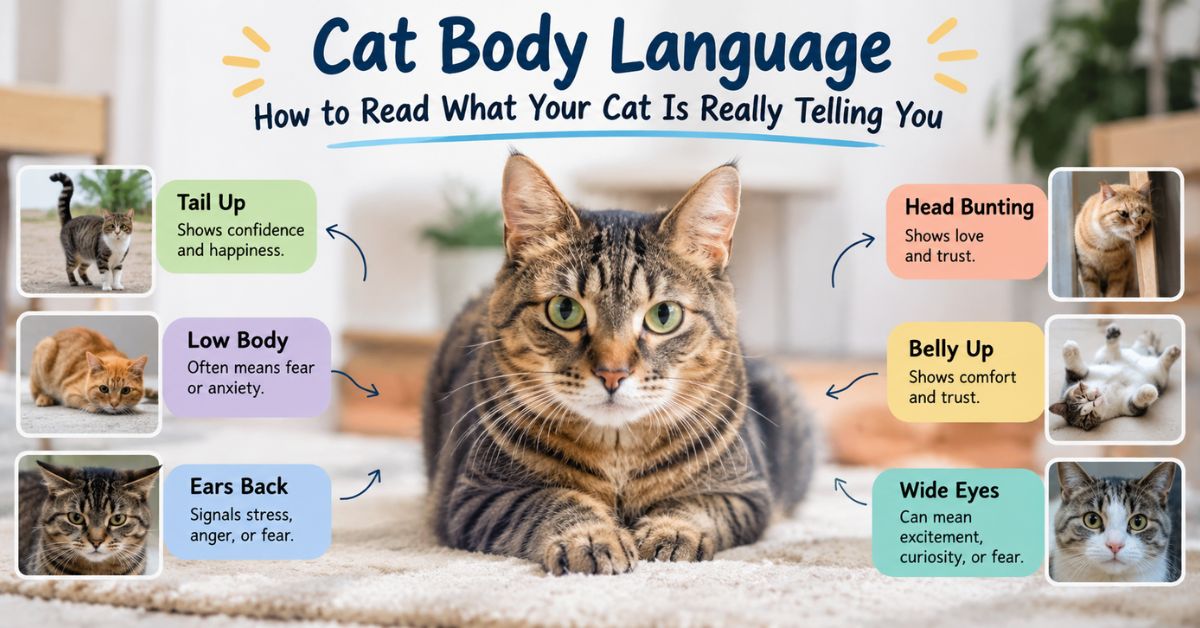
Cat body language is the primary way cats share how they feel, what they want, and when something is wrong. A twitching tail, a half-closed eye, or a tiny shift in ear position can say more than a dozen vocal sounds.
Many cat parents miss these signals. A cat who seems “moody” or “random” is usually communicating clearly, and we just haven’t learned the vocabulary yet.
Misreading a cat can lead to scratches, stress, and a strained bond. It builds trust and helps you recognize pain or anxiety early.
In this guide, you’ll learn what the tail, ears, eyes, whiskers, posture, and sounds mean. You’ll also see how to read these signals together, when body language points to a health problem, and what to do about it.
Why Cat Body Language Matters So Much
Cats evolved as both predator and prey. That means they are wired to hide weakness and avoid open conflict.
As a result, cats communicate in subtle ways. Their signals are quiet by design.
Cats Rely on Body Language More Than Sound
Adult cats rarely meow at each other. Meowing is mostly a skill they developed for communicating with humans.
With other cats, they rely on posture, scent, and visual cues. When you learn feline body language, you are learning their native language.
Reading Signals Prevents Stress and Conflict
Chronic stress in cats can contribute to litter box problems, over-grooming, and some urinary conditions. Spotting early signs of discomfort lets you step in before things escalate.
It also helps you know when your cat wants affection and when they want space. Most “out of nowhere” bites are prevented by that alone.
The Tail: Your Cat’s Emotional Flag
Learn the tail if you can only learn one body part. It is one of the most expressive parts of the cat.
Tail Up and Relaxed
A tail held high, often with a slight curve at the tip, is a friendly greeting. Your cat is confident and happy to see you.
Kittens hold their tails this way when approaching their mothers. It is a sign of trust.
Puffed Up Tail
A bottle-brush tail means your cat is frightened or highly aroused. Their fur stands up to make them appear bigger.
Give them space and remove the trigger if you can. It is not advisable to comfort or pick up a cat in this state.
Low or Tucked Tail
A tail held low or wrapped under the body signals fear, anxiety, or insecurity. cat body language A cat who is hunched with a tucked tail may also be in pain.
Thrashing or Lashing Tail
A fast side-to-side lash is not like a dog’s happy wag. This is usually a sign of irritation, overstimulation, or growing frustration.
If you see this while petting your cat, stop. That is often the last warning before a swat.
Quivering Tail
A tail held straight up and quivering often means excitement or affection. Some unneutered males also quiver while spraying, so context matters.
Ears and Eyes: The Mood Window
Ears and eyes change quickly, which makes them great for reading a cat’s mood in real time.
What Ear Positions Mean
- Forward and upright: Alert, curious, or content.
- Swiveling: Listening to several sounds at once.
- Sideways (“airplane ears”): Nervous, irritated, or unsure.
- Flattened back against the head: Fear or defensive aggression.
Ears pinned flat are a serious warning. Back away calmly.
Reading the Eyes
Eyes tell a story through both pupil size and eyelid position.
Slow blinking is one of the best signs of trust. Cat behaviorists often call it a “cat kiss.”
Try it yourself. Blink slowly at your cat, and many will blink back.
Pupil Size
Wide, dilated pupils can signal fear, excitement, or play. Slits can indicate calm in dim light, or tension and aggression in bright light.
Always check pupils alongside other signals. Pupils alone can mislead you.
Staring
A hard, unblinking stare is a challenge in cat language. Avoid staring back at a cat who looks tense, since they may read it as a threat.
Whiskers, Mouth, and Face
Facial details add important layers to the picture.
Whisker Positions
Relaxed whiskers point slightly to the sides. In times of curiosity or hunting, your cat will fan forward.
Whiskers pulled tightly back against the cheeks signal fear or stress. The discomfort caused by deep, narrow bowls also causes some cats to avoid them.
Mouth and Lip Signals
A lip lick when no food is present can signal nervousness. Yawning can show relaxation, but also stress in tense situations.
An open-mouth hiss shows fear or defense. A cat who pants with an open mouth needs attention, which we cover below.
The Flehmen Response
Sometimes your cat sniffs, then gapes with a slightly open mouth and wrinkled nose. This is the Flehmen response.
It helps them analyze scents using a special organ on the roof of the mouth. It is normal and not a sign of disgust.
Body Posture: Reading the Whole Cat
Posture shows how much space your cat wants to take up. Confident cats stretch out. Scared cats shrink.
Relaxed and Confident Posture
A loose, soft body with a slow tail sway shows contentment. Cats who stretch and roll onto their sides around you feel safe.
The Belly Exposure Myth
A rolled-over cat showing their belly is not always asking for a rub. For many cats, it is a trust display, and touching the belly may trigger a grab or scratch.
Read the rest of the body first. If the face is soft and eyes are slow, a gentle touch on the chest or cheek is safer.
Arched Back and Sideways Stance
A cat with an arched back, puffed fur, and a sideways stance is trying to look bigger. This is a defensive posture, not an invitation to approach.
The Crouch
A low, tense crouch with wiggling hind legs usually means play or hunting. A low crouch with tight muscles, flat ears, and wide eyes means fear.
Kneading
Rhythmic pushing with the front paws is a comfort behavior left over from nursing. It generally signals deep contentment.
Cat Sounds That Match Body Language
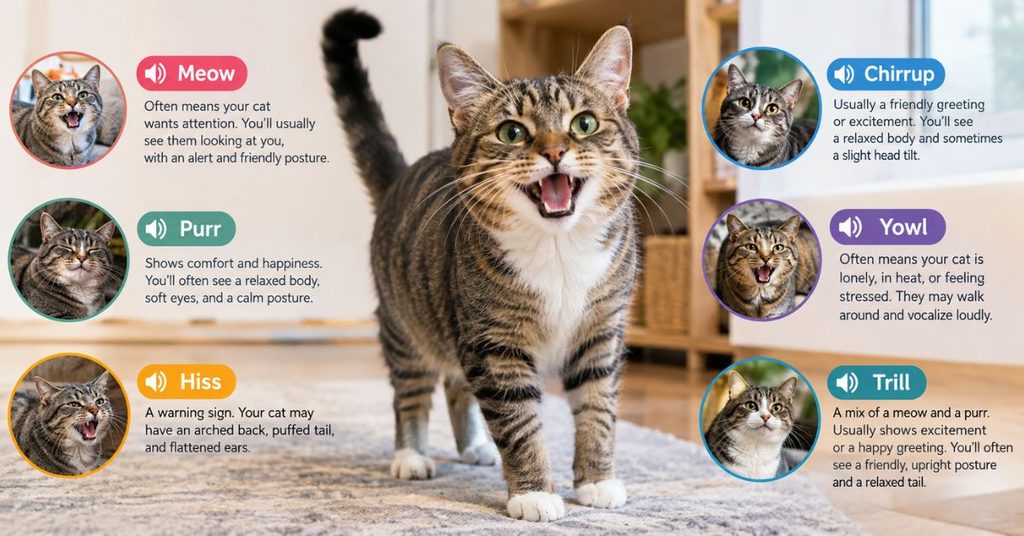
Vocal signals make more sense when paired with posture.
Purring
Purring most often means contentment, but cats also purr when hurt, anxious, or in pain. Check the whole body, not just the sound.
Chirps and Trills
A short trill with a raised tail is a friendly “come follow me.” Mother cats use this sound with kittens.
Growling, Hissing, and Yowling
These are clear “back off” messages. Respect them, and never punish a cat for giving a warning.
Cat Body Language Cheat Sheet
| Signal | What It Usually Means | What You Should Do |
| Tail straight up | Happy, confident greeting | Greet and offer gentle pets |
| Puffed tail | Fear or high arousal | Give space, remove trigger |
| Fast tail lashing | Irritation, overstimulation | Stop petting, let them leave |
| Slow blinking | Trust, relaxation | Blink back slowly |
| Airplane ears | Nervous or annoyed | Reduce noise and activity |
| Flattened ears | Fear, defensiveness | Back away calmly |
| Dilated pupils | Fear, excitement, or play | Check other signals |
| Kneading | Comfort and contentment | Enjoy the moment |
| Hunched, tucked posture | Fear, stress, or pain | Monitor, call vet if it persists |
Pro Tip: Never judge a cat by one signal. Always read the tail, ears, eyes, and posture together before you respond.
How to Respond to Your Cat’s Signals
Understanding is only half the job. What you do next builds trust.
Respect the “No”
When your cat shows warning signs, stop what you’re doing. Cats who learn their warnings are ignored may skip the warnings and go straight to biting.
Reward Calm, Confident Behavior
Offer treats, gentle praise, or play when your cat is relaxed. This reinforces the behaviors you want to see more often.
Create a Safe, Low-Stress Home
Provide hiding spots, vertical space, and quiet resting areas. A stressed cat with nowhere to retreat will show more defensive signals.
Use Play to Release Tension
Short daily play sessions with a wand toy mimic hunting. This lowers frustration and builds confidence.
When to See a Veterinarian
Body language can also be an early warning for illness. Cats hide pain well, so even subtle changes matter.
Contact your vet promptly if you notice:
- Open-mouth breathing or panting at rest (this can be an emergency)
- Hiding for long periods or sudden withdrawal
- Hunched posture with a tucked belly or tucked tail that doesn’t improve
- Flinching or crying when touched
- Straining in the litter box or frequent unproductive trips
- Sudden aggression in a normally calm cat
- Loss of appetite lasting more than a day
- Excessive grooming or bald patches
Straining to urinate, especially in male cats, is a medical emergency. Go to an emergency vet immediately.
This article is educational and does not replace professional veterinary advice. When in doubt, call your vet.
Final Thoughts
Learning cat body language changes your relationship with your cat. You stop guessing and start listening.
Start small by watching the tail and ears for a week. Soon you’ll notice patterns, and your cat will feel understood.
Your cat is always communicating, and every signal is a chance to build trust. For more practical guides on behavior, health, and everyday care, keep exploring Kitty Care Zone, where we help cat parents understand their cats better.
A slow blink is a sign of trust and affection. It is often called a “cat kiss,” and you can return it by slowly closing and opening your eyes.
Unlike dogs, cats usually lash their tails when irritated, overstimulated, or focused. A gentle, slow sway can show curiosity, so check the ears and posture too.
A belly display is typically a sign of trust, not a request for a rub. Many cats have sensitive bellies, so pet the cheeks or chest instead.
No. Cats purr when content, but also when stressed, injured, or in pain. Look at their posture and behavior to understand the reason.
Common signs include flattened ears, a tucked tail, hiding, over-grooming, and litter box changes. If these continue, speak with your vet to rule out medical causes.

Ali Ahmad /Passionate writer sharing informative, engaging, and easy-to-read articles across different topics. Focused on delivering valuable content that helps readers learn, explore, and stay inspired every day.