

Introduction
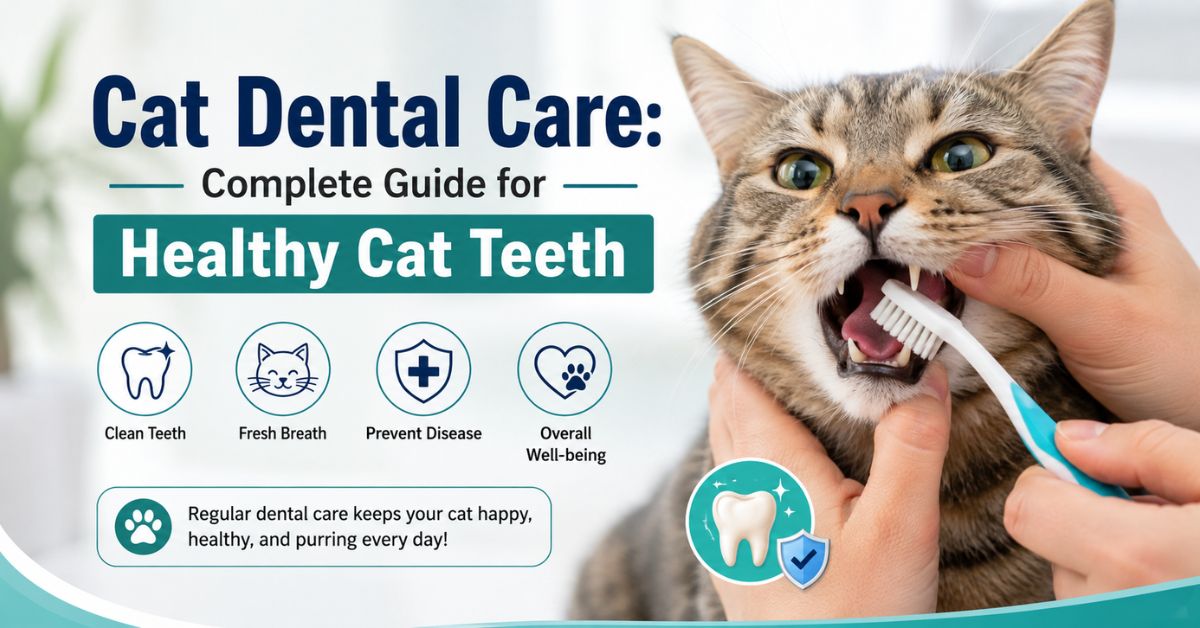
Keeping your cat healthy involves much more than feeding quality food and regular grooming. One of the most overlooked areas of feline health is cat dental care. Many cat owners do not realize that dental disease can lead to pain, tooth loss, infections, and even serious health complications affecting the heart, kidneys, and liver.
Cats naturally hide pain, which means dental problems often go unnoticed until they become severe. That is why understanding proper cat dental care is essential for every responsible pet owner.
In this complete guide, you will learn how to maintain your cat’s oral health, recognize warning signs of dental disease, choose the right dental products, and create a simple dental care routine your cat can tolerate.
Why Cat Dental Care Is Important
A healthy mouth is essential to a cat’s overall well-being.According to veterinary experts, many cats develop some form of dental disease by the age of three.
Without proper dental care, plaque and tartar build up on the teeth. Over time, this can cause:
- Bad breath
- Inflamed gums
- Tooth decay
- Pain while eating
- Gum infections
- Tooth loss
- Bacterial infections
In severe cases, bacteria from dental disease can enter the bloodstream and damage vital organs.
Regular cat dental care helps prevent these problems and improves your cat’s quality of life.
Common Dental Problems in Cats
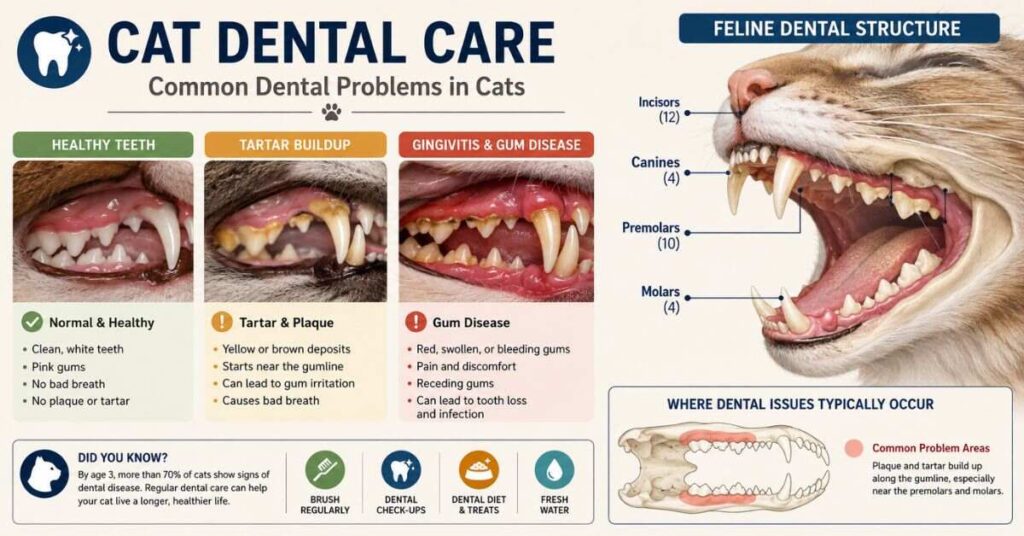
Understanding common feline dental issues can help you identify problems early.
Gingivitis
Gingivitis is inflammation of the gums caused by plaque buildup. It is one of the earliest signs of dental disease.
Symptoms include:
- Red gums
- Swollen gums
- Bad breath
- Bleeding around teeth
Early treatment can often reverse gingivitis.
Periodontal Disease
Periodontal disease occurs when gingivitis becomes more severe and affects deeper tissues around the teeth.
This condition can cause:
- Loose teeth
- Pain
- Tooth loss
- Difficulty eating
Periodontal disease is one of the most common health issues in adult cats.
Tooth Resorption
Tooth resorption is a painful condition where the tooth structure begins to break down.
Signs may include:
- Drooling
- Pawing at the mouth
- Sudden food avoidance
- Teeth chattering
Veterinary treatment is usually required.
Stomatitis
Stomatitis is severe inflammation inside the mouth. It can make eating extremely painful for cats.
Cats with stomatitis may:
- Refuse food
- Cry while eating
- Drool excessively
- Lose weight
Early veterinary care is very important.
Signs Your Cat May Have Dental Problems
Cats often hide discomfort, so owners must watch for subtle changes.
Here are common warning signs:
| Symptom | Possible Dental Issue |
| Bad breath | Plaque or gum disease |
| Drooling | Mouth pain or infection |
| Difficulty eating | Tooth pain |
| Red gums | Gingivitis |
| Loose teeth | Periodontal disease |
| Pawing at the mouth | Oral discomfort |
| Weight loss | Severe dental pain |
| Yellow tartar buildup | Poor oral hygiene |
If you notice any of these symptoms, schedule a veterinary dental exam.
How to Start a Cat Dental Care Routine
Creating a consistent routine is the best way to maintain healthy teeth.
Brush Your Cat’s Teeth Regularly
Brushing is considered the gold standard for cat dental care.
It is ideal to brush your cat’s teeth every day. However, even brushing a few times a week can make a significant difference.
Tips for Brushing Your Cat’s Teeth
- Use a toothbrush designed for cats
- Always use cat-safe toothpaste
- Start slowly and be patient
- Reward your cat after brushing
- Focus on the outer surfaces of teeth
Never use human toothpaste because it may contain ingredients toxic to cats.
Introduce Brushing Gradually
Many cats resist brushing at first. Begin by letting your cat taste the toothpaste and gently touch their mouth before using a brush.
A gradual approach helps reduce stress.
Best Dental Products for Cats
Using the right products can improve your cat’s oral hygiene routine.
Cat Toothbrushes
Finger brushes and soft-bristle cat toothbrushes work best.
Look for:
- Small brush heads
- Soft bristles
- Comfortable grip
Cat Toothpaste
Choose toothpaste made specifically for cats.
Popular flavors include:
- Chicken
- Seafood
- Malt
Flavored toothpaste makes brushing easier for picky cats.
Dental Treats
Dental treats can help reduce plaque buildup.
Choose treats approved by veterinary dental organizations whenever possible.
Water Additives
Dental water additives help freshen breath and reduce bacteria.
These are useful for cats that dislike brushing.
Dental Diets
Some cat foods are specially formulated to improve oral health.
The kibble texture may help clean teeth while chewing.
Foods That Support Cat Dental Care
Diet plays an important role in oral health.
Dry Food vs Wet Food
Many people believe dry food automatically cleans teeth. While some dental diets help reduce plaque, standard dry kibble alone is not enough.
Wet food can still be part of a healthy dental routine when combined with proper oral care.
Healthy Foods for Oral Health
Certain nutrients support gum and tooth health, including:
- Omega-3 fatty acids
- High-quality protein
- Vitamins A and C
- Antioxidants
Always choose nutritionally balanced cat food.
Professional Dental Cleaning for Cats
Even with excellent home care, professional cleanings are still important.
Veterinarians use specialized tools to:
- Remove tartar
- Clean below the gumline
- Check for hidden dental issues
- Extract damaged teeth if necessary
Professional cleanings are usually performed under anesthesia to ensure safety and comfort.
How Often Do Cats Need Dental Cleaning?
The frequency depends on:
- Age
- Breed
- Diet
- Genetics
- Oral health condition
Some cats may need yearly cleanings, while others require more frequent care.
How to Keep Your Cat Calm During Dental Care
Some cats become anxious during oral care routines. The following tips can help:
Create a Calm Environment
Choose a quiet room with minimal distractions.
Use Positive Reinforcement
Reward your cat with:
- Praise
- Treats
- Gentle petting
Keep Sessions Short
Short sessions reduce stress and help your cat adjust gradually.
Be Consistent
Consistency helps your cat become familiar with the routine.
Cat Breeds More Prone to Dental Issues
Some cat breeds are more likely to experience dental problems.
These include:
- Persian cats
- Siamese cats
- Maine Coon cats
- Scottish Fold cats
Flat-faced breeds often experience overcrowded teeth, which increases plaque buildup.
Owners of these breeds should pay extra attention to cat dental care.
Natural Ways to Improve Cat Oral Health
While brushing remains the best option, natural approaches may provide additional support.
Offer Dental Chews
Dental chews encourage chewing activity that may reduce plaque.
Encourage Hydration
Proper hydration supports gum health and overall wellness.
Provide Safe Chew Toys
Chew toys designed for cats may help reduce tartar accumulation.
Always supervise your cat with chew toys to prevent choking hazards.
Mistakes Cat Owners Should Avoid
Many well-meaning owners accidentally make dental care mistakes.
Using Human Toothpaste
Human toothpaste can be toxic to cats.
Ignoring Bad Breath
Persistent bad breath is often a sign of dental disease, not just “cat breath.”
Waiting Too Long for Treatment
Dental issues worsen over time. Early intervention saves pain and money.
Skipping Vet Checkups
Regular veterinary exams are essential for maintaining oral health.
How Dental Health Affects Overall Cat Health
Dental disease affects more than the mouth.
Bacteria from untreated infections may spread throughout the body and impact:
- Heart health
- Kidney function
- Liver health
Cats with painful mouths may also:
- Eat less
- Lose weight
- Become less active
- Develop behavior changes
That is why proper cat dental care is a critical part of overall feline wellness.
Daily Cat Dental Care Checklist
Here is a simple daily routine you can follow:
| Task | Frequency |
| Brush teeth | Daily if possible |
| Check gums and teeth | Weekly |
| Provide dental treats | Several times weekly |
| Refresh water | Daily |
| Monitor eating habits | Daily |
| Veterinary dental exam | Yearly |
Consistency is key to long-term oral health.
Conclusion
Proper cat dental care is one of the most important parts of keeping your feline companion healthy and comfortable. Dental disease can silently affect your cat’s quality of life, but with regular brushing, professional cleanings, healthy nutrition, and routine veterinary care, most oral health problems can be prevented.
By building a consistent dental routine, you can help your cat enjoy healthier teeth, fresher breath, and a happier life. For more expert cat care guides, health tips, and feline wellness advice, visit KittyCareZone.com.
Brushing your cat’s teeth on a daily basis is ideal.However, brushing several times per week still provides significant benefits.
Without proper cat dental care, cats may develop plaque buildup, gum disease, tooth loss, infections, and severe pain.
Dental treats help reduce plaque, but they cannot fully replace brushing. The most effective method of keeping teeth clean is to brush them.
No. Persistent bad breath usually indicates dental disease or another health issue that requires veterinary attention.
Dental care should begin when cats are kittens. Early training helps cats become comfortable with brushing and oral exams.

Ali Ahmad /Passionate writer sharing informative, engaging, and easy-to-read articles across different topics. Focused on delivering valuable content that helps readers learn, explore, and stay inspired every day.
1 thought on “Cat Dental Care: Complete Guide for Healthy Cat Teeth”