

Introduction
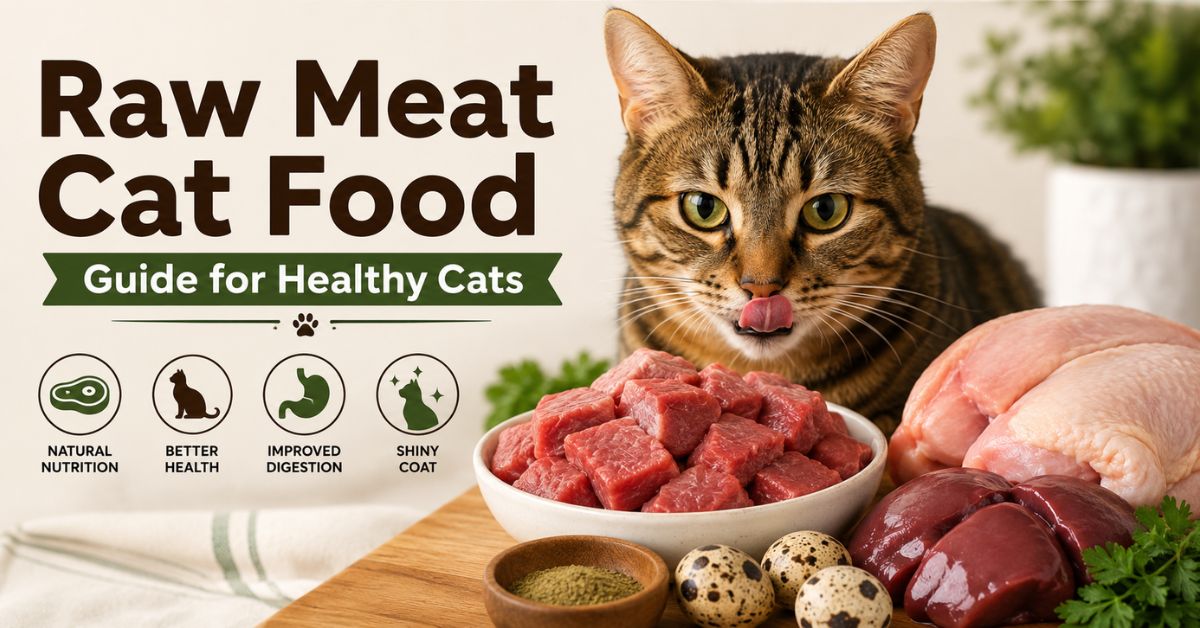
Feeding cats a healthy and balanced diet is one of the most important responsibilities for pet owners. In recent years, raw meat cat food has become increasingly popular among cat lovers in the USA. Many owners believe that a raw diet closely matches what cats naturally eat in the wild. As obligate carnivores, cats thrive on animal protein, which makes raw feeding appealing to many pet parents.
However, before switching your cat to a raw diet, it is essential to understand both the benefits and the potential risks. A well-planned raw diet may support better digestion, healthier skin, and improved energy levels. On the other hand, an unbalanced raw diet can create nutritional deficiencies and health concerns.
In this complete guide, you will learn everything you need to know about raw meat cat food, including benefits, risks, feeding tips, ingredients, and safety guidelines.
What Is Raw Meat Cat Food?
Raw meat cat food is a diet made primarily from uncooked animal ingredients. It often includes:
- Raw muscle meat
- Organ meat
- Raw bones
- Ground meat mixtures
- Nutritional supplements
Some cat owners prepare homemade raw meals, while others buy commercially prepared frozen or freeze-dried raw cat food products.
The goal of raw feeding is to provide a biologically appropriate diet that mimics what cats would naturally consume in the wild.
Why Many Cat Owners Choose Raw Meat Cat Food
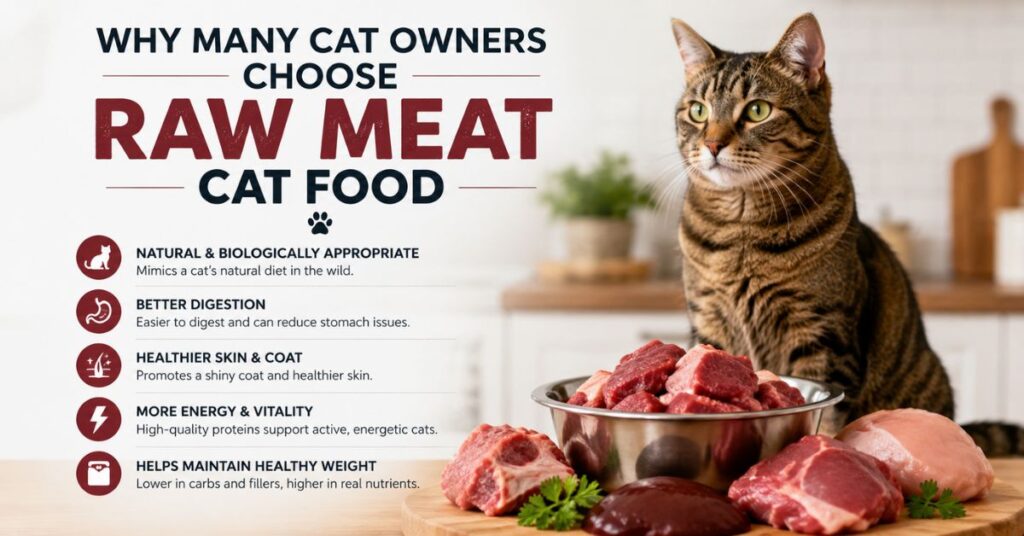
Many cat owners switch to a raw diet because they want a more natural feeding option for their pets. Cats are obligate carnivores, meaning their bodies are designed to digest animal protein efficiently.
Here are some common reasons people choose a raw diet:
Improved Coat and Skin Health
Cats eating a balanced raw diet often develop:
- Shinier fur
- Softer coats
- Reduced dry skin
- Less shedding
The natural fats and proteins found in raw meat can support healthy skin and coat quality.
Better Digestion
Some cats experience fewer digestive problems when eating raw food. Owners often report:
- Smaller stools
- Reduced litter box odor
- Less vomiting
- Improved nutrient absorption
Increased Energy Levels
A protein-rich raw diet may help cats feel more energetic and active throughout the day.
Better Weight Management
Raw diets are typically lower in carbohydrates compared to many commercial dry foods. This can help maintain a healthy body weight.
Nutritional Needs of Cats
Before feeding raw meat cat food, it is important to understand feline nutritional requirements.
Cats require:
| Nutrient | Why It Matters |
| Protein | Supports muscles and organs |
| Taurine | Essential for heart and eye health |
| Fat | Provides energy and healthy skin |
| Calcium | Supports bones and teeth |
| Vitamins | Maintains immune function |
| Water | Prevents dehydration |
Cats cannot survive on plant-based diets alone. They require nutrients that naturally come from animal tissue.
Benefits of Raw Meat Cat Food
Supports Natural Eating Habits
Cats naturally hunt prey animals in the wild. A raw diet closely resembles this natural feeding behavior.
Higher Moisture Content
Unlike dry kibble, raw food contains significant moisture. This may help support:
- Kidney health
- Urinary tract function
- Hydration
Fewer Fillers and Additives
Many commercial cat foods contain fillers, artificial preservatives, and excess carbohydrates. Raw diets usually focus on simple, whole-food ingredients.
Improved Dental Health
Chewing raw meaty bones may help reduce plaque buildup and improve dental hygiene.
Risks of Feeding Raw Meat Cat Food
While raw diets can offer benefits, they also come with important risks.
Bacterial Contamination
In raw meat, harmful bacteria can be found, such as:
- Salmonella
- E. coli
- Listeria
These bacteria can affect both cats and humans.
Nutritional Imbalance
Homemade raw diets may lack essential nutrients if not properly formulated.
For example:
- Too little taurine can cause heart disease
- Low calcium may weaken bones
- Vitamin deficiencies can impact overall health
Bone Hazards
Improper bones may create choking risks or damage teeth and digestive organs.
Not Suitable for Every Cat
Some cats may not tolerate raw food well, especially:
- Senior cats
- Cats with weakened immune systems
- Cats with chronic illnesses
Consulting a veterinarian is strongly recommended before changing diets.
Raw Meat Cat Food vs Commercial Cat Food
| Feature | Raw Meat Cat Food | Commercial Dry Food |
| Moisture Content | High | Low |
| Protein Quality | Usually high | Varies |
| Processing | Minimal | Highly processed |
| Artificial Additives | Usually fewer | Often present |
| Shelf Life | Shorter | Longer |
| Preparation Time | Higher | Low |
Both feeding methods have advantages and disadvantages. The best choice depends on your cat’s health, lifestyle, and nutritional needs.
Best Ingredients for Raw Meat Cat Food
A balanced raw diet should include several animal-based ingredients.
Muscle Meat
Muscle meat provides protein and amino acids.
Popular choices include:
- Chicken
- Turkey
- Rabbit
- Beef
- Duck
Organ Meat
Organ meat contains essential vitamins and minerals.
Common organs include:
- Liver
- Kidney
- Heart
Raw Bones
Raw edible bones provide calcium and phosphorus.
Never feed cooked bones because they can splinter dangerously.
Supplements
Some homemade diets require supplements such as:
- Taurine
- Fish oil
- Vitamin E
- Calcium powder
How to Transition Cats to Raw Meat Cat Food
Switching suddenly may upset your cat’s stomach. A gradual transition works best.
Step-by-Step Transition
Week 1
Mix 25% raw food with 75% current food.
Week 2
Increase to 50% raw food.
Week 3
Feed 75% raw food.
Week 4
Transition fully to raw feeding if your cat adjusts well.
Monitor your cat closely during the transition period.
Signs Your Cat Is Adjusting Well
Healthy signs include:
- Good appetite
- Normal stools
- Increased energy
- Healthy coat
- Stable weight
If you notice vomiting, diarrhea, lethargy, or refusal to eat, contact your veterinarian.
Safe Handling Tips for Raw Meat Cat Food
Food safety is extremely important when feeding raw diets.
Store Properly
Keep raw meat frozen until needed.
Wash Surfaces Thoroughly
Clean bowls, counters, and utensils after every meal.
Use Fresh Ingredients
Never feed spoiled meat.
Avoid Unsafe Bones
Only provide appropriate raw bones recommended by professionals.
Practice Hand Hygiene
Wash your hands carefully after handling raw food.
Homemade vs Commercial Raw Cat Food
Homemade Raw Diet
Pros:
- Full ingredient control
- Custom recipes
- Fresh ingredients
Cons:
- Time-consuming
- Requires nutritional planning
- Risk of deficiencies
Commercial Raw Cat Food
Pros:
- Convenient
- Nutritionally balanced
- Easier for beginners
Cons:
- More expensive
- Some brands vary in quality
Choose high-quality brands with veterinary nutrition support whenever possible.
Common Myths About Raw Meat Cat Food
Myth 1: Raw Diets Are Always Dangerous
When prepared safely and balanced correctly, raw diets can be healthy for some cats.
Myth 2: Cats Can Eat Only Meat
Cats also need balanced nutrients, including calcium, taurine, and vitamins.
Myth 3: All Cats Love Raw Food
Some cats refuse raw food or struggle during transition periods.
Myth 4: Dry Food Cleans Teeth Completely
Dry kibble alone does not guarantee dental health.
How to Choose the Best Raw Meat Cat Food
When buying commercial raw food, look for:
- High-quality animal protein
- Balanced nutrition
- AAFCO compliance
- No unnecessary fillers
- Transparent ingredient lists
You should also read reviews and consult your veterinarian.
Is Raw Meat Cat Food Good for Kittens?
Kittens have special nutritional needs because they are growing rapidly.
A raw diet for kittens should:
- Be professionally balanced
- Include sufficient calcium
- Provide enough calories
- Contain taurine
Improper kitten nutrition can cause serious developmental problems.
Is Raw Meat Cat Food Safe for Indoor Cats?
Yes, many indoor cats can safely eat raw food if the diet is properly balanced and handled safely.
Indoor cats may especially benefit from:
- Better hydration
- Weight management
- Improved coat health
However, every cat is unique, so regular veterinary monitoring remains important.
Practical Tips for Raw Feeding Success
Here are some beginner-friendly tips:
- Start slowly
- Use trusted recipes
- Keep feeding areas clean
- Monitor your cat’s health
- Rotate protein sources
- Consult feline nutrition experts
Consistency and safety are essential for long-term success.
Conclusion
Feeding raw meat cat food can offer several benefits, including improved hydration, healthier coats, and better digestion. However, raw feeding also requires careful planning, proper hygiene, and balanced nutrition to keep cats healthy and safe.
Before making dietary changes, always research thoroughly and consult a qualified veterinarian. Every cat has unique nutritional needs, and the best diet depends on age, lifestyle, and overall health.
At KittyCareZone.com, we believe informed pet owners make the best decisions for their feline companions. By understanding both the benefits and risks of raw feeding, you can choose the healthiest option for your beloved cat.
Raw meat cat food may provide higher moisture and protein levels than dry food. However, it must be balanced properly to ensure complete nutrition.
Yes, raw meat can contain harmful bacteria. Proper food handling and high-quality ingredients help reduce risks.
Chicken, turkey, rabbit, and beef are commonly used proteins for raw-fed cats.
Most adult cats eat two meals daily, but feeding schedules depend on age, weight, and activity level.
Yes, consulting a veterinarian is strongly recommended before changing your cat’s diet.

Ali Ahmad /Passionate writer sharing informative, engaging, and easy-to-read articles across different topics. Focused on delivering valuable content that helps readers learn, explore, and stay inspired every day.
1 thought on “Raw Meat Cat Food Guide for Healthy Cats”