

Introduction
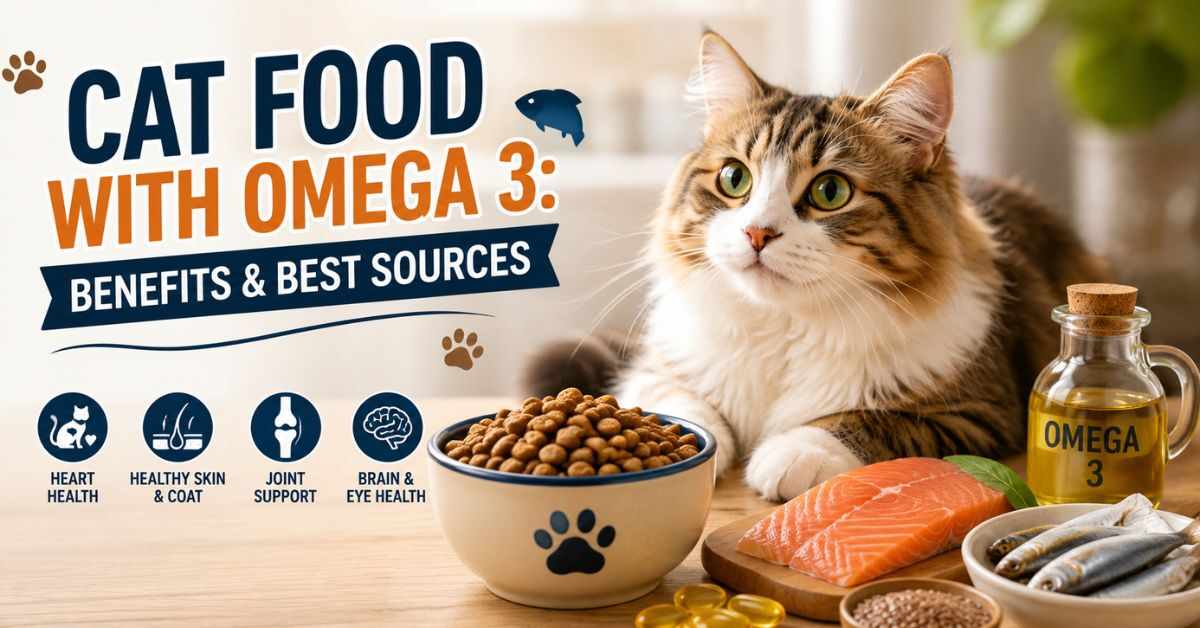
Choosing the right diet can make a big difference in your cat’s long-term health. While protein is an essential part of feline nutrition, cats also need certain fats to support important body functions. One nutrient that has received considerable attention is omega-3 fatty acids.
Many cat owners are now looking for cat food with omega 3 because these essential fats may support healthy skin, a shiny coat, normal inflammatory responses, and overall wellness. Omega-3 fatty acids are especially interesting because some forms, such as EPA and DHA, play important roles in the body.
However, not every cat food provides omega-3s in the same way. Some formulas contain fish oil, while others use ingredients such as salmon, sardines, or other marine sources. Plant-based sources may also provide certain omega-3 fatty acids, but cats may not convert them into the forms they need as efficiently as some other animals.
So, how do you choose the right food? Are your cats getting enough omega-3? And are supplements necessary if your cat already eats a balanced diet?
This guide explains what cat owners should know about cat food with omega 3, including potential benefits, common sources, how to read labels, and practical tips for choosing a suitable diet.
What Is Omega-3 Fatty Acid?
Omega-3 fatty acids are a group of polyunsaturated fats that help support various functions throughout the body. They are considered important fats because they play roles in cell membranes and normal biological processes.
The three omega-3 fatty acids most commonly discussed are:
- EPA (eicosapentaenoic acid)
- DHA (docosahexaenoic acid)
- ALA (alpha-linolenic acid)
For cats, EPA and DHA are particularly important when discussing dietary omega-3s. Marine sources, including certain fish and fish oils, can provide these fatty acids directly.
ALA is primarily found in plant-based ingredients such as flaxseed. However, cats have limited ability to convert ALA into EPA and DHA. Therefore, simply seeing “omega-3” on a cat food label does not necessarily tell you how much EPA or DHA the food contains.
This is one reason why ingredient quality and the specific source of omega-3 matter when selecting food for your cat.
Why Choose Cat Food With Omega 3?
A balanced feline diet should provide all the essential nutrients a cat needs. Among those nutrients are omega-3 fatty acids.
When provided in appropriate amounts, omega-3 fatty acids may support several areas of feline health.
1. Supports Healthy Skin
Healthy skin acts as an important protective barrier for your cat. Nutrition plays a role in maintaining normal skin function.
A diet containing appropriate fatty acids may help support the skin’s natural condition. This can be particularly useful for cats that experience dry or flaky skin, although skin problems can have many different causes.
If your cat has persistent itching, redness, hair loss, or skin lesions, don’t assume that a nutritional change will solve the problem. Allergies, parasites, infections, and other medical conditions can also affect the skin.
2. Promotes a Healthy, Shiny Coat
One of the most noticeable potential benefits of omega-3-rich nutrition is its connection to skin and coat health.
Cats naturally spend a significant amount of time grooming themselves. A healthy coat should generally look clean and well-maintained.
A nutritionally balanced diet that includes appropriate fats can help support normal coat condition. Some owners choose cat food with omega 3 because they want to provide nutritional support for a soft, healthy-looking coat.
However, coat quality depends on more than omega-3 intake. Protein, overall calorie balance, hydration, grooming, genetics, and general health all matter too.
3. Helps Support Normal Inflammatory Responses
Omega-3 fatty acids are often discussed in relation to the body’s inflammatory processes.
EPA and DHA are involved in producing compounds that participate in regulating inflammatory responses. This is one reason omega-3s have attracted interest in feline nutrition.
It is important to understand that omega-3s are not a cure for inflammatory diseases. If your cat has a diagnosed health condition, your veterinarian should guide dietary decisions and supplementation.
4. Supports Joint Health
As cats grow older, maintaining mobility becomes increasingly important. Senior cats may become less active or have difficulty jumping onto furniture.
Omega-3 fatty acids, particularly EPA and DHA, are commonly included in nutritional strategies designed to support joint health.
That does not mean every cat with mobility issues simply needs more omega-3. Arthritis and other joint conditions require proper evaluation. Still, a nutritionally balanced diet containing appropriate omega-3s may be one part of an overall wellness plan.
5. Supports Overall Wellness
Healthy fats contribute energy and play important structural roles in the body. Omega-3 fatty acids are also involved in normal cellular function.
When included as part of a complete and balanced diet, omega-3s can contribute to a broader nutritional approach to feline health.
The key is balance. More is not always better, and adding supplements without considering the complete diet can create nutritional problems.
Best Sources of Omega-3 for Cats
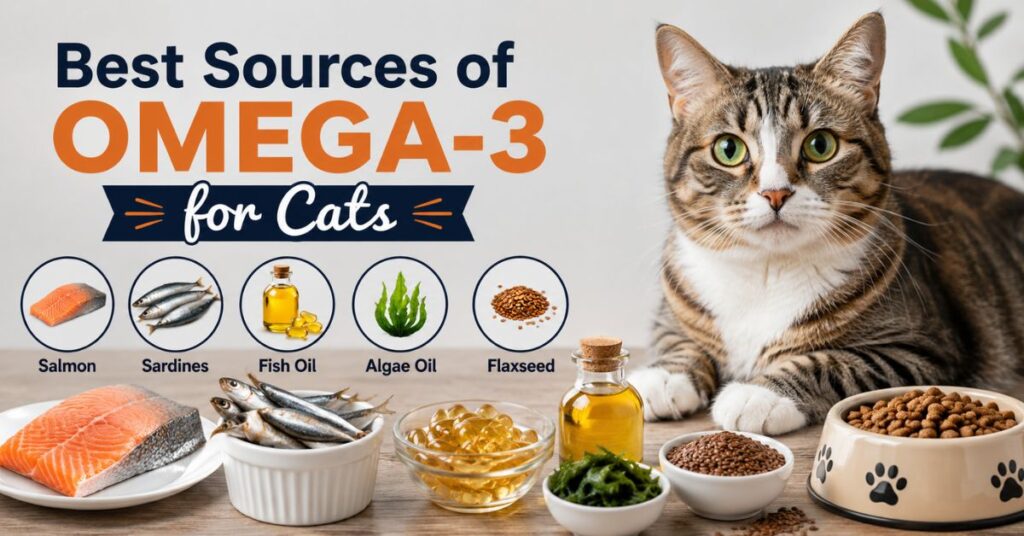
When shopping for cat food with omega 3, you may notice several different sources listed on the packaging.
Here are some common sources:
| Omega-3 Source | Commonly Provides | What Cat Owners Should Know |
| Fish oil | EPA and DHA | A concentrated marine source often used in cat food |
| Salmon | EPA and DHA | Provides protein plus marine omega-3s |
| Sardines | EPA and DHA | Naturally rich in marine fatty acids |
| Anchovies | EPA and DHA | Often used as a fish-based omega-3 source |
| Flaxseed | ALA | Plant-based source; cats have limited conversion of ALA to EPA and DHA |
| Algae oil | Primarily DHA in some products | May be used in certain specialized diets or supplements |
The source is important because not all omega-3 fatty acids function identically.
For example, a food may contain flaxseed and therefore contain ALA. That is not necessarily equivalent to providing the same amount of EPA and DHA from marine ingredients.
If you’re specifically looking for EPA and DHA, check whether the manufacturer provides information about these individual fatty acids.
How to Choose the Best Cat Food With Omega 3
Choosing a good cat food involves more than looking for the words “omega-3” on the package.
Here are several factors to consider.
Look for a Complete and Balanced Diet
First, make sure the food is designed to provide complete and balanced nutrition for your cat’s life stage.
Look for a nutritional adequacy statement indicating that the food meets established nutritional standards for cats. Kittens, adults, and senior cats may have different nutritional needs.
A food with omega-3s is not automatically a complete diet.
Check the Omega-3 Source
Look at the ingredient list for sources such as:
- Fish oil
- Salmon
- Sardines
- Anchovies
- Marine oils
If you are specifically interested in EPA and DHA, check whether the manufacturer provides detailed nutritional information.
Consider Your Cat’s Life Stage
Your cat’s age matters when choosing food.
A growing kitten has different nutritional requirements from an adult cat. Likewise, older cats may benefit from diets formulated with their changing nutritional needs in mind.
Always choose a food appropriate for your cat’s current life stage unless your veterinarian recommends otherwise.
Pay Attention to Protein Quality
Cats are obligate carnivores and naturally require nutrients found in animal tissues.
Omega-3s should complement a nutritionally appropriate diet rather than replace the importance of adequate protein and essential nutrients.
Look for a food that provides appropriate animal-based nutrition while meeting your cat’s complete dietary requirements.
Don’t Judge Food by One Ingredient
A common mistake is choosing cat food based on a single ingredient.
For example, seeing “salmon” on the front of a package does not automatically mean the food is nutritionally superior to every other option.
Instead, consider the entire formula, including:
- Nutritional adequacy
- Protein content
- Calorie density
- Life-stage suitability
- Omega-3 sources
- Your cat’s individual health needs
How Much Omega-3 Does Your Cat Need?
There is no single omega-3 amount that is perfect for every cat.
The appropriate intake depends on factors such as:
- Your cat’s age
- Body size
- Overall diet
- Health status
- Existing medical conditions
- The specific type of omega-3
- The concentration of EPA and DHA
This is why you should avoid guessing how much fish oil or omega-3 supplement to give your cat.
If your cat already eats a complete and balanced diet containing omega-3 fatty acids, adding a separate supplement may not be necessary.
For cats with specific health concerns, your veterinarian can help determine whether dietary omega-3 supplementation is appropriate and, if so, what product and amount may be suitable.
Can Cats Get Too Much Omega-3?
Yes, excessive supplementation can cause problems.
Although omega-3 fatty acids are important nutrients, giving a cat large amounts of fish oil or other supplements without veterinary guidance is not a good idea.
Potential concerns from excessive supplementation may include:
- Digestive upset
- Loose stools
- Vomiting
- Excessive calorie intake
- Nutritional imbalance
- Potential interactions with certain medications
The quality of the supplement also matters. Oils can become rancid if they are poorly stored or past their freshness date.
Therefore, if you decide to use an omega-3 supplement, discuss it with your veterinarian first. This is especially important if your cat takes medication or has a chronic health condition.
Is Fish Oil Better Than Flaxseed for Cats?
This question comes up often among cat owners.
Fish oil is naturally rich in EPA and DHA, while flaxseed primarily provides ALA.
Cats have limited ability to convert ALA into EPA and DHA. As a result, marine sources are often considered more direct sources of these particular omega-3 fatty acids for cats.
However, this does not mean flaxseed is automatically harmful or that every cat needs fish oil.
The best choice depends on the complete nutritional formula. If your goal is to provide EPA and DHA, look for foods or supplements that specifically identify these fatty acids.
Omega-3 Cat Food for Kittens
Kittens experience rapid growth and development, so their nutritional needs are different from those of adult cats.
DHA is particularly important in discussions about early development because it is associated with normal brain and eye development.
However, kitten nutrition should always focus on the complete diet rather than one nutrient alone.
When choosing food for a kitten, look for:
- A formula specifically designed for kittens or growth
- Complete and balanced nutrition
- Adequate animal-based protein
- Appropriate calorie density
- Essential nutrients required for growth
- Suitable sources of healthy fats
If you’re considering an omega-3 supplement for a kitten, speak with your veterinarian before adding it to the diet.
Omega-3 Cat Food for Senior Cats
Older cats can have changing nutritional needs. Some may experience reduced activity, changes in body condition, or mobility concerns.
A balanced senior diet may include nutrients that support overall wellness and healthy aging. Omega-3 fatty acids are sometimes included as part of nutritional strategies for mature cats.
However, senior cats should receive regular veterinary checkups because changes in appetite, weight, movement, or grooming can sometimes indicate an underlying health issue.
If your older cat suddenly becomes less active, don’t assume it’s simply because of age. A veterinarian can help identify the cause and recommend an appropriate diet.
Signs Your Cat May Benefit From a Diet Review
Omega-3s may be useful as part of a balanced diet, but they are not a universal solution.
Consider talking to your veterinarian if you notice:
- Persistent dry or flaky skin
- Excessive scratching
- Unexplained hair loss
- A dull or changing coat
- Reduced mobility
- Stiffness
- Changes in appetite
- Unexpected weight loss or gain
- Digestive problems
These symptoms can have many causes. A nutritional review can be helpful, but medical evaluation may be necessary as well.
Should You Give Your Cat an Omega-3 Supplement?
Not necessarily.
If your cat eats a complete and balanced food that already provides appropriate omega-3 fatty acids, an additional supplement may not be needed.
Before adding a supplement, ask:
- Does my cat’s current food already contain omega-3s?
- Does it provide EPA or DHA?
- Is my cat eating a complete and balanced diet?
- Does my cat have a medical condition?
- Is my cat taking medication?
- What does my veterinarian recommend?
These questions can help you avoid unnecessary supplementation.
Remember that supplements are not always harmless simply because they are marketed as “natural.” The dose, purity, freshness, and interaction with other nutrients or medications all matter.
Common Mistakes When Choosing Omega-3 Cat Food
Many cat owners make simple mistakes when comparing different foods.
Mistake 1: Focusing Only on the Front Label
Marketing claims can be helpful, but they don’t tell you everything about a food.
Always look beyond phrases such as “rich in omega-3” and examine the nutritional information and ingredients.
Mistake 2: Assuming All Omega-3s Are the Same
ALA, EPA, and DHA are different fatty acids.
If your goal is to provide EPA and DHA, identify foods or supplements that specifically contain these forms.
Mistake 3: Adding Too Many Supplements
Combining several supplements can unintentionally increase certain nutrients or calories.
It’s better to discuss your cat’s complete diet with a veterinarian before adding multiple products.
Mistake 4: Ignoring the Rest of the Diet
Omega-3 is only one part of feline nutrition.
A cat’s diet should also provide appropriate protein, essential amino acids, vitamins, minerals, and adequate calories.
Mistake 5: Using Human Fish Oil Without Guidance
Human supplements may contain ingredients or concentrations that aren’t appropriate for cats.
Always ask your veterinarian before giving your cat a human dietary supplement.
Practical Tips for Adding Omega-3 to Your Cat’s Diet
If you want to improve your cat’s omega-3 intake, consider these practical steps:
- Choose a complete and balanced cat food with an appropriate omega-3 source.
- Look for marine sources if you specifically want EPA and DHA.
- Check whether the manufacturer provides EPA and DHA amounts.
- Avoid making sudden dietary changes whenever possible.
- Transition to new food gradually.
- Store fish oil supplements according to label instructions.
- Never exceed recommended supplement amounts.
- Consult your veterinarian if your cat has a health condition.
- Monitor your cat’s stool and appetite after a dietary change.
Most importantly, remember that good nutrition is about the entire diet not one special ingredient.
Conclusion
Choosing the right cat food with omega 3 can be a smart way to support your cat’s overall nutrition. Omega-3 fatty acids, especially EPA and DHA, may play useful roles in maintaining healthy skin and coat, supporting normal inflammatory processes, and contributing to overall wellness.
However, omega-3 is only one part of a healthy feline diet. The best cat food should provide complete and balanced nutrition that matches your cat’s age, lifestyle, and individual needs.
When comparing foods, pay attention to the source of omega-3, especially if you’re looking for EPA and DHA. Marine ingredients such as fish oil and certain fish can provide these fatty acids directly, while plant sources such as flaxseed primarily provide ALA.
Most importantly, don’t assume that adding more omega-3 is always better. If your cat has a medical condition, takes medication, or needs a specialized diet, talk with your veterinarian before adding supplements.
With the right nutritional choices and regular veterinary care, you can help support your cat’s health at every stage of life. For more practical, easy-to-understand cat nutrition and wellness advice, visit KittyCareZone.com.
Yes, cat food with omega 3 can be a beneficial part of a complete and balanced feline diet. Omega-3 fatty acids, particularly EPA and DHA, may support healthy skin, coat condition, normal inflammatory responses, and overall wellness. The food should still meet your cat’s complete nutritional needs.
Marine sources such as fish oil, salmon, sardines, and anchovies can provide EPA and DHA. These forms are often of particular interest in feline nutrition. However, the best option depends on your cat’s complete diet and individual health needs.
Some cats may safely receive fish oil under veterinary guidance, but the correct amount depends on the product, your cat’s size, diet, and health status. If your cat already eats food containing omega-3s, additional supplementation may not be necessary.
Omega-3 fatty acids may support normal skin function and healthy coat condition when included as part of a balanced diet. However, ongoing itching, hair loss, or skin irritation can have other causes, so persistent problems should be evaluated by a veterinarian.
Omega-3 fatty acids may be included in nutritional plans for senior cats and can support overall wellness. They are also commonly discussed in relation to joint health. However, older cats with mobility problems or other symptoms should receive veterinary evaluation to determine the underlying cause.

Ali Ahmad /Passionate writer sharing informative, engaging, and easy-to-read articles across different topics. Focused on delivering valuable content that helps readers learn, explore, and stay inspired every day.