

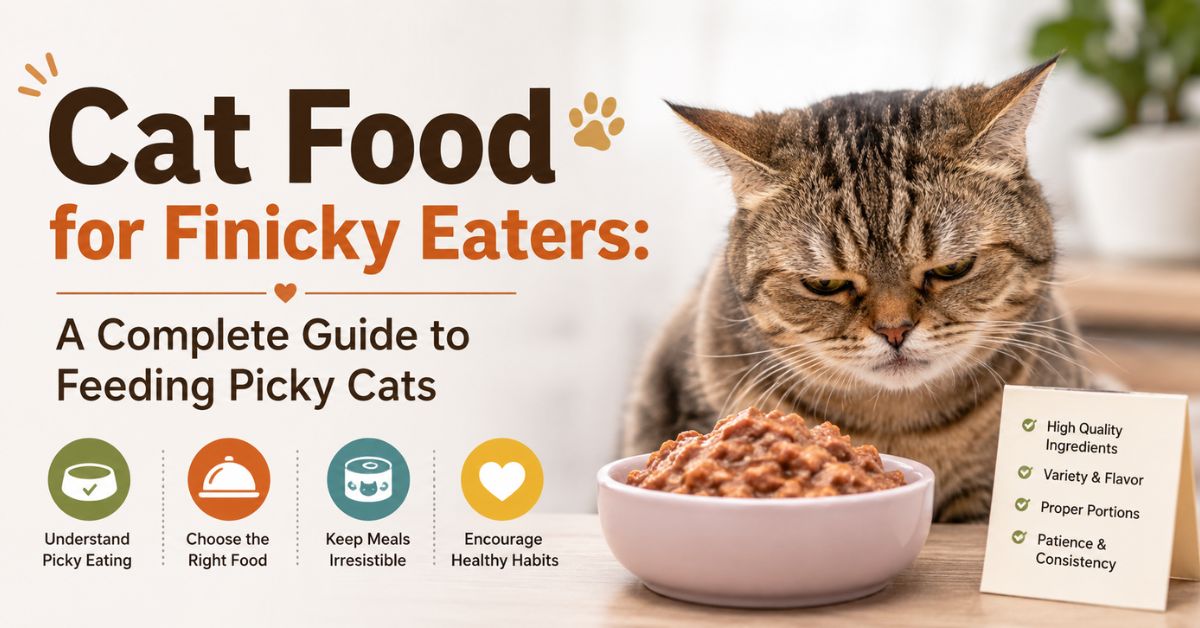
Finding the right cat food for finicky eaters can feel frustrating. One day your cat happily finishes every bite, and the next day they refuse the exact same food. Many cat owners experience this problem, but the good news is that picky eating is often manageable.
Cats can become selective for many reasons. Their preferences may change because of texture, smell, health issues, or even boredom. Understanding why your cat refuses food is the first step toward finding a healthy solution.
In this guide, you’ll learn why cats become picky, how to choose the best cat food for finicky eaters, ingredients to look for, foods to avoid, and practical feeding strategies that actually work.
Why Are Some Cats Finicky Eaters?
Many cats naturally prefer consistency. However, several factors can make them become selective about food.
Natural Hunting Instincts
Cats are obligate carnivores. Their sense of smell is far stronger than their sense of taste. If food doesn’t smell appealing, they may refuse to eat it.
Previous Feeding Habits
Cats that have eaten only one type of food for years often resist change. Introducing new foods suddenly can cause rejection.
Medical Problems
Loss of appetite may signal:
- Dental disease
- Mouth pain
- Kidney disease
- Digestive problems
- Food allergies
- Stress-related illness
If your cat suddenly stops eating for more than 24 hours, consult your veterinarian immediately.
Stress and Environmental Changes
Cats dislike sudden changes. Moving homes, new pets, loud noises, or changes in feeding schedules may reduce appetite.
Signs Your Cat Is Simply Picky
Not every food refusal is a medical emergency.
Common signs include:
- Sniffing food then walking away
- Eating treats but refusing meals
- Preferring wet food over dry food
- Wanting different flavors every few days
- Begging for human food
It is always advisable to take seriously refusals to eat.
How to Choose the Best Cat Food for Finicky Eaters
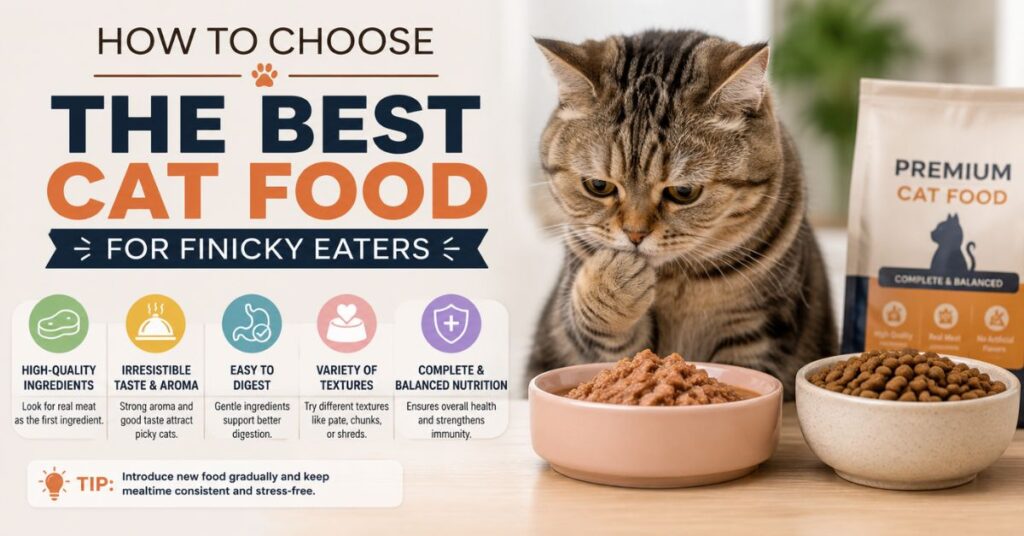
Selecting the right food requires more than choosing an attractive package.
Look for High Animal Protein
A cat’s primary nutrient is animal protein.
Good protein sources include:
- Chicken
- Turkey
- Salmon
- Tuna
- Duck
- Beef
High-quality protein also improves flavor and aroma.
Choose Strong-Smelling Foods
Since cats rely heavily on smell, aromatic foods often encourage eating.
Popular options include:
- Tuna recipes
- Salmon recipes
- Sardine-based foods
- Chicken liver formulas
Warm food slightly before serving to increase aroma.
Consider Wet Food
Wet food usually has:
- Stronger smell
- Softer texture
- Higher moisture
- Better palatability
Many picky cats prefer canned food over dry kibble.
Select Limited Ingredient Diets
Some cats dislike food because of sensitivities.
Limited ingredient diets help reduce digestive discomfort while providing complete nutrition.
Wet Food vs Dry Food for Finicky Cats
| Feature | Wet Food | Dry Food |
| Aroma | Excellent | Moderate |
| Moisture | High | Low |
| Texture | Soft | Crunchy |
| Shelf Life | Short after opening | Long |
| Hydration | Excellent | Limited |
| Usually Preferred by Picky Cats | Yes | Sometimes |
Many owners achieve the best results by combining both types.
Ingredients to Look For
Quality ingredients often improve acceptance.
Choose foods that contain:
- Real meat as the first ingredient
- Animal-based protein
- Healthy fats
- Taurine
- Omega-3 fatty acids
- Vitamins and minerals
- Natural preservatives
These ingredients support healthy skin, coat, muscles, and immune function.
Ingredients to Avoid
Avoid foods containing excessive amounts of:
- Artificial colors
- Artificial flavors
- Meat by-products with unclear sources
- Excessive fillers
- Too much corn
- Too much wheat
- Added sugars
While not every filler is harmful, higher-quality foods generally rely more on meat ingredients.
Best Types of Cat Food for Finicky Eaters
Grain-Free Recipes
Some picky cats enjoy grain-free diets with higher meat content.
However, grain-free isn’t automatically healthier for every cat.
High-Protein Foods
Protein-rich foods better match a cat’s natural nutritional needs.
Benefits include:
- Improved muscle maintenance
- Better satiety
- Enhanced flavor
Freeze-Dried Raw Food
Freeze-dried meals retain strong meat aromas that many picky cats love.
These foods can also be used as meal toppers.
Fresh Cat Food
Fresh refrigerated meals often contain fewer preservatives and a stronger natural aroma.
Many selective cats find them highly appealing.
Feeding Tips That Actually Work
Changing food alone isn’t always enough.
Maintain a Feeding Schedule
Offer meals at consistent times each day.
Avoid leaving food out all day because grazing can reduce hunger.
Warm the Food
Heating wet food for a few seconds releases aroma.
Serve warm not hot.
Keep Bowls Clean
Cats have sensitive noses.
Wash food bowls daily to remove lingering odors.
Reduce Stress
Feed your cat in a quiet location.
Avoid placing food near:
- Litter boxes
- Washing machines
- Loud appliances
Avoid Too Many Treats
Treats can spoil appetite.
Limit treats to less than 10% of daily calories.
How to Transition to New Food
Changing foods too quickly often causes refusal.
Follow this gradual schedule:
| Days | Old Food | New Food |
| 1–2 | 75% | 25% |
| 3–4 | 50% | 50% |
| 5–6 | 25% | 75% |
| 7 | 0% | 100% |
This approach also helps prevent digestive upset.
Foods That Naturally Increase Appetite
Some healthy meal toppers include:
- Plain cooked chicken
- Plain turkey
- Unsalted bone broth
- Freeze-dried chicken
- Freeze-dried salmon
- Tuna water (without oil or salt)
Always introduce new foods gradually.
Common Feeding Mistakes
Many owners accidentally encourage picky eating.
Avoid these habits:
- Changing food every day
- Feeding too many treats
- Offering human food frequently
- Overfilling the bowl
- Ignoring dental problems
- Free-feeding all day
Consistency is often the biggest key to success.
When Should You Visit the Veterinarian?
A picky eater isn’t always unhealthy.
However, schedule a veterinary visit if your cat:
- Stops eating for more than 24 hours
- Rapidly loses weight
- Vomits repeatedly
- Has diarrhea
- Appears lethargic
- Drools excessively
- Has difficulty chewing
- Shows signs of pain
Prompt treatment helps prevent serious complications.
Nutritional Needs by Life Stage
Kittens
Growing kittens need:
- High protein
- Healthy fats
- DHA
- Calcium
Choose kitten-specific formulas.
Adult Cats
Adult cats benefit from balanced nutrition with quality protein and controlled calories.
Senior Cats
Older cats often prefer softer foods because dental problems become more common.
Wet food may also improve hydration.
Simple Daily Feeding Routine
A healthy routine can reduce picky behavior.
Morning:
- Fresh water
- Measured breakfast
Afternoon:
- Quiet resting period
- Limited treats if needed
Evening:
- Fresh dinner
- Remove leftovers after about 30 minutes
Daily:
- Clean bowls
- Fresh water
- Consistent schedule
Conclusion
Finding the ideal cat food for finicky eaters requires patience, observation, and a focus on high-quality nutrition. By choosing protein-rich foods, maintaining a consistent feeding routine, and understanding your cat’s individual preferences, you can improve mealtime and support long-term health.
Consult your veterinarian if picky eating persists or is accompanied by weight loss or other symptoms. For more practical cat care guides, nutrition advice, and health tips, visit KittyCareZone.com your trusted resource for raising happy and healthy cats.
The best cat food for finicky eaters is typically high in animal protein, made with real meat, and has a strong aroma. Wet food is often more appealing than dry kibble for selective cats.
Sudden pickiness can result from stress, boredom with the current diet, dental issues, illness, or changes in the environment. Consult a veterinarian if your cat refuses food for more than 24 hours.
Many picky cats prefer wet food because it has a stronger smell, softer texture, and higher moisture content. Combining wet and dry food is beneficial for some cats.
Try warming the food slightly, feeding on a consistent schedule, limiting treats, keeping bowls clean, and introducing new foods gradually. Meal toppers like plain cooked chicken or freeze-dried meat may also help.
Frequent changes can make picky behavior worse. Give your cat time to adjust to the new food over a period of 7–10 days, unless your veterinarian recommends an immediate change in diet.

Ali Ahmad /Passionate writer sharing informative, engaging, and easy-to-read articles across different topics. Focused on delivering valuable content that helps readers learn, explore, and stay inspired every day.
1 thought on “Cat Food for Finicky Eaters: A Complete Guide to Feeding Picky Cats”