

Introduction
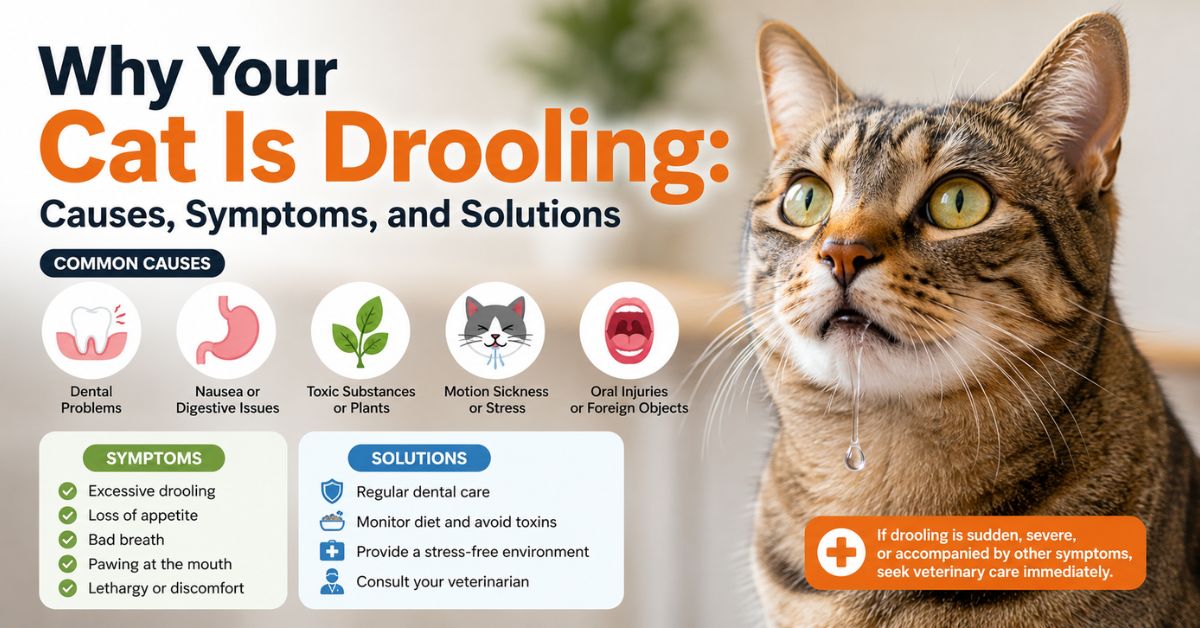
Have you noticed your cat is drooling and suddenly wondered if something is wrong? A little saliva around your cat’s mouth may seem harmless at first. However, excessive drooling can sometimes signal a health issue that needs attention.
Cats are generally neat and clean animals. Unlike dogs, they do not commonly drool a lot. So when a cat starts producing more saliva than usual, many pet owners become concerned.
The good news is that drooling does not always mean your cat is sick. Some cats drool when they feel happy and relaxed. Others may drool because of stress, dental problems, or medical conditions.
In this guide, you will learn why cats drool, how to identify normal and abnormal drooling, warning signs to watch for, and what steps you should take to help your furry friend.
Is It Normal If Your Cat Is Drooling?
Some amount of drooling can be perfectly normal in certain situations.
Cats may drool because of:
- Extreme relaxation
- Enjoyable petting sessions
- Anticipation of food
- Temporary stress
- Sleeping deeply
For example, some cats drool while purring and kneading their paws because they feel safe and comfortable.
However, excessive or sudden drooling usually deserves closer attention.
Watch for changes in:
- Frequency of drooling
- Amount of saliva
- Eating behavior
- Energy levels
- Breathing patterns
Common Reasons Why Your Cat Is Drooling
Dental Disease
Dental problems are among the most common reasons cats drool excessively.
Cats can develop:
- Gum disease
- Tooth decay
- Oral infections
- Broken teeth
- Mouth ulcers
Pain inside the mouth often makes swallowing uncomfortable. As a result, saliva begins building up and eventually drips out.
Signs of dental issues include:
- Bad breath
- Red gums
- Difficulty chewing
- Pawing at the mouth
- Dropping food while eating
Regular dental care can significantly reduce these issues.
Nausea and Digestive Problems
Cats often drool when they feel nauseous.
Nausea may happen because of:
- Hairballs
- Upset stomach
- Motion sickness
- Kidney disease
- Digestive disorders
You may also notice:
- Lip smacking
- Swallowing repeatedly
- Vomiting
- Loss of appetite
If nausea continues for more than a day, veterinary attention becomes important.
Poisoning or Toxic Exposure
Some household products and plants are dangerous for cats.
Common toxins include:
- Cleaning chemicals
- Human medications
- Toxic plants
- Certain foods
- Insecticides
Drooling caused by poisoning often appears suddenly.
Additional symptoms may include:
- Vomiting
- Weakness
- Tremors
- Difficulty breathing
- Seizures
This situation requires immediate veterinary care.
Stress and Anxiety
Cats can become stressed more easily than many owners realize.
Triggers may include:
- Car rides
- Moving homes
- Loud noises
- New pets
- Veterinary visits
Stress-related drooling usually stops once the stressful event ends.
Foreign Objects in the Mouth
Sometimes a cat gets an object stuck inside the mouth.
Examples include:
- String
- Small bones
- Pieces of toys
- Grass blades
A foreign object can irritate tissues and increase saliva production.
Symptoms may include:
- Gagging
- Pawing at the face
- Difficulty eating
- Mouth pain
Never pull a string from a cat’s mouth because it could damage internal organs.
Respiratory Infections
Upper respiratory infections can sometimes cause drooling.
Common symptoms include:
- Sneezing
- Nasal discharge
- Watery eyes
- Reduced appetite
- Fever
Congestion can make eating and swallowing difficult, leading to extra saliva.
Heatstroke
Although less common, overheating may cause severe drooling.
Signs include:
- Rapid breathing
- Weakness
- Bright red gums
- Lethargy
- Panting
Heatstroke is a medical emergency.
Symptoms That Can Appear Alongside Cat Drooling
The following table helps identify whether your cat’s drooling may be normal or concerning.
| Symptom | Possible Cause | Severity |
| Mild drooling while purring | Relaxation | Low |
| Bad breath | Dental disease | Moderate |
| Vomiting | Digestive issues | Moderate |
| Difficulty eating | Mouth pain | Moderate |
| Sudden excessive drooling | Poisoning | High |
| Breathing problems | Respiratory illness | High |
| Pawing at mouth | Foreign object | Moderate |
| Weakness and drooling | Serious illness | High |
How to Check Your Cat at Home
If your cat is drooling, perform a quick observation before panicking.
Look Inside the Mouth
Check for:
- Red gums
- Swelling
- Broken teeth
- Bleeding
- Objects stuck in the mouth
Be gentle during examination because a painful cat may bite unexpectedly.
Observe Eating Habits
Notice whether your cat:
- Eats normally
- Avoids food
- Chews on one side
- Drops food
When eating behavior changes, it is often a sign of oral discomfort.
Monitor Behavior
Pay attention to:
- Hiding
- Sleeping more
- Low energy
- Increased aggression
- Reduced grooming
Behavior changes often provide important clues.
When Should You Call a Veterinarian?
Some drooling situations require immediate care.
Contact a veterinarian if your cat has:
- Sudden excessive drooling
- Blood in saliva
- Difficulty breathing
- Swelling around the mouth
- Loss of appetite
- Vomiting that continues
- Weakness
- Weight loss
Early treatment often prevents more serious complications.
Treatment Options for Cat Drooling
Treatment depends on the cause of the drooling.
Common treatments include:
Dental Cleaning
Professional cleaning removes plaque and treats gum disease.
Medication
Your veterinarian may prescribe:
- Antibiotics
- Pain medication
- Anti-nausea drugs
- Anti-inflammatory medicine
Removal of Foreign Objects
Objects stuck inside the mouth may require careful removal.
Fluid Therapy
Cats with dehydration or poisoning sometimes need fluids.
Dietary Adjustments
Soft food may help cats with mouth pain.
Your veterinarian may recommend:
- Wet food
- Prescription diets
- Smaller meals
Tips to Prevent Excessive Drooling in Cats
Preventive care can reduce many drooling problems.
Follow these practical tips:
- Schedule regular veterinary checkups
- Brush your cat’s teeth regularly
- Keep toxic plants away
- Store chemicals safely
- Feed balanced nutrition
- Watch for behavior changes
- Keep small objects out of reach
Prevention often saves money and protects your cat’s health.
Can Certain Cat Breeds Drool More?
Yes. Some cats naturally drool more than others.
Breeds occasionally associated with increased drooling include:
- Persian cats
- Maine Coon cats
- Exotic Shorthair cats
Flat-faced breeds may sometimes experience mouth or breathing issues that contribute to saliva buildup.
However, breed alone should not automatically explain excessive drooling.
Conclusion
Seeing that your cat is drooling can be concerning, especially if it happens suddenly. While some cats drool because they feel relaxed and happy, excessive saliva may point to dental disease, nausea, toxins, infections, or other health issues.
Pay attention to additional symptoms and changes in behavior. Early detection can make treatment easier and protect your cat’s well-being.
At KittyCareZone.com, helping cat owners understand their pets better is always the goal. Knowing the reasons behind unusual symptoms allows you to make smarter decisions and keep your furry companion healthy and happy.
Sudden drooling can happen because of dental problems, toxins, nausea, mouth injuries, or stress. If the drooling is severe or comes with other symptoms, contact your veterinarian.
Not always. Mild drooling during relaxation can be normal. However, excessive drooling with weakness, vomiting, or breathing issues may require urgent care.
Yes. Anxiety and stressful situations such as car rides or veterinary visits can temporarily increase saliva production.
Some cats drool when they feel relaxed and happy. This type of drooling is usually harmless.
Yes. Bad breath combined with drooling often suggests dental disease or an oral health problem.

Ali Ahmad /Passionate writer sharing informative, engaging, and easy-to-read articles across different topics. Focused on delivering valuable content that helps readers learn, explore, and stay inspired every day.
Great content! Keep up the good work!