

Introduction
Many cat owners have heard about parvo in dogs and wonder: do cats get parvo too? The short answer is yes. Cats can suffer from a highly contagious viral disease known as feline parvovirus, more commonly called feline panleukopenia.
This serious illness affects cats of all ages, but kittens are especially vulnerable. Without proper treatment, the disease can become life-threatening. Fortunately, modern vaccinations have made feline parvovirus far less common than it once was.
In this guide, you’ll learn everything you need to know about do cats get parvo, including symptoms, causes, treatment options, prevention methods, and what to do if you suspect your cat is infected.
What Is Parvo in Cats?
When people ask, “do cats get parvo,” they are usually referring to feline panleukopenia virus (FPV). This virus belongs to the same family as canine parvovirus and attacks rapidly dividing cells in a cat’s body.
The virus primarily affects:
- Bone marrow
- Intestinal lining
- Lymph nodes
- Developing fetuses in pregnant cats
Because it damages the immune system and digestive tract, infected cats can become severely ill within a short period.
Feline panleukopenia is sometimes called:
- Feline distemper
- Cat parvo
- FPV infection
- Feline parvovirus disease
Do Cats Get Parvo From Dogs?
One of the most common questions pet owners ask is whether cats can catch parvo from dogs.
The answer is a bit complicated.
While feline parvovirus and canine parvovirus are closely related, cats generally contract feline-specific strains. However, certain canine parvovirus strains have evolved and may infect cats under some circumstances.
In most cases:
| Virus Type | Affects Dogs | Affects Cats |
| Canine Parvovirus | Yes | Rarely |
| Feline Parvovirus (FPV) | No | Yes |
| Feline Panleukopenia | No | Yes |
Regardless of the source, maintaining proper vaccination schedules is the best protection for both cats and dogs.
What Causes Feline Parvovirus?
The virus spreads very easily and can survive in the environment for months or even years under favorable conditions.
Cats can become infected through:
Direct Contact
Cats infected with the virus can spread it through:
- Saliva
- Urine
- Feces
- Nasal secretions
Contaminated Objects
The virus can survive on:
- Food bowls
- Bedding
- Litter boxes
- Toys
- Clothing
- Shoes
Mother-to-Kitten Transmission
Pregnant cats infected with feline parvovirus can pass the virus to unborn kittens.
This can lead to:
- Miscarriage
- Stillbirth
- Neurological defects
Which Cats Are Most at Risk?
Although any cat can become infected, some groups face a much higher risk.
Kittens
Kittens between 2 and 6 months old are particularly vulnerable because their immune systems are still developing.
Unvaccinated Cats
Cats that have not received their core vaccinations are at significantly higher risk.
Shelter and Rescue Cats
Crowded environments increase the chance of virus transmission.
Outdoor Cats
Cats that roam outdoors may encounter contaminated environments or infected animals.
Symptoms of Parvo in Cats
The sooner you recognize symptoms, the better.
Common signs include:
- Sudden lethargy
- Loss of appetite
- High fever
- Vomiting
- Severe diarrhea
- Dehydration
- Weight loss
- Depression
- Abdominal pain
- Hiding behavior
Young kittens may deteriorate rapidly within 24 to 48 hours.
Advanced Symptoms
As the disease progresses, cats may develop:
- Weakness
- Low body temperature
- Shock
- Difficulty standing
- Collapse
Immediate veterinary care is essential when these symptoms appear.
How Does Feline Parvovirus Affect the Body?
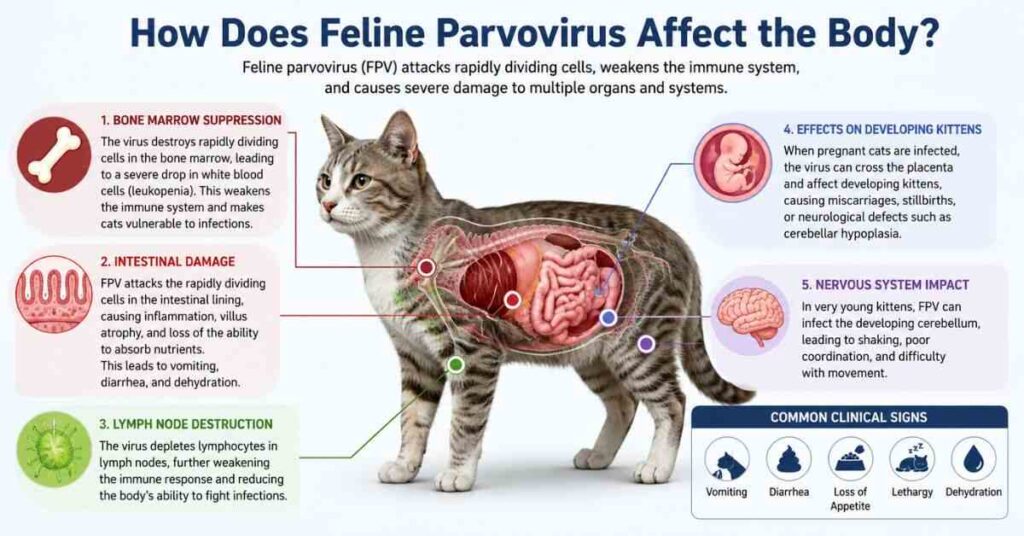
Understanding how the virus works helps explain why it is so dangerous.
Damage to the Digestive System
The virus attacks cells lining the intestines.
This causes:
- Severe vomiting
- Bloody diarrhea
- Nutrient malabsorption
Damage to White Blood Cells
The virus dramatically lowers white blood cell counts.
As a result:
- The immune system weakens
- Secondary infections become more likely
- Recovery becomes more difficult
Effects on Kittens
In very young kittens, the virus may damage the developing nervous system.
This can cause:
- Tremors
- Poor coordination
- Difficulty walking
How Veterinarians Diagnose Parvo in Cats
If your veterinarian suspects feline panleukopenia, several diagnostic tests may be performed.
Physical Examination
The vet will evaluate:
- Hydration status
- Temperature
- Abdominal discomfort
- General condition
Blood Tests
Bloodwork often reveals:
- Extremely low white blood cell counts
- Signs of dehydration
- Electrolyte imbalances
Fecal Testing
Special tests can identify the presence of parvovirus in fecal samples.
Medical History
Vaccination history and exposure risk help veterinarians make an accurate diagnosis.
Treatment Options for Cats With Parvo
Many owners searching “do cats get parvo” are relieved to learn that treatment is available, although there is no direct cure for the virus itself.
Treatment focuses on supportive care while the cat’s immune system fights the infection.
Fluid Therapy
Dehydration is one of the biggest threats.
Veterinarians often provide:
- Intravenous fluids
- Electrolyte replacement
- Nutritional support
Medications
Common medications include:
- Anti-nausea drugs
- Antibiotics
- Pain relief medications
- Gastrointestinal protectants
Nutritional Support
Cats need adequate nutrition to recover.
Veterinarians may recommend:
- Special recovery diets
- Assisted feeding
- Feeding tubes in severe cases
Hospitalization
Severely affected cats often require hospitalization for intensive monitoring and treatment.
Recovery and Survival Rates
The outlook depends on:
- Age
- Overall health
- Severity of infection
- Speed of treatment
Cats receiving prompt veterinary care generally have a much better chance of survival.
Recovery Timeline
| Stage | Typical Time |
| Initial Symptoms | 1–3 Days |
| Intensive Treatment | 3–7 Days |
| Stabilization | 1–2 Weeks |
| Full Recovery | Several Weeks |
Kittens face the highest mortality risk, making early treatment critical.
How to Prevent Parvo in Cats
The best answer to the question “do cats get parvo” is prevention through proper healthcare.
Vaccination
Vaccination is the most effective defense against feline parvovirus.
Most kittens receive vaccinations at:
- 6 to 8 weeks
- 10 to 12 weeks
- 14 to 16 weeks
Adult cats require booster vaccinations according to veterinary recommendations.
Keep Living Areas Clean
Regularly disinfect:
- Litter boxes
- Food bowls
- Toys
- Bedding
Isolate Sick Cats
If one cat becomes infected:
- Separate it from other pets
- Use dedicated feeding supplies
- Practice strict hygiene
Limit Exposure
Avoid contact with unknown or unvaccinated cats whenever possible.
Can Indoor Cats Get Parvo?
Many owners assume indoor cats are completely protected.
Unfortunately, indoor cats can still become infected.
The virus may enter the home through:
- Shoes
- Clothing
- Pet carriers
- Newly adopted cats
Although the risk is lower, indoor cats should still receive routine vaccinations.
Is Parvo Contagious to Humans?
No.
Feline parvovirus does not infect humans.
However, people can accidentally carry the virus on their hands, shoes, or clothing and spread it to other cats.
Good hygiene practices help reduce transmission.
Can Cats Survive Parvo?
Yes, many cats survive parvo when they receive prompt veterinary treatment.
Factors that improve survival include:
- Early diagnosis
- Immediate medical care
- Proper hydration
- Strong immune response
- Vaccination history
The earlier treatment begins, the better the outcome.
Warning Signs That Require Immediate Veterinary Care
Contact a veterinarian immediately if your cat shows:
- Repeated vomiting
- Severe diarrhea
- Refusal to eat
- Extreme lethargy
- Sudden weight loss
- Fever
- Signs of dehydration
Waiting too long can significantly reduce the chances of recovery.
Conclusion
So, do cats get parvo? Absolutely. Feline parvovirus, also known as feline panleukopenia, is a serious and highly contagious disease that can affect cats of all ages. Fortunately, vaccinations, proper hygiene, and early veterinary intervention provide excellent protection and significantly improve survival rates.
As a responsible cat owner, understanding the symptoms and prevention methods can help keep your feline companion safe. For more expert cat health advice, care guides, and trusted pet information, continue exploring KittyCareZone.com, your reliable resource for raising happy and healthy cats.
Cats get a similar disease caused by feline parvovirus, known as feline panleukopenia. Although related to canine parvovirus, it is generally a different virus affecting cats.
Vaccinated cats have strong protection, but no vaccine offers 100% immunity. However, vaccinated cats are far less likely to become seriously ill.
Symptoms typically last one to two weeks, but full recovery may take several additional weeks depending on the severity of the infection.
Yes. The virus can enter the home through contaminated objects, clothing, shoes, or infected animals.
Without treatment, feline parvovirus can be fatal, especially in kittens. Early veterinary care greatly improves survival rates.

Ali Ahmad /Passionate writer sharing informative, engaging, and easy-to-read articles across different topics. Focused on delivering valuable content that helps readers learn, explore, and stay inspired every day.
1 thought on “Do Cats Get Parvo? Complete Guide for Cat Owners”