

Introduction
If your feline friend has experienced urinary tract issues, choosing the right urinary food for cats can make a significant difference in their health and quality of life. Urinary problems are among the most common health concerns in cats, affecting millions of pets every year.
Conditions such as urinary tract infections, bladder stones, crystal formation, and feline lower urinary tract disease (FLUTD) can cause discomfort, pain, and even life-threatening complications.
Fortunately, specialized urinary diets are designed to support a healthy urinary system and reduce the risk of recurring problems. Understanding how these diets work can help cat owners make informed decisions about their pet’s nutrition.
In this comprehensive guide, you’ll learn everything you need to know about urinary food for cats, including its benefits, ingredients, types, and how to choose the best option for your furry companion.
What Is Urinary Food for Cats?
Urinary food for cats is specially formulated cat food designed to promote urinary tract health. These diets help maintain the proper balance of minerals, encourage hydration, and support healthy urine pH levels.
Unlike regular cat food, urinary formulas focus on reducing factors that contribute to urinary crystal and stone formation. Many veterinarians recommend these diets for cats with a history of urinary tract issues or those at increased risk.
Key Goals of Urinary Cat Food
- Maintain optimal urine pH
- Reduce crystal formation
- Support bladder health
- Increase water intake
- Control mineral levels
- Promote overall urinary tract function
Why Urinary Health Is Important for Cats
Cats naturally have a low thirst drive because their wild ancestors obtained most of their moisture from prey. As a result, many domestic cats don’t drink enough water.
When cats become dehydrated, their urine becomes more concentrated. Concentrated urine can increase the risk of:
- Bladder stones
- Urinary crystals
- Urinary tract infections
- Blockages
- FLUTD
Male cats are particularly vulnerable because their urethras are narrower, making blockages more dangerous.
Proper nutrition plays a crucial role in reducing these risks and maintaining urinary health.
Common Urinary Problems in Cats
Before selecting a urinary diet, it’s helpful to understand the conditions it is designed to address.
Feline Lower Urinary Tract Disease (FLUTD)
FLUTD is a broad term covering several urinary disorders that affect the bladder and urethra.
Symptoms may include:
- Frequent urination
- Straining in the litter box
- Blood in urine
- Painful urination
- Urinating outside the litter box
- Excessive licking of the genital area
Urinary Crystals
Urinary crystals develop when minerals in urine become concentrated and form microscopic particles.
The most common types include:
- Struvite crystals
- Calcium oxalate crystals
Certain urinary diets help dissolve struvite crystals and reduce future formation.
Bladder Stones
Bladder stones form when crystals combine and grow larger. These stones may cause pain, irritation, and urinary obstruction.
Urinary Blockages
A blockage is a medical emergency. When a cat cannot urinate, toxins build up quickly in the body and can become fatal if untreated.
How Urinary Food for Cats Works
The primary purpose of urinary food for cats is to create an environment in the urinary tract that discourages crystal and stone formation.
Mineral Control
Many urinary diets contain carefully controlled levels of:
- Magnesium
- Phosphorus
- Calcium
Excessive amounts of these minerals can contribute to crystal development.
Urine pH Management
Urine pH influences crystal formation.
Most urinary diets help maintain a slightly acidic urine pH, which can reduce the likelihood of struvite crystals developing.
Increased Moisture Intake
Wet urinary foods contain significantly more water than dry kibble.
Higher moisture intake helps:
- Dilute urine
- Flush the bladder
- Reduce mineral concentration
- Encourage healthy urination
Balanced Nutrition
Urinary cat food still provides complete and balanced nutrition while supporting bladder health.
Types of Urinary Food for Cats
Not all urinary diets are the same. Understanding the different options can help you choose the most suitable one.
Prescription Urinary Diets
Veterinary prescription diets are specifically formulated for cats with diagnosed urinary conditions.
Benefits include:
- Targeted mineral control
- Clinically tested formulas
- Therapeutic urinary support
These diets should only be used under veterinary guidance.
Non-Prescription Urinary Diets
Many pet food manufacturers offer urinary support formulas available without a prescription.
These diets are often suitable for:
- Preventive care
- Cats with mild urinary concerns
- Long-term urinary maintenance
Wet Urinary Food
Wet food is often recommended because of its high moisture content.
Advantages include:
- Increased hydration
- Diluted urine
- Improved urinary function
Dry Urinary Food
Dry urinary formulas are convenient and often more affordable.
However, cats eating dry food should always have access to fresh water.
Key Ingredients to Look for in Urinary Cat Food
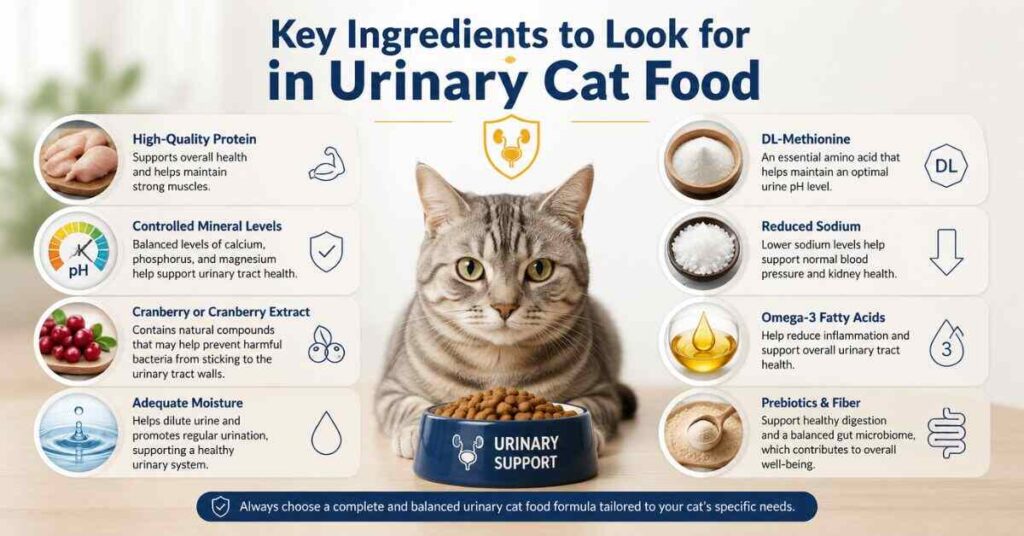
When shopping for urinary food for cats, pay attention to ingredient quality and nutritional composition.
High-Quality Animal Protein
Cats are obligate carnivores and require animal-based protein for optimal health.
Look for:
- Chicken
- Turkey
- Salmon
- Duck
- Whitefish
Controlled Magnesium Levels
Magnesium contributes to struvite crystal formation when present in excessive amounts.
Urinary diets typically contain carefully regulated magnesium levels.
Omega-3 Fatty Acids
Omega-3 fatty acids may help reduce inflammation and support overall urinary tract health.
Common sources include:
- Fish oil
- Salmon oil
Added Moisture
Wet foods naturally provide more hydration and are often preferred for urinary health support.
Urinary Food for Cats Comparison Table
| Feature | Regular Cat Food | Urinary Cat Food |
| Urine pH Support | Limited | Specialized |
| Mineral Control | Standard | Carefully Controlled |
| Crystal Prevention | Minimal | Designed for Support |
| Hydration Benefits | Depends on Type | Often Enhanced |
| Veterinary Recommendation | General Nutrition | Urinary Health Support |
| Bladder Health Focus | Basic | High |
Signs Your Cat May Need a Urinary Diet
Not every cat requires a specialized urinary diet. However, certain signs may indicate a need for additional urinary support.
Watch for These Symptoms
- Frequent litter box visits
- Straining during urination
- Small amounts of urine
- Blood in urine
- Excessive licking
- Urinating outside the litter box
- Crying while urinating
If you notice any of these symptoms, consult your veterinarian promptly.
Wet vs. Dry Urinary Food for Cats
One of the most common questions cat owners ask is whether wet or dry urinary food is better.
Benefits of Wet Urinary Food
- Higher moisture content
- Better hydration
- Diluted urine
- Reduced crystal risk
Benefits of Dry Urinary Food
- Convenient storage
- Longer shelf life
- Often lower cost
- Easy portion control
Best Approach
Many veterinarians recommend feeding a combination of wet and dry urinary diets to balance hydration and convenience.
Tips for Transitioning to Urinary Food
Switching foods too quickly can upset your cat’s digestive system.
Gradual Transition Schedule
| Day | Old Food | New Food |
| 1-2 | 75% | 25% |
| 3-4 | 50% | 50% |
| 5-6 | 25% | 75% |
| 7+ | 0% | 100% |
Helpful Transition Tips
- Mix foods thoroughly
- Monitor appetite
- Ensure fresh water is available
- Avoid sudden changes
- Follow veterinary advice
Additional Ways to Support Urinary Health
While urinary food for cats is important, nutrition is only one part of maintaining a healthy urinary tract.
Encourage Hydration
Try:
- Water fountains
- Multiple water bowls
- Wet food meals
- Fresh water daily
Maintain a Healthy Weight
Obesity can increase urinary health risks.
Regular exercise and portion control help maintain a healthy body condition.
Reduce Stress
Stress can contribute to urinary issues in cats.
Create a calm environment by:
- Providing hiding spots
- Maintaining routines
- Offering enrichment activities
- Keeping litter boxes clean
Schedule Regular Veterinary Visits
Routine checkups can help identify urinary problems before they become serious.
Can Healthy Cats Eat Urinary Food?
In many cases, urinary-support diets are safe for healthy adult cats. However, prescription urinary diets are specifically formulated for certain medical conditions and should not be used without veterinary guidance.
Make any major dietary changes after consulting your veterinarian.
How to Choose the Best Urinary Food for Cats
Choosing the right food depends on several factors.
Consider:
- Your cat’s age
- Medical history
- Existing urinary conditions
- Wet versus dry preference
- Veterinary recommendations
- Ingredient quality
The ideal diet should support urinary health while providing complete and balanced nutrition.
Conclusion
Maintaining good urinary health is essential for every cat, especially those prone to bladder stones, crystals, or urinary tract issues. A high-quality urinary food for cats can help regulate urine pH, control mineral levels, increase hydration, and reduce the risk of recurring urinary problems.
Remember that diet works best when combined with proper hydration, stress management, regular exercise, and routine veterinary care. By choosing the right urinary-support nutrition, you can help your cat enjoy a healthier and more comfortable life.
For more expert cat care guides, nutrition tips, and health advice, keep visiting KittyCareZone.com, your trusted resource for feline wellness.
Urinary food for cats helps maintain healthy urine pH, controls mineral levels, supports hydration, and reduces the risk of urinary crystal and stone formation.
While urinary diets may support urinary health, they do not directly treat or prevent all urinary tract infections. In the event of symptoms, veterinary care is still essential.
Wet urinary food generally provides more moisture, which helps dilute urine and support bladder health. Cats with urinary issues are often prescribed wet food by veterinarians.
The duration depends on your cat’s condition. Some cats require lifelong urinary support, while others may only need it temporarily. Always follow veterinary recommendations.
Most urinary diets are formulated for adult cats. Consult your veterinarian before feeding urinary food to kittens.

Ali Ahmad /Passionate writer sharing informative, engaging, and easy-to-read articles across different topics. Focused on delivering valuable content that helps readers learn, explore, and stay inspired every day.
1 thought on “Urinary Food for Cats: Complete Guide to Better Urinary Health”