


Introduction
If you own a male cat or are considering adopting one, understanding what a neutered cat is can help you make informed decisions about your pet’s health and behavior. Neutering is one of the most common veterinary procedures performed worldwide, and it offers numerous benefits for both cats and their owners.
Many people wonder whether neutering changes a cat’s personality, affects health, or requires special care. The truth is that a neutered cat can enjoy a long, healthy, and happy life while avoiding many problems associated with intact male cats.
In this complete guide, you’ll learn what neutering is, its benefits, potential drawbacks, behavioral changes, recovery expectations, and practical care tips to help your feline companion thrive.
What Is a Neutered Cat?
A neutered cat is a male cat that has undergone a surgical procedure to remove the testicles. This procedure prevents reproduction and significantly reduces the production of testosterone.
Veterinarians typically perform neutering under general anesthesia. The surgery is considered routine, safe, and relatively quick.
How Neutering Works
During the procedure:
- The cat is placed under anesthesia.
- The veterinarian removes both testicles.
- Small incisions are made and usually heal quickly.
- Most cats return home the same day.
After recovery, the cat can no longer father kittens, and many hormone-driven behaviors gradually decrease.
Why Do Veterinarians Recommend Neutering?
Neutering helps improve feline welfare while reducing the number of unwanted cats entering shelters.
Some major reasons veterinarians recommend neutering include:
- Population control
- Reduced roaming behavior
- Lower risk of injuries
- Fewer territorial fights
- Reduced urine spraying
- Improved household harmony
- Prevention of certain reproductive diseases
For most pet owners, the advantages far outweigh the risks.
Benefits of Having a Neutered Cat
Reduced Territorial Spraying
One of the biggest complaints among cat owners is urine marking. Intact male cats often spray strong-smelling urine around the home to mark territory.
A neutered cat is much less likely to engage in this behavior, especially if neutered at a young age.
Less Roaming
Male cats naturally seek mates and may travel long distances in search of females.
Neutering helps reduce:
- Wandering
- Escaping from the home
- Getting lost
- Road accidents
As a result, neutered cats often stay closer to home and remain safer.
Fewer Fights
Testosterone encourages territorial aggression in male cats.
Neutering can help reduce:
- Fighting with neighborhood cats
- Bite wounds
- Scratches
- Infection risks
This leads to a healthier and less stressful life.
Better Household Behavior
Many owners notice that a neutered cat becomes calmer and easier to manage.
Possible improvements include:
- Reduced aggression
- Less mounting behavior
- Lower stress levels
- Improved interactions with other pets
Health Benefits of a Neutered Cat
Beyond behavior, neutering offers significant health advantages.
Lower Risk of Testicular Cancer
Because the testicles are removed, neutered cats cannot develop testicular cancer.
Reduced Reproductive Disorders
Neutering eliminates several diseases affecting the reproductive system.
Fewer Injury-Related Problems
Cats that roam and fight are more likely to suffer:
- Broken bones
- Bite abscesses
- Eye injuries
- Skin infections
Since neutered cats often roam less, these risks decrease significantly.
Reduced Exposure to Infectious Diseases
Fighting and mating can expose cats to contagious illnesses.
Lower interaction with unknown cats may help reduce disease transmission risks.
Behavioral Changes in a Neutered Cat
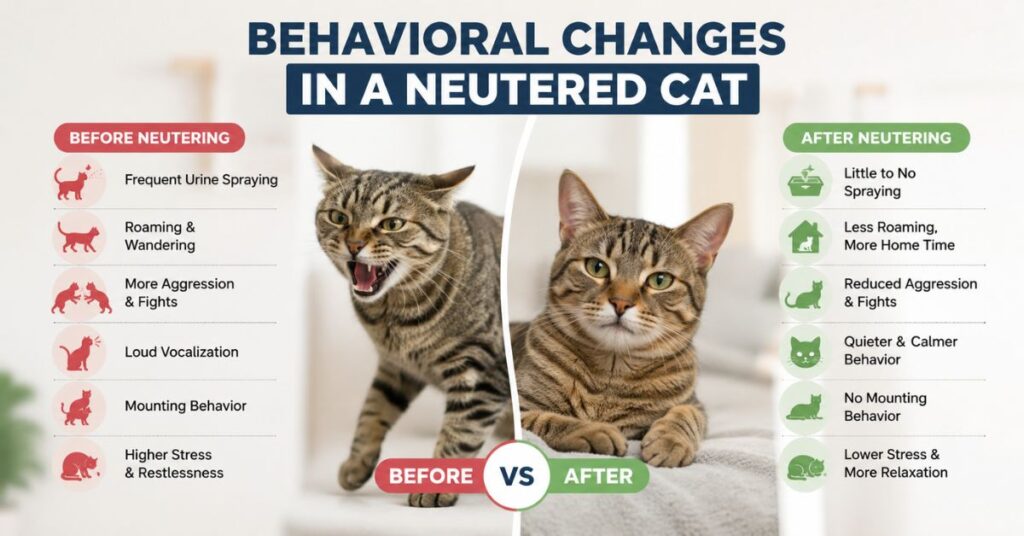
Many owners worry that neutering will completely change their cat’s personality.
Fortunately, this is usually not the case.
What Usually Changes
Hormone-driven behaviors may decrease, including:
- Spraying
- Roaming
- Mounting
- Territorial aggression
What Usually Stays the Same
Your cat’s core personality generally remains unchanged.
Traits such as:
- Affection
- Playfulness
- Intelligence
- Curiosity
typically stay intact after neutering.
In many cases, owners report that their cats become more relaxed and affectionate.
When Should a Cat Be Neutered?
Veterinarians often recommend neutering before sexual maturity.
Neutering cats can vary depending on the recommendations, but many are done between:
- 4 to 6 months of age
However, older cats can also benefit from the procedure.
Consult your veterinarian to determine the best timing for your individual cat.
Neutered Cat vs. Intact Male Cat
The following table highlights some key differences.
| Feature | Neutered Cat | Intact Male Cat |
| Ability to Reproduce | No | Yes |
| Testosterone Levels | Much Lower | Higher |
| Urine Spraying | Less Common | More Common |
| Roaming Behavior | Reduced | Frequent |
| Fighting Tendency | Lower | Higher |
| Risk of Testicular Cancer | None | Present |
| Household Management | Easier | More Challenging |
This comparison demonstrates why many pet owners choose neutering.
Recovery After Neutering
Recovery is generally straightforward and quick.
First 24 Hours
Your cat may experience:
- Mild sleepiness
- Reduced appetite
- Temporary grogginess
These effects are normal after anesthesia.
First Week
During recovery:
- Keep activity limited.
- Follow medication instructions.
- Monitor incision sites.
- Prevent excessive licking.
Most cats recover fully within a short period.
Signs You Should Contact a Veterinarian
Seek veterinary advice if you notice:
- Excessive swelling
- Bleeding
- A loss of appetite that lasts more than a day
- Severe lethargy
- Signs of infection
Prompt treatment helps prevent complications.
Caring for a Neutered Cat Long-Term
A neutered cat may require some lifestyle adjustments to maintain optimal health.
Monitor Weight Carefully
After neutering, metabolism may slow slightly.
Some cats become less active and more prone to weight gain.
To prevent obesity:
- Measure food portions
- Avoid excessive treats
- Encourage daily exercise
- Schedule regular weigh-ins
Provide Mental Stimulation
Keep your cat engaged with:
- Puzzle feeders
- Interactive toys
- Climbing trees
- Window perches
Mental enrichment supports both physical and emotional well-being.
Schedule Regular Veterinary Checkups
Routine veterinary visits help monitor:
- Weight
- Dental health
- Vaccinations
- Overall wellness
Preventive care contributes to a longer lifespan.
Common Myths About Neutered Cats
Myth 1: Neutering Makes Cats Lazy
While some cats become calmer, neutering does not automatically make them lazy.
Regular exercise and proper nutrition play a much larger role in activity levels.
Myth 2: Neutered Cats Lose Their Personality
Most cats retain their unique personalities after surgery.
Owners often find their pets just as playful and affectionate as before.
Myth 3: Neutering Is Unnatural and Harmful
Neutering is a well-established veterinary procedure that offers many health and behavioral benefits.
For most cats, the advantages significantly outweigh potential risks.
Myth 4: Only Outdoor Cats Need Neutering
Even indoor cats can benefit from neutering.
Hormonal behaviors such as spraying and frustration can occur regardless of lifestyle.
Myth 5: Older Cats Cannot Be Neutered
Healthy adult and senior cats can often be neutered successfully after veterinary evaluation.
Nutrition Tips for a Neutered Cat
Proper nutrition becomes especially important after neutering.
Choose High-Quality Cat Food
Look for food that provides:
- High-quality protein
- Balanced nutrients
- Appropriate calorie levels
- Essential vitamins and minerals
Encourage Hydration
Adequate water intake supports urinary health.
Helpful strategies include:
- Fresh water daily
- Multiple water bowls
- Cat fountains
- Wet food options
Avoid Overfeeding
Free-feeding may contribute to weight gain.
Instead:
- Follow feeding guidelines
- Use measured portions
- Adjust calories based on activity level
Can a Neutered Cat Still Display Male Behaviors?
Yes, sometimes.
If a cat was neutered later in life, some learned behaviors may continue.
Examples include:
- Occasional mounting
- Mild territorial behavior
- Habitual spraying
However, these behaviors are often less intense than in intact males.
Patience and positive reinforcement can help manage lingering habits.
How Long Do Neutered Cats Live?
Research consistently suggests that neutered cats often enjoy longer lives than intact male cats.
This may be due to:
- Reduced roaming
- Fewer fights
- Lower injury risk
- Better preventive healthcare
In addition to affecting longevity, neutering has a considerable impact on overall health and safety.
Conclusion
A neutered cat can enjoy numerous health, behavioral, and lifestyle benefits. From reducing territorial spraying and roaming to lowering the risk of certain diseases, neutering is one of the most responsible decisions a cat owner can make.
While some minor adjustments in diet and exercise may be necessary, the long-term advantages typically outweigh any concerns.
By understanding the needs of a neutered cat and providing proper nutrition, enrichment, and veterinary care, you can help your feline companion live a healthier and happier life. For more expert cat care guides, health tips, and feline advice, keep visiting KittyCareZone.com.
A neutered cat is a male cat whose testicles have been surgically removed to prevent reproduction and reduce testosterone-related behaviors.
Generally, no. Neutering mainly reduces hormone-driven behaviors while preserving the cat’s natural personality and temperament.
Many veterinarians recommend neutering between 4 and 6 months of age, although adult cats can also benefit from the procedure.
Many cats spray less or stop spraying after neutering, especially when the procedure is performed before the behavior becomes established.
Some cats may gain weight if calorie intake exceeds energy expenditure. Proper diet management and regular exercise can help maintain a healthy weight.

Ali Ahmad /Passionate writer sharing informative, engaging, and easy-to-read articles across different topics. Focused on delivering valuable content that helps readers learn, explore, and stay inspired every day.
1 thought on “Neutered Cat Guide: Everything Cat Owners Need to Know”