

Introduction
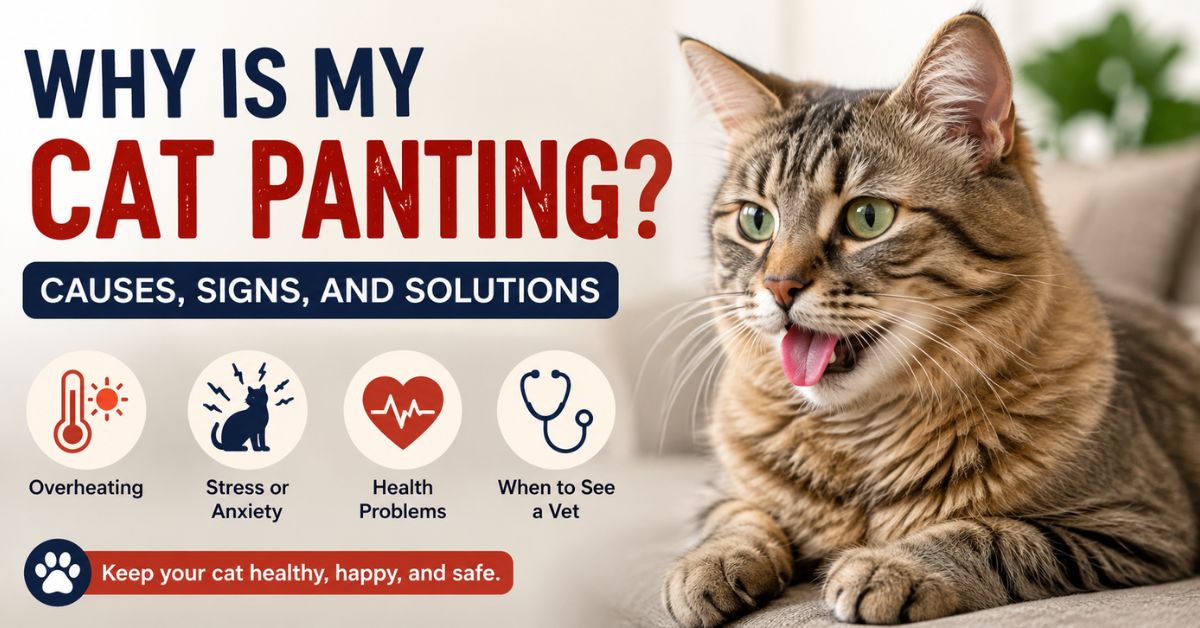
If you suddenly notice your furry friend breathing with an open mouth, you may immediately ask yourself, “why is my cat panting?” Many cat owners become worried because panting is much more common in dogs than in cats.
Cats typically breathe quietly through their noses. Therefore, when a cat starts panting, it can sometimes indicate excitement or stress. However, in other situations, it may signal an underlying health issue that requires attention.
Understanding the difference between harmless panting and dangerous symptoms can help protect your cat’s health. In this guide, we will explain the common reasons for panting, warning signs to watch for, and practical steps you should take.
What Does Panting in Cats Look Like?
Panting in cats often appears different from normal breathing.
Signs include:
- Open-mouth breathing
- Rapid breathing
- Tongue hanging out
- Heavy chest movement
- Fast, shallow breaths
- Restlessness
- Drooling in some cases
A healthy cat usually takes around 20–30 breaths per minute while resting. If breathing becomes unusually fast or difficult, it deserves closer attention.
Common Reasons Why Is My Cat Panting
The question “why is my cat panting?” has several possible answers. Various reasons may not require medical attention, while others may.
Exercise or Intense Play
Cats occasionally pant after vigorous physical activity.
For example:
- Chasing toys
- Running around the house
- Jumping repeatedly
- Playing aggressively with another pet
Just like humans become short of breath after exercise, cats may briefly pant after intense activity.
Normal exercise-related panting should:
- Stop within a few minutes
- Improve after rest
- Not include coughing or weakness
If your cat recovers quickly, there may be no reason to worry.
Heat and Overheating
Cats do not sweat like humans. They release heat mainly through grooming and limited sweating through their paws.
During hot weather, some cats begin panting to cool themselves.
Common signs of overheating include:
- Panting
- Lethargy
- Excessive grooming
- Drooling
- Weakness
Indoor cats may overheat because of:
- Poor ventilation
- Hot rooms
- Lack of fresh water
- Direct sunlight exposure
Practical Tip
Always provide:
- Clean drinking water
- Cool resting areas
- Air circulation
- Shade during warm weather
Stress and Anxiety
Stress can also answer the question “why is my cat panting?”
Cats are sensitive animals. Changes in their environment may trigger anxiety.
Stress triggers may include:
- Car rides
- Loud noises
- Visitors
- Moving homes
- New pets
- Veterinary appointments
Stress-related panting usually appears with other symptoms:
- Hiding
- Dilated pupils
- Trembling
- Tail tucked down
- Ears pulled back
Once the stressful event ends, breathing often returns to normal.
Respiratory Problems
Respiratory issues can interfere with normal breathing and cause panting.
Possible conditions include:
- Asthma
- Lung infections
- Pneumonia
- Nasal blockage
- Allergies
Additional symptoms may include:
- Wheezing
- Sneezing
- Coughing
- Nasal discharge
- Difficulty breathing
Respiratory conditions should never be ignored.
Heart Disease
Heart problems sometimes cause cats to breathe heavily because oxygen circulation becomes less efficient.
Common symptoms include:
- Weakness
- Panting
- Rapid breathing
- Reduced activity
- Collapse in severe cases
Unfortunately, cats often hide illness very well. Many owners notice symptoms only after the condition progresses.
Pain or Injury
Pain can increase stress hormones and breathing rate.
Cats experiencing pain may pant because of:
- Trauma
- Internal injuries
- Arthritis
- Dental pain
- Surgery recovery
You may also notice:
- Hiding behavior
- Aggression
- Limping
- Reduced appetite
Obesity
Overweight cats may struggle to breathe comfortably during activity.
Extra body weight places additional pressure on:
- Lungs
- Heart
- Joints
Obese cats can become tired quickly and may pant more frequently.
Maintaining a healthy weight helps improve overall health and breathing function.
Useful Table: Cat Panting Causes and Recommended Actions
| Cause | Common Symptoms | Recommended Action |
| Exercise | Short-term heavy breathing | Allow rest and water |
| Heat | Drooling, weakness | Move to a cool area |
| Stress | Hiding, trembling | Remove stress source |
| Respiratory illness | Wheezing, coughing | Contact veterinarian |
| Heart disease | Fatigue, rapid breathing | Veterinary evaluation |
| Pain | Hiding, aggression | Identify possible injury |
| Obesity | Difficulty moving | Weight management plan |
When Should You Worry About Cat Panting?
Not all panting is dangerous. However, certain situations require immediate attention.
Watch for these warning signs:
- Panting that lasts longer than several minutes
- Blue or pale gums
- Weakness
- Fainting
- Difficulty walking
- Extreme lethargy
- Refusal to eat
- Continuous rapid breathing
- Open-mouth breathing without exercise
If you see these symptoms, seek veterinary care quickly.
How to Help a Panting Cat at Home
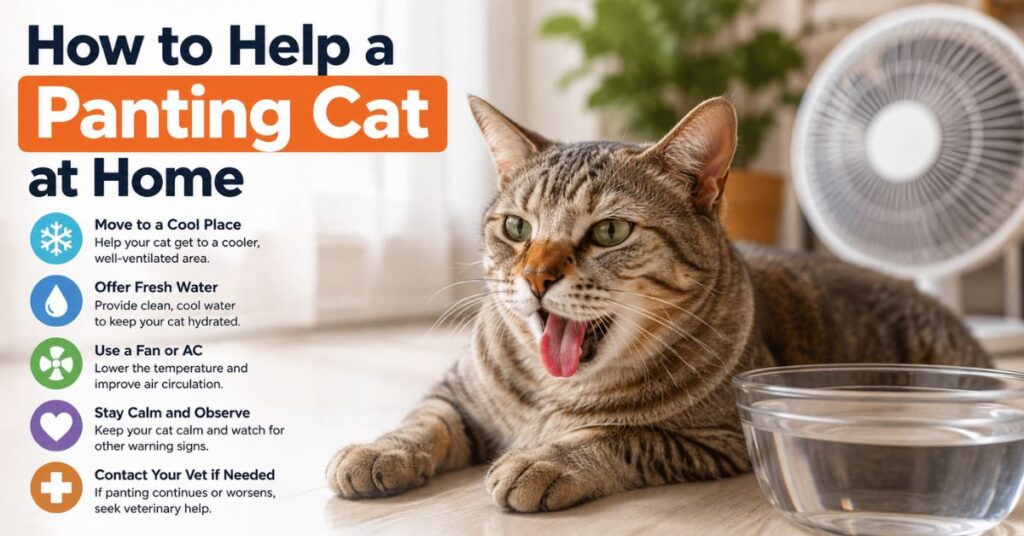
If your cat appears mildly stressed or overheated, there are safe things you can do.
Move Your Cat to a Calm Area
Reduce noise and stimulation.
A quiet room helps your cat relax and recover.
Offer Fresh Water
Hydration supports healthy body temperature regulation.
Never force water into your cat’s mouth.
Keep the Environment Cool
Use:
- Fans
- Air conditioning
- Cool surfaces
- Shade
Limit Activity
Allow your cat to rest.
Avoid excessive play until breathing returns to normal.
Monitor Symptoms
Watch closely for changes.
If panting worsens or new symptoms appear, contact your veterinarian.
What You Should Never Do
Many owners panic when they notice unusual breathing. Avoid these mistakes:
Do not:
- Ignore prolonged panting
- Force-feed water
- Give human medications
- Delay treatment if breathing worsens
- Assume it is always normal
Acting quickly can sometimes prevent serious complications.
Can Certain Cat Breeds Pant More Often?
Some cat breeds may experience breathing difficulties more frequently.
Flat-faced breeds sometimes have narrowed airways.
Examples include:
- Persian cat
- Himalayan cat
- Exotic Shorthair
These breeds can struggle with airflow because of facial structure.
Owners should monitor breathing carefully, especially in hot weather.
How Veterinarians Diagnose Panting in Cats
If your veterinarian investigates why is my cat panting, they may perform several tests.
Possible diagnostic methods include:
- Physical examination
- Breathing assessment
- Blood tests
- Chest X-rays
- Ultrasound
- Heart evaluation
- Oxygen level testing
Diagnosis helps identify the underlying cause rather than simply treating symptoms.
Conclusion
If you have been asking yourself “why is my cat panting,” remember that the answer can range from harmless excitement to serious health concerns. Brief panting after exercise or stress may not be dangerous, but ongoing breathing problems should never be ignored.
Pay attention to your cat’s behavior, breathing patterns, and overall energy level. Early action often makes a significant difference in your pet’s health and comfort.
At KittyCareZone.com, our goal is to help cat owners make informed decisions and provide better care for their feline companions. Understanding unusual symptoms today may help keep your cat healthier tomorrow.
Cats sometimes pant after intense exercise because they need extra oxygen. Normal panting should stop within a few minutes of rest.
Yes. Temporary panting after exercise, excitement, or mild stress can be normal. Persistent panting is not considered normal.
Car rides commonly create stress and anxiety in cats. Motion, unfamiliar surroundings, and noise can trigger panting.
Panting combined with hiding may indicate pain, fear, illness, or stress. Monitor other symptoms and seek veterinary advice if behavior continues.
Panting at rest may suggest respiratory issues, heart disease, overheating, or other medical conditions. Veterinary evaluation is recommended.

Ali Ahmad /Passionate writer sharing informative, engaging, and easy-to-read articles across different topics. Focused on delivering valuable content that helps readers learn, explore, and stay inspired every day.
1 thought on “Why Is My Cat Panting? Causes, Signs, and Solutions”