


Introduction
Has your Cat Suddenly Aggressive behavior left you feeling confused or worried? One day your cat acts sweet and affectionate, and the next day it starts hissing, scratching, biting, or attacking without warning. This sudden change can feel upsetting, especially if your cat has always behaved calmly.
Cats rarely become aggressive for no reason. In many cases, aggression serves as a warning signal that something is wrong. Physical pain, fear, stress, environmental changes, or underlying health issues can trigger unusual behavior.
Understanding the cause of sudden aggression can help you protect yourself and your pet while restoring a peaceful relationship. In this guide, we will explore the reasons behind sudden aggression in cats, warning signs to watch for, and practical solutions that can help your feline friend feel comfortable again.
What Does Sudden Aggression in Cats Mean?
A Cat Suddenly Aggressive situation usually refers to an unexpected change in behavior where a cat starts showing signs such as:
- Hissing
- Growling
- Scratching
- Biting
- Swatting
- Chasing people or pets
- Flattened ears
- Dilated pupils
- Puffing up fur
Aggression often develops as a reaction rather than random bad behavior.
Cats communicate through body language. When they feel threatened, uncomfortable, or stressed, aggression can become their way of expressing those emotions.
Common Reasons Why Your Cat Suddenly Aggressive
Several factors can cause a calm cat to become aggressive unexpectedly.
Pain or Medical Problems
Pain is one of the most common causes of sudden aggression in cats.
Cats naturally hide illness because of their survival instincts. As a result, they may not show obvious symptoms until the discomfort becomes severe.
Common medical conditions include:
- Arthritis
- Dental disease
- Urinary tract infections
- Injuries
- Thyroid problems
- Neurological issues
- Internal pain
For example, if your cat experiences tooth pain, even gentle petting near its face could trigger biting or scratching.
If aggression appears suddenly and without explanation, contact a veterinarian.
Fear-Based Aggression
Fear often causes cats to react aggressively.
A frightened cat may feel trapped and believe aggression is necessary for self-defense.
Common fear triggers include:
- Loud noises
- New people
- Unfamiliar pets
- Vacuum cleaners
- Sudden movements
- Moving to a new home
Signs of fear aggression may include:
- Crouching
- Ears pulled backward
- Wide eyes
- Tail tucked underneath the body
Territorial Behavior
Cats naturally protect their territory.
If another cat appears outside your window or a new pet enters the house, your cat may react aggressively.
Territorial aggression often includes:
- Blocking doorways
- Chasing
- Swatting
- Growling
- Spraying urine
Indoor cats frequently become upset when they see unfamiliar animals through windows.
Redirected Aggression
Redirected aggression happens when a cat becomes upset by something but attacks another target nearby.
For example:
Your cat sees a stray cat outside the window and becomes highly excited. Since it cannot reach that animal, it redirects frustration toward you, another pet, or even furniture.
This type of aggression often surprises owners because it seems to happen without warning.
Stress and Anxiety
Cats enjoy predictable routines. Sudden changes can create emotional stress.
Stress triggers may include:
- Moving homes
- New family members
- Home renovations
- Schedule changes
- New furniture
- Lack of hiding spaces
Long-term stress can eventually affect both behavior and health.
Overstimulation During Petting
Some cats enjoy affection only up to a certain point.
You may notice your cat purring one moment and suddenly biting the next.
This reaction is called petting-induced aggression.
Common warning signs include:
- Tail twitching
- Skin rippling
- Ears rotating backward
- Restlessness
Learning your cat’s personal limits can prevent these incidents.
Types of Cat Aggression
Different types of aggression may require different solutions.
| Type of Aggression | Common Cause | Typical Signs |
| Fear Aggression | Fear or anxiety | Hissing, hiding, scratching |
| Territorial Aggression | Protecting space | Chasing, growling |
| Redirected Aggression | Frustration | Sudden attacks |
| Pain-Induced Aggression | Illness or injury | Biting when touched |
| Petting Aggression | Overstimulation | Swatting during petting |
| Maternal Aggression | Protecting kittens | Defensive behavior |
Understanding the category helps identify the best response.
Warning Signs Before a Cat Becomes Aggressive
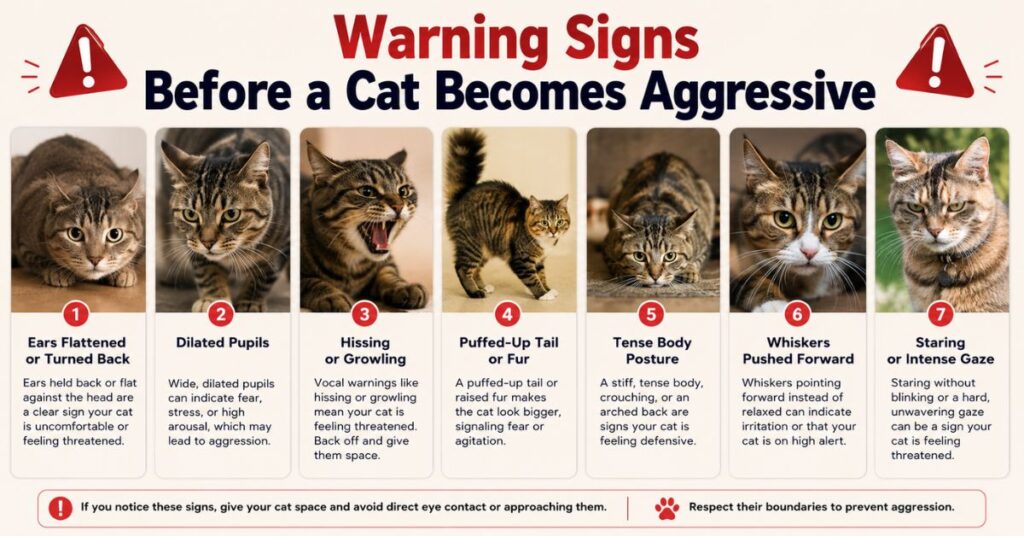
Cats usually give signals before attacking.
Watch carefully for these signs:
- Tail whipping rapidly
- Ears flattened backward
- Dilated pupils
- Stiff body posture
- Low growling
- Hissing
- Fur standing up
- Intense staring
Recognizing these signals early can prevent scratches and bites.
How to Calm a Cat Suddenly Aggressive
If your Cat Suddenly Aggressive, avoid reacting emotionally.
Instead, follow these steps:
Give Your Cat Space
Never force interaction during an aggressive episode.
Allow your cat to:
- Retreat safely
- Hide
- Calm down naturally
Trying to hold or comfort an upset cat may worsen the situation.
Identify the Trigger
Observe what happened before the aggression started.
Ask questions such as:
- Did a new pet arrive?
- Was there a loud sound?
- Did someone touch a painful area?
- Did another animal appear outside?
Finding patterns can reveal important clues.
Create a Stress-Free Environment
Cats need safe and comfortable surroundings.
Helpful ideas include:
- Quiet resting areas
- Cat trees
- Window perches
- Hiding spots
- Consistent feeding schedules
A stable environment often reduces anxiety.
Use Interactive Play
Play helps release excess energy and frustration.
Good toys include:
- Wand toys
- Puzzle feeders
- Soft balls
- Feather toys
Avoid using hands as toys because this encourages biting behavior.
Avoid Punishment
Punishment usually makes aggression worse.
Avoid:
- Yelling
- Hitting
- Spraying water
- Physical force
Cats may become more fearful and stressed after punishment.
Praise and treats should be given instead for calm behavior.
When Should You Visit a Veterinarian?
A veterinarian visit becomes important when:
- Aggression appears suddenly
- Your cat seems in pain
- Appetite changes occur
- Weight loss happens
- Litter box habits change
- Aggression becomes frequent
- Your cat attacks without warning
Medical issues often hide beneath behavior changes.
Early treatment can prevent more serious problems.
Long-Term Prevention Tips
Preventing aggression often works better than fixing it later.
Maintain Routine
Cats love consistency.
Try to keep:
- Feeding times stable
- Play schedules regular
- Sleeping areas unchanged
Provide Mental Stimulation
Bored cats may become frustrated.
Ideas include:
- Puzzle toys
- Climbing shelves
- Scratching posts
- Training sessions
Mental exercise reduces stress and improves behavior.
Socialize Properly
Introduce new people, pets, and experiences gradually.
Allow your cat to adjust at its own pace.
Rushing introductions may increase anxiety.
Monitor Health Regularly
Annual veterinary checkups help detect problems early.
Regular care can identify:
- Dental issues
- Weight changes
- Arthritis
- Hormonal problems
Healthy cats often display more stable behavior.
Can Sudden Aggression Be Dangerous?
Yes, severe aggression can become dangerous.
Cat bites and scratches may cause infections and injuries.
If your cat repeatedly attacks:
- Avoid direct confrontation
- Use barriers if necessary
- Contact a veterinarian
- Consider a certified cat behavior specialist
Safety should remain the priority for everyone in the home.
Conclusion
A Cat Suddenly Aggressive situation can feel alarming, but aggression usually signals an underlying issue rather than bad behavior. Fear, stress, pain, territory concerns, and health conditions often explain sudden changes in personality.
Pay attention to warning signs, create a calm environment, and avoid punishment. Most importantly, seek professional help if aggression appears severe or persistent.
At KittyCareZone.com, we believe understanding your cat’s emotions and health needs creates stronger bonds and happier homes. By learning what triggers sudden aggression, you can help your feline companion feel safe, relaxed, and loved.
Your cat may suddenly become aggressive because of pain, fear, stress, overstimulation, or environmental changes. Medical problems commonly trigger unexpected behavior changes.
Yes. Conditions such as arthritis, dental disease, thyroid disorders, or injuries can cause discomfort and lead to aggression.
This behavior often results from redirected aggression. Your cat becomes frustrated by the outside animal and redirects that emotion elsewhere.
No. Punishment increases stress and fear. Positive reinforcement and identifying triggers work much better.
The duration depends on the cause. Stress-related aggression may improve quickly, while medical issues require treatment before behavior improves.

Ali Ahmad /Passionate writer sharing informative, engaging, and easy-to-read articles across different topics. Focused on delivering valuable content that helps readers learn, explore, and stay inspired every day.
1 thought on “Cat Suddenly Aggressive? Causes, Signs, and Easy Solutions”