

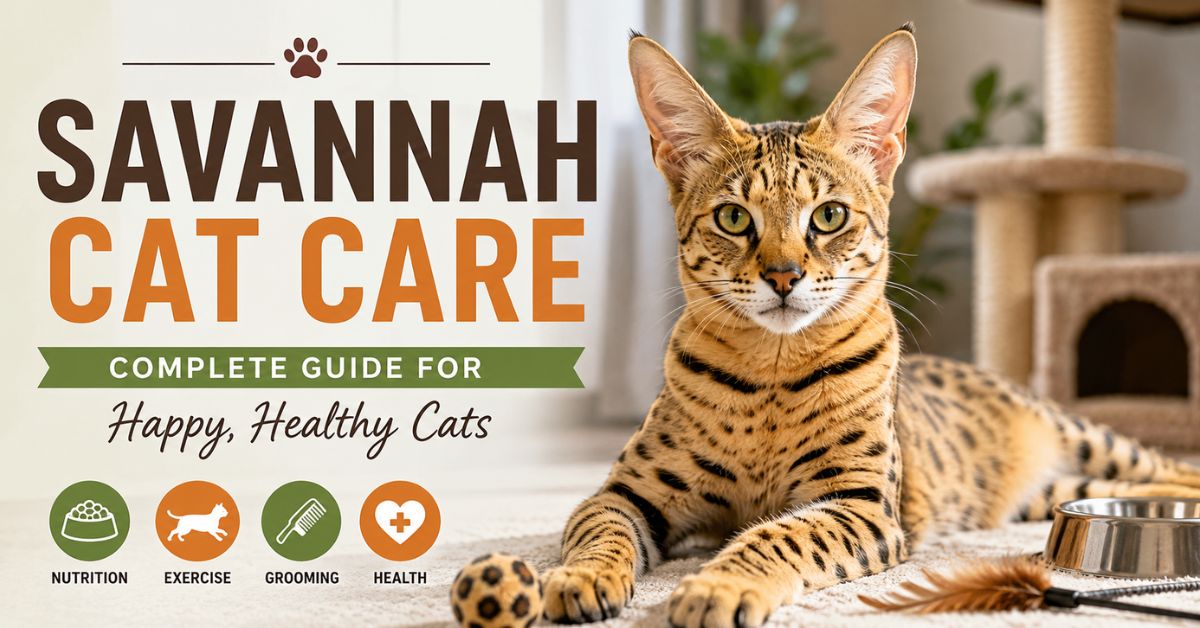
Savannah cats are among the most unique and fascinating feline breeds in the world. Their exotic appearance, tall build, spotted coat, and energetic personality often make them look like miniature wild cats. However, despite their striking appearance, they still need proper care, attention, and affection to thrive in a home environment.
If you are considering adopting one or already own one, understanding savannah cat care is essential. These intelligent and active cats have different needs compared to many traditional domestic breeds. From nutrition and exercise to grooming and health management, every aspect of their care plays a crucial role in their well-being.
This comprehensive guide covers everything you need to know about Savannah cat care to help your feline companion live a long, healthy, and happy life.
What Is a Savannah Cat?
The Savannah cat is a hybrid breed created by crossing a domestic cat with an African Serval. The result is a stunning feline with long legs, large ears, and a sleek spotted coat.
Savannah cats are known for:
- High intelligence
- Strong curiosity
- Athletic abilities
- Loyalty to owners
- Dog-like behavior
- Exceptional jumping skills
Because of these unique traits, savannah cat care requires a more active and engaging approach than caring for many other cat breeds.
Understanding the Savannah Cat Personality
Before discussing daily care, it is important to understand their temperament.
Savannah cats are:
Highly Intelligent
They quickly learn routines, commands, and even tricks. Many can learn to open doors, retrieve toys, and walk on a leash.
Extremely Active
Unlike many cats that enjoy long naps throughout the day, Savannah cats thrive on movement and exploration.
Social and Loyal
Many Savannah cats form strong bonds with their families and often follow their owners around the house.
Curious Explorers
They investigate everything in their environment and enjoy climbing, jumping, and interactive play.
Understanding these traits helps owners provide better care for Savannah cats and prevent boredom-related behavioral problems.
Essential Savannah Cat Care Requirements
Providing excellent Savannah cat care involves several important areas:
| Care Area | Importance | Recommended Frequency |
| High-quality diet | Very High | Daily |
| Exercise and play | Very High | Multiple times daily |
| Grooming | Moderate | Weekly |
| Health checkups | Very High | Annual or as advised |
| Mental stimulation | Very High | Daily |
| Dental care | High | Several times weekly |
| Litter box maintenance | High | Daily |
Following these basics helps create a healthy lifestyle for your Savannah cat.
Savannah Cat Diet and Nutrition
Proper nutrition forms the foundation of effective Savannah cat care.
Choose High-Protein Foods
Savannah cats are active and muscular. Their bodies benefit from diets rich in animal protein.
Look for cat foods that contain:
- Chicken
- Turkey
- Duck
- Salmon
- Beef
Protein should be the primary ingredient.
Avoid Low-Quality Fillers
Limit foods containing excessive amounts:
- Corn
- Wheat
- Soy
- Artificial preservatives
- Artificial colors
These ingredients provide limited nutritional value.
Wet Food vs. Dry Food
A combination of high-quality wet and dry food often works best.
Benefits of wet food:
- Increased hydration
- Easier digestion
- Supports urinary health
Benefits of dry food:
- Convenient feeding
- Longer shelf life
- Helps reduce plaque buildup
Fresh Water Is Essential
Savannah cats often enjoy moving water.
Consider:
- Cat water fountains
- Multiple water stations
- Daily water replacement
Proper hydration is a major part of Savannah cat care.
Exercise and Physical Activity
One of the most important aspects of savannah cat care is providing enough exercise.
These cats are natural athletes and require significantly more activity than many other breeds.
Daily Interactive Play
Plan at least:
- 30–60 minutes of active play
- Interactive sessions throughout the day
- Puzzle-based activities
Popular toys include:
- Wand toys
- Laser pointers
- Ball tracks
- Interactive feeders
Climbing Opportunities
Savannah cats love heights.
Provide:
- Tall cat trees
- Wall shelves
- Climbing towers
- Window perches
Vertical space helps satisfy their instincts.
Leash Training
Many Savannah cats can learn to walk on a leash.
Benefits include:
- Additional exercise
- Mental stimulation
- Safe outdoor exploration
Always use a secure cat harness designed specifically for felines.
Mental Stimulation for Savannah Cats
Because Savannah cats are highly intelligent, mental enrichment is crucial.
Without enough stimulation, they may:
- Become destructive
- Develop anxiety
- Engage in unwanted behaviors
Enrichment Ideas
Try activities such as:
- Puzzle feeders
- Treat-dispensing toys
- Hide-and-seek games
- Clicker training
- Interactive play sessions
Mental exercise is just as important as physical exercise in effective Savannah cat care.
Grooming Your Savannah Cat
Fortunately, Savannah cats are relatively low-maintenance when it comes to grooming.
Coat Care
Their short coat requires minimal upkeep.
Brush your Savannah cat:
- Once or twice weekly
- More frequently during shedding seasons
Benefits include:
- Reduced loose fur
- Healthier coat
- Stronger owner-cat bond
Nail Trimming
Trim nails every:
- 2–4 weeks
Regular trimming prevents:
- Furniture damage
- Overgrown nails
- Accidental scratches
Ear Cleaning
Check ears regularly for:
- Wax buildup
- Dirt
- Signs of infection
Use veterinarian-approved cleaning products only.
Dental Care
Dental disease is common in cats.
For better oral health:
- Brush teeth regularly
- Offer dental treats
- Schedule professional cleanings when necessary
Good dental hygiene is an important part of long-term Savannah cat care.
Creating the Perfect Indoor Environment
Savannah cats thrive in stimulating environments.
Cat-Proof Your Home
Because they are curious and athletic:
- Secure windows
- Remove toxic plants
- Store chemicals safely
- Protect electrical cords
Provide Safe Exploration Areas
Create spaces with:
- Climbing structures
- Scratching posts
- Interactive toys
- Comfortable resting spots
Window Views
Many Savannah cats enjoy watching outdoor activity.
Install:
- Window perches
- Cat hammocks
- Observation shelves
These additions provide entertainment throughout the day.
Common Health Concerns in Savannah Cats
Although generally healthy, Savannah cats can experience certain health issues.
Hypertrophic Cardiomyopathy (HCM)
This heart condition can affect various cat breeds.
Potential symptoms include:
- Lethargy
- Rapid breathing
- Reduced activity
Routine veterinary exams help with early detection.
Dental Disease
Without proper oral care, plaque and tartar can accumulate.
Preventive care includes:
- Tooth brushing
- Dental diets
- Veterinary cleanings
Obesity
Although active by nature, overfeeding can still lead to weight gain.
Maintain:
- Portion control
- Regular exercise
- Balanced nutrition
Digestive Sensitivities
Some Savannah cats may have sensitive stomachs.
Watch for:
- Vomiting
- Diarrhea
- Appetite changes
Consult your veterinarian if symptoms persist.
Regular veterinary visits remain a key component of responsible savannah cat care.
Vaccinations and Preventive Care
Preventive healthcare helps your Savannah cat stay healthy throughout life.
Core Vaccinations
Your veterinarian may recommend vaccines for:
- Rabies
- Feline panleukopenia
- Feline herpesvirus
- Calicivirus
Parasite Prevention
Protect your cat from:
- Fleas
- Ticks
- Intestinal worms
- Heartworms were applicable
Follow your veterinarian’s recommendations for preventive treatments.
Training a Savannah Cat
One advantage of owning a Savannah cat is their remarkable intelligence.
Basic Training Skills
Many Savannah cats can learn:
- Sit
- Come when called
- High five
- Retrieve toys
- Harness walking
Positive Reinforcement Works Best
Reward desired behaviors with:
- Treats
- Praise
- Playtime
Avoid punishment, as it can damage trust and increase stress.
Training strengthens the bond between you and your cat while improving overall Savannah cat care.
Socialization Tips
Early socialization helps Savannah cats become confident and friendly companions.
Introduce New Experiences Gradually
Expose your cat to:
- Different people
- Household sounds
- New environments
- Other pets
Respect Personal Boundaries
Allow your cat to approach interactions at their own pace.
Positive experiences create a well-adjusted and secure pet.
Is a Savannah Cat Right for You?
Before adopting one, consider whether your lifestyle matches their needs.
Savannah cats may be ideal if you:
- Have time for daily interaction
- Enjoy active pets
- Can provide enrichment
- Are willing to invest in quality care
They may not be ideal if you:
- Prefer low-maintenance pets
- Spend long hours away from home
- Cannot provide sufficient stimulation
Understanding these factors helps ensure successful Savannah cat care and a happy relationship with your pet.
Tips for First-Time Savannah Cat Owners
If you are new to the breed, keep these tips in mind:
- Invest in large cat trees.
- Schedule regular veterinary visits.
- Feed a high-quality diet.
- Rotate toys to prevent boredom.
- Start training early.
- Provide plenty of climbing opportunities.
- Maintain a consistent routine.
- Spend quality time interacting daily.
These simple practices make a significant difference in successful Savannah cat care.
Conclusion
Proper Savannah cat care involves much more than providing food and shelter. These intelligent, energetic, and affectionate cats require quality nutrition, daily exercise, mental stimulation, routine grooming, and preventive healthcare to truly thrive.
By understanding their unique needs and creating an enriching environment, you can enjoy a rewarding relationship with your Savannah cat for many years. For more expert cat care guides, health tips, and breed information, keep visiting KittyCareZone.com, your trusted resource for everything feline.
Yes. Savannah cats can be excellent family pets when properly socialized. They are affectionate, loyal, and often enjoy interactive play with family members.
Most Savannah cats need at least 30–60 minutes of active play daily, along with opportunities for climbing and exploration.
While they do not necessarily require special food, a high-protein, premium-quality diet is highly recommended for optimal health and energy.
They are not difficult, but they do require more exercise, mental stimulation, and interaction than many traditional cat breeds.
Yes. Savannah cats can thrive indoors when provided with enough enrichment, climbing structures, toys, and regular play sessions.

Ali Ahmad /Passionate writer sharing informative, engaging, and easy-to-read articles across different topics. Focused on delivering valuable content that helps readers learn, explore, and stay inspired every day.
1 thought on “Savannah Cat Care: Complete Guide for Happy, Healthy Cats”