

If you’re a cat owner, chances are you’ve walked into a room and found a pile of vomited food on the floor. It’s unpleasant, confusing, and sometimes worrying.
The truth is, cat throwing up food is a very common issue. But here’s the catch not all vomiting is the same. Sometimes it’s harmless, like eating too fast. Other times, it could be a warning sign of a serious health problem.
So how do you tell the difference?
In this detailed guide, we’ll break down the real causes, practical solutions, and clear warning signs so you can confidently take care of your cat.
Vomiting vs. Regurgitation: Know the Difference
Before diving into causes, it’s important to understand what’s actually happening.
Vomiting (Medical Concern)
Vomiting involves the stomach and often includes warning signs.
Key signs:
- Retching or heaving
- Partially digested food
- Yellow bile or foam
- Happens some time after eating
Regurgitation (Usually Less Serious)
Regurgitation is more passive and happens quickly.
Key signs:
- No warning (sudden)
- Undigested food
- Happens immediately after eating
👉 Most cases of cat throwing up food right after meals are actually regurgitation not true vomiting.
Top Causes of Cat Throwing Up Food
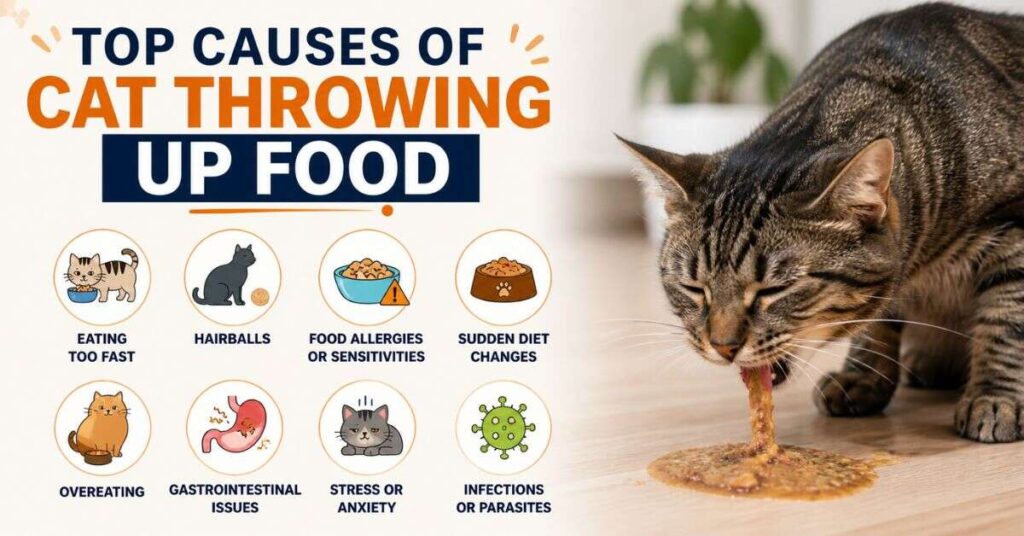
Let’s go through the most common reasons behind cat throwing up food and what you can do about each one.
1. Eating Too Fast (Most Common Cause)
Many cats eat like they’re in a race especially in multi-cat households.
When food is swallowed too quickly, the stomach can’t process it properly, and it comes right back up.
Symptoms:
- Vomiting within minutes of eating
- Whole or barely chewed food
Solutions:
- Use a slow-feeder bowl
- Spread food on a flat plate
- Feed smaller meals 2–3 times a day
2. Hairballs
Cats naturally swallow hair while grooming. Over time, this builds up and causes irritation.
Symptoms:
- Vomiting with hair present
- Gagging or coughing
- Occasional loss of appetite
Solutions:
- Brush your cat regularly
- Use hairball control treats or food
- Add fiber to their diet
3. Food Allergies or Sensitivities
Some cats react poorly to certain ingredients.
Common triggers:
- Chicken
- Beef
- Dairy
- Artificial additives
Symptoms:
- Frequent vomiting
- Diarrhea
- Skin itching or ear infections
Solutions:
- Switch to limited-ingredient diets
- Try grain-free or hypoallergenic options
- Consult a vet for elimination diets
4. Sudden Diet Changes
Cats have sensitive digestive systems. A quick switch in food can upset their stomach.
Symptoms:
- Vomiting within days of new food
- Reduced appetite
Solutions:
Transition food slowly:
- Day 1–3: 25% new food
- Day 4–6: 50% new food
- Day 7–10: 75% new food
5. Overeating
Free-feeding can lead to overeating, especially in indoor cats.
Symptoms:
- Vomiting after large meals
- Weight gain
- Lethargy
Solutions:
- Measure food portions
- Stick to scheduled feeding times
6. Gastrointestinal Problems
Sometimes, cat throwing up food is linked to medical issues.
Possible conditions:
- Inflammatory bowel disease (IBD)
- Parasites
- Infections
Symptoms:
- Frequent vomiting
- Weight loss
- Weakness
Solution:
👉 Immediate veterinary check-up is necessary.
7. Stress and Anxiety
Cats are creatures of habit. Even small changes can affect them.
Triggers include:
- Moving homes
- New pets
- Loud environments
Symptoms:
- Vomiting with behavior changes
- Hiding or aggression
Solutions:
- Keep a consistent routine
- Provide safe, quiet spaces
- Use calming products if needed
Comparison Table: Causes & Solutions
| Cause | Key Symptoms | Best Solution |
| Eating too fast | Undigested food, quick vomiting | Slow feeder, smaller meals |
| Hairballs | Hair in vomit | Grooming, hairball control |
| Food allergies | Vomiting + itching | Hypoallergenic diet |
| Diet change | Sudden vomiting | Gradual transition |
| Overeating | Vomiting after meals | Portion control |
| GI issues | Frequent vomiting, weight loss | Vet care |
| Stress | Behavior changes + vomiting | Reduce stress |
When Should You Be Worried?
Not every case of cat throwing up food is dangerous but some situations require immediate attention.
🚨 Warning Signs:
- Vomiting more than 2–3 times per week
- Blood in vomit
- Severe lethargy
- Loss of appetite
- Weight loss
- Dehydration
If you notice any of these, contact your veterinarian right away.
Practical Tips to Prevent Cat Vomiting
Here are proven strategies that work for real cat owners:
Feeding Habits
- Feed smaller, frequent meals
- Avoid overfeeding
- Use puzzle or slow feeders
Diet Choices
- Choose high-quality, digestible food
- Avoid artificial fillers
- Include wet food for hydration
Grooming Routine
- Brush your cat 2–3 times per week
- Increase grooming during shedding seasons
Environment Control
- Keep feeding areas calm
- Avoid sudden changes in routine
- Reduce stress triggers
Real-Life Scenario
Mike, a cat owner in California, noticed his cat vomiting almost daily.
He feared a serious illness.
But after observing closely, he realized his cat was eating too fast. After switching to a slow feeder and splitting meals, the vomiting stopped completely.
👉 This shows that not every case of cat throwing up food is serious but it should never be ignored.
Conclusion
Dealing with cat throwing up food can feel overwhelming, but the good news is that most causes are manageable with simple changes.
From adjusting feeding habits to improving diet quality, small steps can make a big difference in your cat’s health and comfort.
However, always stay alert. If symptoms persist or worsen, don’t delay seeking professional help.
At KittyCareZone.com, we’re dedicated to helping you understand your cat better and provide the best care possible. Keep exploring our guides for more expert advice and practical tips to keep your feline friend happy and healthy.
No. Occasional vomiting is normal, but frequent vomiting is not and needs attention.
This is usually regurgitation caused by eating too quickly.
Yes, especially if your cat eats too fast or has sensitivities.
Yes, but do it gradually to avoid worsening the issue.
Absolutely. Stress affects digestion and can lead to vomiting.
If vomiting is frequent, contains blood, or is combined with weight loss see a vet immediately.

Ali Ahmad /Passionate writer sharing informative, engaging, and easy-to-read articles across different topics. Focused on delivering valuable content that helps readers learn, explore, and stay inspired every day.
1 thought on “Why Is Your Cat Throwing Up Food? (Complete Guide for Cat Owners)”