

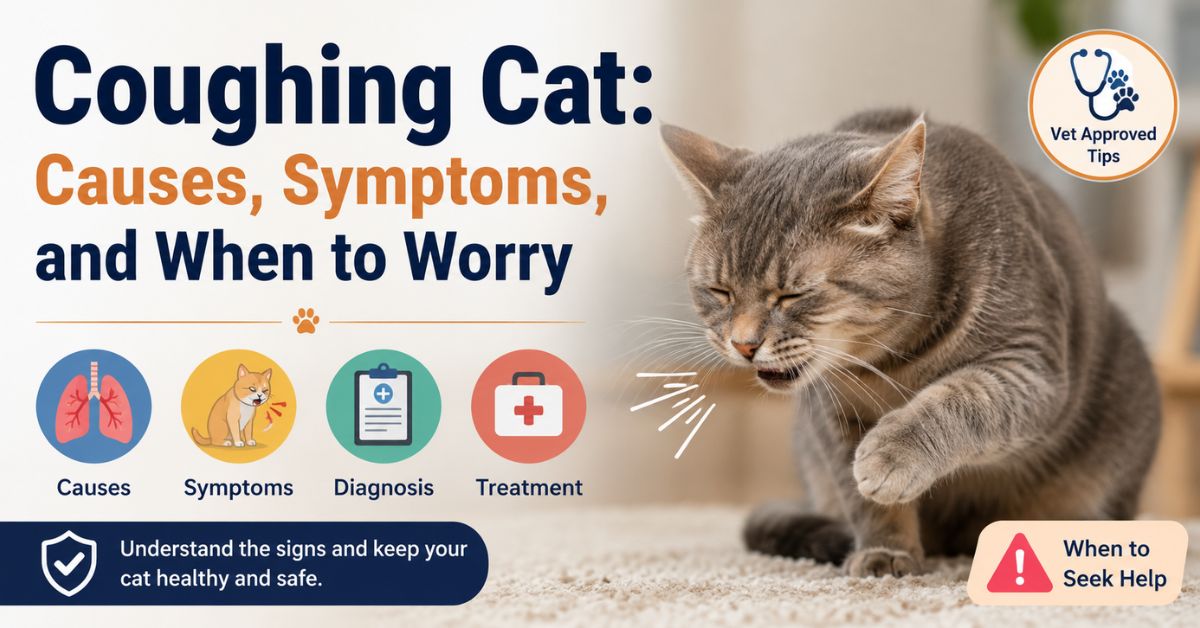
A coughing cat can quickly make any pet owner nervous. While an occasional cough may not seem serious, frequent coughing in cats can point to underlying health conditions that need attention. Cats do not cough as often as humans, so repeated coughing should never be ignored.
Sometimes, cat owners mistake coughing for hairball problems. In spite of this, there is a huge difference between the two.A true cough usually involves forceful air movement from the lungs, while hairball episodes often end with vomiting or gagging.
Understanding why your cat is coughing can help you take the right steps early. In this guide, you will learn the common causes of coughing in cats, symptoms to watch for, treatment options, prevention tips, and when it is time to call the veterinarian.
What Does a Coughing Cat Sound Like?
A coughing cat may make hacking, wheezing, or gagging noises. Some cats crouch low to the ground and stretch their neck forward while coughing. Others may sound like they are trying to clear something from their throat.
Common coughing sounds include:
- Dry hacking
- Wheezing
- Gagging
- Raspy breathing
- Repeated throat-clearing sounds
Many owners initially believe their cat is trying to cough up a hairball. However, if nothing comes out and the coughing keeps happening, another health issue may be responsible.
Common Causes of a Coughing Cat
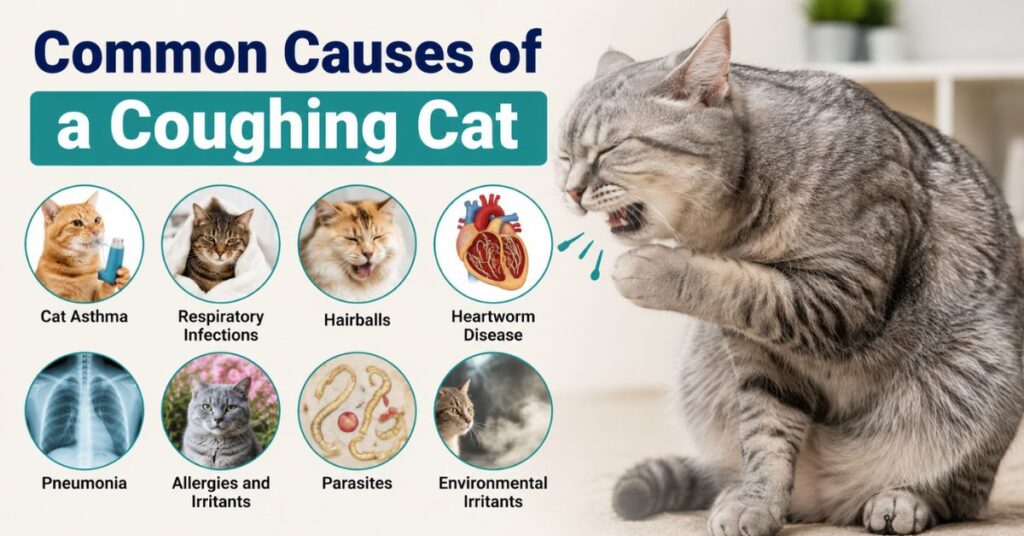
When cats cough, there are several possible causes. Some are mild, while others can become serious if untreated.
Cat Asthma
Cat asthma is one of the leading causes of chronic coughing in cats. This condition occurs when the airways become inflamed and narrow, making breathing difficult.
Symptoms of feline asthma include:
- Persistent coughing
- Wheezing
- Rapid breathing
- Open-mouth breathing
- Difficulty exercising
Environmental triggers often include:
- Cigarette smoke
- Dust
- Perfumes
- Air fresheners
- Litter dust
- Mold
Asthma attacks can become emergencies if breathing becomes severely restricted.
Respiratory Infections
Upper respiratory infections are another common cause of a coughing cat. Viral or bacterial infections can irritate the throat and lungs.
Common symptoms include:
- Sneezing
- Runny nose
- Fever
- Eye discharge
- Loss of appetite
- Congestion
Kittens and senior cats are especially vulnerable because their immune systems may be weaker.
Hairballs
Hairballs are often confused with coughing. Cats groom themselves frequently, swallowing loose fur in the process. Sometimes the fur collects in the stomach and causes gagging or hacking.
Hairball symptoms usually include:
- Retching
- Gagging
- Vomiting fur
- Reduced appetite
If your cat coughs without producing a hairball, another condition may be involved.
Heartworm Disease
Although heartworms are more common in dogs, cats can also become infected. Heartworms can affect the lungs and cause coughing.
Signs may include:
- Coughing
- Vomiting
- Weight loss
- Breathing difficulty
- Sudden collapse
Heartworm disease in cats can sometimes become life-threatening.
Pneumonia
Pneumonia develops when the lungs become inflamed due to infection or fluid buildup. This condition requires immediate veterinary care.
Symptoms often include:
- Wet cough
- Fever
- Lethargy
- Loss of appetite
- Fast breathing
Cats with pneumonia may appear extremely weak or tired.
Allergies and Irritants
Just like humans, cats can react to allergens in their environment.
Common irritants include:
- Smoke
- Dust
- Strong cleaning products
- Scented candles
- Pollen
- Aerosol sprays
Reducing exposure to irritants may improve coughing symptoms.
Parasites
Lungworms and other parasites can trigger coughing in cats, especially outdoor cats.
Additional symptoms may include:
- Weight loss
- Breathing issues
- Poor coat quality
- Fatigue
Regular parasite prevention is important for maintaining good feline health.
Difference Between Cat Coughing and Hairballs
Many cat owners struggle to tell the difference between coughing and hairballs. The following table can help.
| Symptom | Coughing Cat | Hairball Issue |
| Sound | Dry hacking or wheezing | Gagging or retching |
| Body Position | Neck stretched forward | Hunched body posture |
| Outcome | Usually nothing comes out | Hairball often expelled |
| Frequency | Can happen repeatedly | Usually occasional |
| Cause | Respiratory or medical issue | Swallowed fur |
If your cat repeatedly coughs without producing hair, a veterinary exam is recommended.
Warning Signs That Need Immediate Veterinary Care
Some coughing symptoms should never be ignored. Contact a veterinarian immediately if your cat shows any of the following signs:
- Blue or pale gums
- Open-mouth breathing
- Severe wheezing
- Difficulty breathing
- Loss of consciousness
- Persistent coughing fits
- Refusing food or water
- Extreme lethargy
Breathing emergencies in cats can worsen very quickly.
How Veterinarians Diagnose a Coughing Cat
Diagnosing the cause of coughing usually requires a complete examination.
Your veterinarian may perform:
Physical Examination
The vet listens to your cat’s lungs and heart to identify abnormal sounds.
X-Rays
Chest X-rays help detect:
- Asthma
- Pneumonia
- Tumors
- Fluid buildup
- Heart enlargement
Blood Tests
Bloodwork can identify infections, inflammation, or parasites.
Fecal Testing
This helps check for lungworms and intestinal parasites.
Bronchoscopy
In severe cases, a small camera may be used to examine the airways directly.
Proper diagnosis is essential because treatments vary depending on the underlying cause.
Treatment Options for a Coughing Cat
Treatment depends on what is causing the coughing.
Asthma Treatments
Cats with asthma may need:
- Steroid medications
- Inhalers
- Bronchodilators
- Environmental changes
Many cats improve significantly with proper asthma management.
Antibiotics
If a bacterial infection is present, antibiotics may be prescribed.
Always complete the full course exactly as directed.
Parasite Treatments
Dewormers or parasite medications help eliminate lungworms and other parasites.
Oxygen Therapy
Cats struggling to breathe may require oxygen support at a veterinary clinic.
Lifestyle Changes
Simple environmental adjustments can reduce coughing triggers.
Helpful changes include:
- Using dust-free litter
- Avoiding cigarette smoke
- Improving air circulation
- Reducing scented products
- Keeping the home clean
Home Care Tips for a Coughing Cat
Caring for a coughing cat at home can support recovery and reduce flare-ups.
Keep the Environment Calm
Stress may worsen respiratory symptoms. Create a quiet, comfortable resting area.
Use a Humidifier
Moist air may help soothe irritated airways.
Encourage Hydration
Fresh water helps keep mucus thin and easier to clear.
Monitor Symptoms
Track:
- Frequency of coughing
- Breathing patterns
- Appetite changes
- Energy levels
This information can help your veterinarian.
Can a Coughing Cat Be Prevented?
While not every cause can be prevented, many respiratory issues can be reduced through good care.
Prevention Tips
- Schedule regular veterinary checkups
- Keep vaccinations current
- Maintain parasite prevention
- Avoid smoking indoors
- Reduce dust and allergens
- Groom long-haired cats regularly
- Feed a balanced diet
Healthy living conditions play a major role in feline respiratory health.
Indoor vs Outdoor Cats and Coughing Risks
Outdoor cats often face greater exposure to parasites, infections, and environmental irritants. Indoor cats may experience fewer infectious diseases but can still develop asthma or allergy-related coughing.
Here is a quick comparison:
| Risk Factor | Indoor Cats | Outdoor Cats |
| Parasites | Lower risk | Higher risk |
| Air Pollution | Moderate | High |
| Infections | Lower exposure | Higher exposure |
| Allergens | Household irritants | Outdoor allergens |
| Trauma Risk | Lower | Higher |
Regular veterinary care is beneficial to both indoor and outdoor cats.
When Is Cat Coughing Considered Chronic?
A coughing cat may be considered chronic if symptoms continue for several weeks or return frequently.
Chronic coughing can indicate:
- Feline asthma
- Chronic bronchitis
- Heart disease
- Lung disease
- Persistent infections
Long-term coughing should always be professionally evaluated.
How Diet Impacts Respiratory Health
Nutrition affects the immune system and overall respiratory function.
A healthy diet can support:
- Strong immunity
- Reduced inflammation
- Better recovery from illness
- Healthy body weight
Overweight cats may experience more breathing difficulties because extra fat puts pressure on the lungs and chest.
Choose high-quality cat food with balanced nutrients and adequate hydration support.
Emotional Impact on Cat Owners
Hearing a cat cough repeatedly can be stressful for pet owners. Many people worry about emergencies or serious illness.
The good news is that many coughing conditions can be managed successfully with early treatment and consistent care.
Paying attention to subtle changes in your cat’s breathing habits can make a major difference in long-term health outcomes.
Conclusion
A coughing cat should never be ignored, especially if symptoms become frequent or severe. While some causes are relatively mild, others can indicate serious respiratory or heart-related conditions. Early diagnosis and proper treatment are the best ways to protect your cat’s health and comfort.
By understanding the warning signs, reducing environmental triggers, and scheduling regular veterinary care, you can help your cat breathe easier and live a healthier life.
For more trusted cat care guides, health tips, and feline wellness articles, visit KittyCareZone.com.
A cat may cough occasionally while otherwise appearing healthy. Mild asthma, allergies, or hairballs can cause this. However, repeated coughing should still be checked by a veterinarian.
Sometimes. If your cat has trouble breathing, wheezing severely, or breathing with an open mouth, seek emergency veterinary care immediately.
Common asthma signs include coughing, wheezing, rapid breathing, and difficulty exercising. Your veterinarian may use X-rays to confirm the diagnosis.
Yes. Dusty or scented cat litter can irritate sensitive airways and trigger coughing in some cats.
Occasional coughing may not be serious, but frequent or worsening coughing should always be evaluated to rule out respiratory disease or infections.

Ali Ahmad /Passionate writer sharing informative, engaging, and easy-to-read articles across different topics. Focused on delivering valuable content that helps readers learn, explore, and stay inspired every day.
1 thought on “Coughing Cat: Causes, Symptoms, and When to Worry”