

Introduction
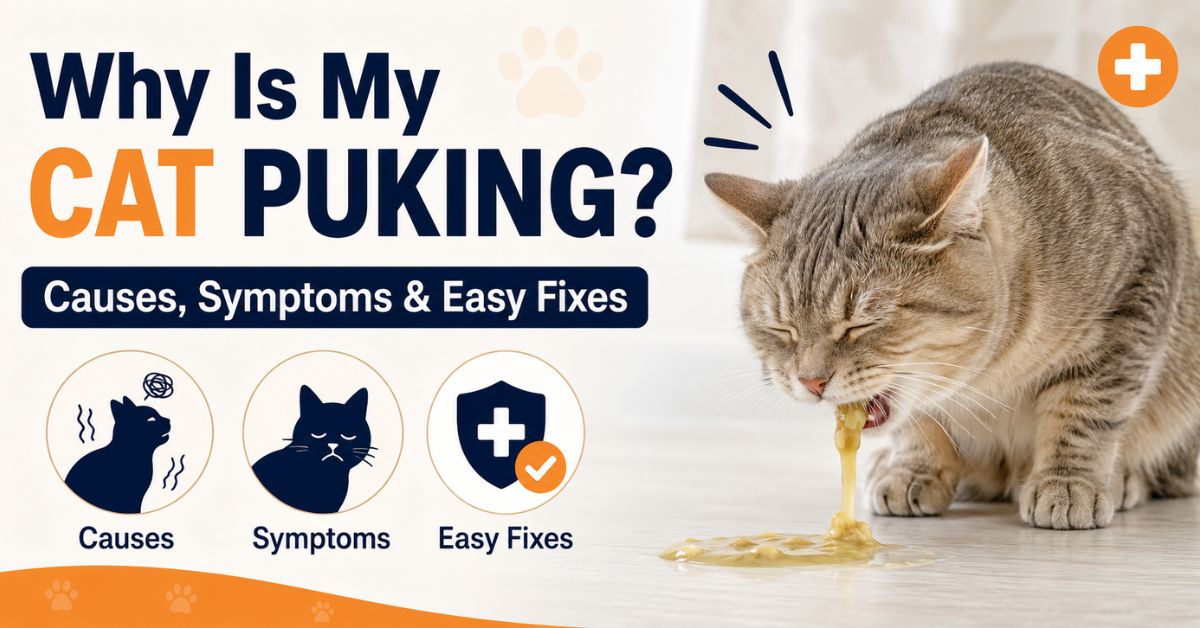
Have you ever wondered, “Why does my cat puke?”, you’re definitely not alone. Many cat owners become worried when they see their furry friend vomit unexpectedly. Sometimes, occasional vomiting is harmless. However, frequent or severe puking may signal an underlying health problem that needs attention.
Cats can throw up for many reasons, including hairballs, eating too fast, food sensitivities, infections, or even serious illnesses. Understanding the difference between normal and abnormal vomiting is important for every cat parent.
In this guide, you’ll learn the common causes of cat vomiting, warning signs to watch for, treatment options, and practical prevention tips to help keep your cat healthy and comfortable.
What Does It Mean When a Cat Throws Up?
The act of vomiting involves forcing stomach contents out of the mouth. It is different from regurgitation, which happens when food comes back up without much effort shortly after eating.
Occasional vomiting may not always be dangerous. Cats naturally groom themselves and swallow fur, which can lead to hairballs. However, if vomiting becomes frequent, persistent, or severe, it should never be ignored.
Some cats vomit once and quickly recover. Others may experience repeated episodes that point to digestive issues, poisoning, infections, or chronic diseases.
Common Reasons Why Your Cat Is Puking
Hairballs
Vomiting is most commonly caused by hairballs. When cats groom themselves, they swallow loose fur. Most of this fur passes through the digestive system, but some can collect in the stomach.
Long-haired breeds are especially prone to hairballs.
Signs of Hairball Vomiting
- Cylindrical clumps of fur in vomit
- Gagging or hacking sounds
- Vomiting occasionally after grooming
- Mild coughing before puking
Regular brushing can help reduce hairballs significantly.
Eating Too Fast
Some cats eat so quickly that they irritate their stomachs and vomit shortly afterward.
This is especially common in multi-cat households where cats compete for food.
How to Slow Down Eating
- Use slow-feeder bowls
- Offer smaller meals throughout the day
- Separate cats during feeding time
- Avoid sudden food changes
If your cat vomits undigested food soon after eating, eating too fast may be the cause.
Food Allergies or Food Intolerance
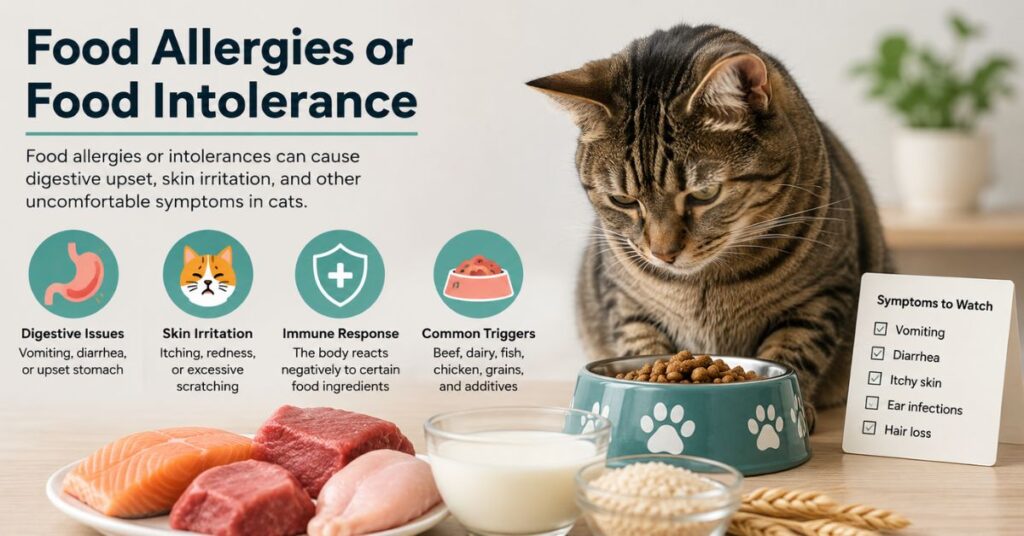
Food sensitivities can upset a cat’s digestive system. Certain ingredients may trigger vomiting, diarrhea, or itching.
Common food triggers include:
- Beef
- Dairy products
- Fish
- Chicken
- Artificial additives
Switching to a high-quality or limited-ingredient diet may help.
Sudden Diet Changes
Cats have sensitive stomachs. Changing food too quickly can lead to digestive upset and vomiting.
Always transition gradually over 7–10 days by mixing increasing amounts of the new food with the old one.
Parasites
Intestinal worms and parasites are common causes of vomiting, especially in kittens and outdoor cats.
Common Symptoms
- Vomiting
- Diarrhea
- Weight loss
- Bloated belly
- Poor coat condition
Routine deworming and veterinary checkups are important for prevention.
Poisoning or Toxic Substances
Cats are naturally curious and may accidentally consume toxic items around the house.
Dangerous Household Toxins
| Toxic Item | Possible Symptoms |
| Lilies | Kidney failure, vomiting |
| Chocolate | Tremors, vomiting |
| Cleaning products | Drooling, stomach upset |
| Human medications | Severe poisoning |
| Onions and garlic | Digestive problems |
Contact a veterinarian immediately if poisoning is suspected.
Gastrointestinal Problems
Digestive diseases can also explain why is my cat puking frequently.
These conditions include:
- Inflammatory bowel disease (IBD)
- Gastritis
- Stomach ulcers
- Intestinal blockages
Cats with digestive diseases may also lose weight or experience diarrhea.
Infections and Viruses
Bacterial or viral infections can upset a cat’s stomach.
Common symptoms include:
- Fever
- Low energy
- Loss of appetite
- Diarrhea
- Frequent vomiting
Cats in their younger and older years are particularly vulnerable.
Chronic Kidney Disease
Older cats often develop kidney disease, which may lead to nausea and vomiting.
Other Symptoms Include
- Increased thirst
- Frequent urination
- Weight loss
- Bad breath
- Weakness
Kidney disease requires long-term veterinary care and dietary management.
Liver Disease
Liver issues can also cause vomiting in cats. The liver helps remove toxins from the body, so when it isn’t functioning properly, nausea may occur.
Signs may include:
- Yellow gums or eyes
- Poor appetite
- Weight loss
- Lethargy
Early treatment improves outcomes significantly.
When Should You Worry About Cat Vomiting?
Occasional vomiting may not be serious, but certain symptoms require immediate veterinary attention.
Red Flag Symptoms
- Vomiting several times a day
- Blood in vomit
- Severe lethargy
- Refusing food or water
- Weight loss
- Diarrhea
- Trouble breathing
- Swollen abdomen
If your cat cannot keep water down, dehydration can become dangerous quickly.
What Cat Vomit Looks Like and What It Means
The appearance of vomit often provides clues about the underlying problem.
| Type of Vomit | Possible Cause |
| Hair-filled vomit | Hairballs |
| Undigested food | Eating too fast |
| Yellow bile | Empty stomach |
| White foam | Stomach irritation |
| Blood | Ulcers or injury |
| Green vomit | Digestive issue or bile problem |
Tracking what your cat vomits can help your veterinarian diagnose the issue faster.
How Veterinarians Diagnose Vomiting in Cats
If vomiting becomes frequent, your veterinarian may perform several tests.
Common Diagnostic Methods
- Physical examination
- Blood tests
- Fecal testing
- X-rays
- Ultrasound
- Food trials
Providing details about your cat’s symptoms helps improve diagnosis accuracy.
Treatment Options for Cat Vomiting
Treatment depends entirely on the underlying cause.
Dietary Changes
Veterinarians often recommend:
- Sensitive stomach cat food
- Prescription diets
- Smaller meals
- Bland foods temporarily
Hydration is also extremely important.
Medications
Your vet may prescribe:
- Anti-nausea medication
- Dewormers
- Antibiotics
- Hairball remedies
- Probiotics
Never give human medications to cats without veterinary approval.
Surgery
If an intestinal blockage or swallowed object is causing vomiting, surgery may be necessary.
Cats sometimes swallow:
- String
- Toys
- Rubber bands
- Fabric pieces
Foreign objects can quickly become life-threatening.
Home Remedies for Mild Cat Vomiting
If your cat vomits only once and seems otherwise healthy, mild supportive care may help.
Helpful Home Care Tips
- Offer fresh water
- Feed smaller meals
- Avoid treats temporarily
- Keep your cat calm and stress-free
- Brush regularly to reduce hairballs
However, home remedies should never replace veterinary care for persistent vomiting.
How to Prevent Vomiting in Cats
Preventing vomiting often comes down to good daily care and monitoring.
Prevention Tips
Feed High-Quality Food
Cheap foods with fillers can upset digestion.
Keep Toxic Items Away
Store cleaners, medications, and toxic plants safely.
Groom Your Cat Regularly
Brushing reduces swallowed fur and hairballs.
Schedule Routine Vet Visits
Early detection of illness helps prevent serious complications.
Reduce Stress
Cats can develop stomach upset from anxiety and environmental changes.
Can Stress Cause Cats to Vomit?
Yes, stress can absolutely contribute to vomiting.
Cats are sensitive animals. Changes in routine, loud noises, travel, or new pets may trigger digestive upset.
Signs of Stress in Cats
- Hiding
- Overgrooming
- Appetite changes
- Aggression
- Vomiting
Creating a calm and stable environment can help reduce stress-related stomach problems.
Why Is My Kitten Puking?
Kittens may vomit for different reasons than adult cats.
Common causes include:
- Eating too quickly
- Parasites
- Infections
- Dietary changes
- Curiosity-related ingestion
Because kittens are small and fragile, frequent vomiting should always be evaluated promptly.
Is It Normal for Cats to Vomit Occasionally?
Many healthy cats vomit once in a while. Occasional hairballs or mild stomach upset can happen naturally.
However, vomiting should not become a regular habit.
If your cat vomits more than once every few weeks, it’s worth discussing with your veterinarian.
Foods That May Upset a Cat’s Stomach
Certain foods are harder for cats to digest.
Avoid Feeding
- Dairy products
- Spicy foods
- Fatty table scraps
- Raw dough
- Chocolate
- Onions
- Garlic
Cats have unique nutritional needs, so sticking to balanced cat food is safest.
Indoor vs Outdoor Cats and Vomiting Risk
Outdoor cats face more vomiting risks because they are exposed to:
- Parasites
- Toxins
- Garbage
- Infected animals
- Poisonous plants
Indoor cats are generally safer but can still develop vomiting from hairballs, stress, or diet-related issues.
Conclusion
If you’ve been wondering, “why is my cat puking?”, the answer can range from harmless hairballs to serious health conditions. It may not always be dangerous to vomit occasionally, but you should never ignore vomiting that is repeated or severe.
Pay attention to your cat’s symptoms, eating habits, and overall behavior. Early diagnosis and treatment can make a huge difference in your cat’s health and comfort.
At KittyCareZone.com, we’re dedicated to helping cat owners provide the best possible care for their feline companions. By staying informed and proactive, you can help your cat live a happier, healthier life.
Your cat may have eaten too fast, swallowed hair, or experienced mild stomach irritation. However, frequent vomiting should still be monitored carefully.
A white foam often forms when the stomach is empty or irritated. It can also indicate mild digestive inflammation.
It’s usually best to wait a few hours before offering a small amount of bland food. Always provide fresh water unless your vet advises otherwise.
Yellow vomit often contains bile, which can happen when a cat’s stomach is empty for too long.
Seek veterinary care if vomiting is frequent, contains blood, causes dehydration, or comes with weakness, diarrhea, or appetite loss.

Ali Ahmad /Passionate writer sharing informative, engaging, and easy-to-read articles across different topics. Focused on delivering valuable content that helps readers learn, explore, and stay inspired every day.
2 thoughts on “Why Is My Cat Puking? Causes, Symptoms & Easy Fixes”