

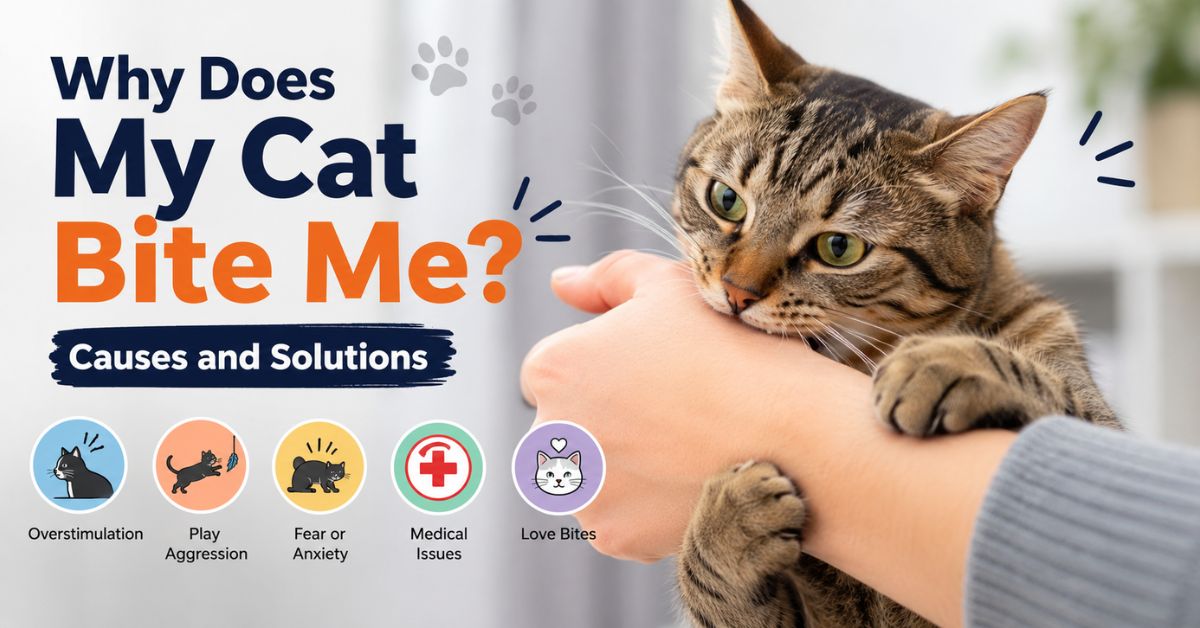
Cats are loving companions, but sometimes they surprise their owners with an unexpected bite. If you’ve ever asked yourself, why does my cat bite me, you’re certainly not alone. Cat biting is one of the most common behavioral concerns among pet owners, and understanding the reason behind it is the first step toward solving the problem.
Cats don’t usually bite without a reason. In most cases, biting is their way of communicating discomfort, excitement, fear, or even affection. By learning what triggers your cat’s behavior, you can build a stronger relationship and create a safer environment for both of you.
In this guide, we’ll explore the most common reasons cats bite, how to identify different types of biting behavior, and practical ways to prevent it.
Understanding Cat Biting Behavior
Before addressing the question, why does my cat bite me, it’s important to understand that cats communicate differently than humans.
Unlike people, cats rely heavily on body language and physical actions. A bite may be their way of saying:
- “I’m uncomfortable.”
- “I’ve had enough attention.”
- “I’m scared.”
- “I want to play.”
- “Something hurts.”
The meaning behind a bite often depends on the situation and your cat’s body language.
Common Reasons Why Cats Bite Their Owners
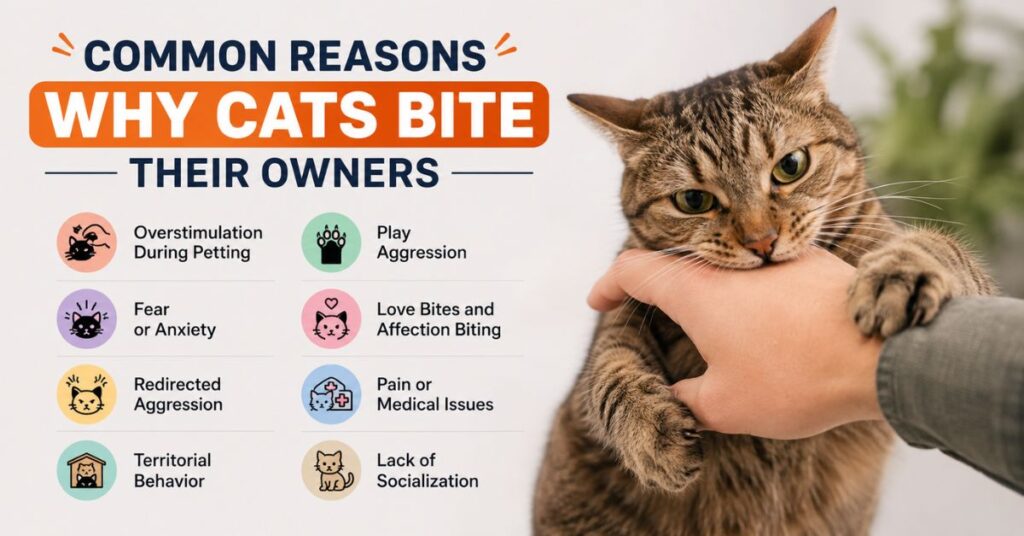
1. Overstimulation During Petting
One of the most common answers to why does my cat bite me is overstimulation.
Many cats enjoy being petted, but only up to a certain point. Repeated touching can become overwhelming and cause them to react suddenly.
Signs of overstimulation include:
- Tail twitching
- Flattened ears
- Skin rippling on the back
- Dilated pupils
- Restlessness
If these warning signs are ignored, your cat may bite to make the interaction stop.
How to Prevent It
- Keep petting sessions short.
- Watch for warning signals.
- Stop touching your cat when signs of irritation appear.
2. Play Aggression
Cats are natural hunters. Young cats and kittens especially enjoy chasing, pouncing, and biting moving objects.
Sometimes your hands or feet become the target.
Play aggression often occurs when:
- Cats lack toys.
- Cats are bored.
- Owners use hands during play.
This behavior is not usually aggressive but can still be painful.
How to Prevent It
- Use wand toys.
- Avoid rough hand play.
- Provide daily interactive play sessions.
3. Fear or Anxiety
Fear is another major reason behind the question, why does my cat bite me.
When cats feel threatened, they may bite as a form of self-defense.
Common triggers include:
- Loud noises
- New people
- Veterinary visits
- Moving homes
- Other pets
A frightened cat may first try to escape. If escape isn’t possible, biting may follow.
Signs of Fear
- Hiding
- Flattened ears
- Hissing
- Growling
- Puffed-up fur
Give fearful cats space and avoid forcing interactions.
4. Love Bites and Affection Biting
Surprisingly, not all bites are negative.
Some cats gently nibble their owners as a sign of affection. These are often called “love bites.”
Love bites are usually:
- Gentle
- Brief
- Not intended to cause pain
Cats may give affection bites while:
- Grooming you
- Cuddling
- Relaxing on your lap
Although they can be confusing, these bites are often harmless.
5. Redirected Aggression
Redirected aggression happens when a cat becomes upset by something but cannot reach the actual source of frustration.
For example:
- Seeing another cat outside
- Watching wildlife through a window
- Hearing unfamiliar sounds
The cat may suddenly bite the nearest person instead.
What to Do
- Remove the trigger if possible.
- Give your cat time to calm down.
- Avoid handling an agitated cat immediately.
6. Pain or Medical Issues
If your normally friendly cat suddenly starts biting, a medical issue could be responsible.
Pain can make even gentle cats react aggressively.
Potential health problems include:
- Arthritis
- Dental disease
- Injuries
- Infections
- Neurological conditions
If biting behavior appears suddenly or worsens over time, schedule a veterinary examination.
7. Territorial Behavior
Cats are territorial animals.
They may become defensive when they feel their space is threatened.
Territorial biting can occur because of:
- New pets
- New family members
- Changes in the household
- Outdoor cats near windows
Territorial stress can be reduced by creating safe spaces.
8. Lack of Socialization
Kittens learn important social skills during their early weeks of life.
Cats that were separated from littermates too early may not learn proper bite inhibition.
As adults, they may:
- Bite harder during play
- Struggle with social interactions
- Misread human cues
Positive training and interactive play can help improve behavior over time.
Different Types of Cat Bites
Understanding the type of bite can help answer the question, why does my cat bite me.
| Type of Bite | Common Cause | Severity |
| Play Bite | Hunting instincts | Mild |
| Love Bite | Affection | Very Mild |
| Warning Bite | Overstimulation | Moderate |
| Fear Bite | Self-defense | Moderate to Severe |
| Pain-Related Bite | Medical issues | Moderate |
| Aggressive Bite | Territorial or redirected aggression | Severe |
Recognizing the context is key to identifying the underlying cause.
Body Language Signs Before a Cat Bites
Most cats provide warnings before biting.
Watch for:
- Tail flicking
- Flattened ears
- Stiff body posture
- Dilated pupils
- Growling
- Hissing
- Swishing tail
Learning these signals allows you to stop interactions before a bite occurs.
How to Stop a Cat From Biting
Never Use Punishment
Punishment often makes biting worse.
Avoid:
- Yelling
- Hitting
- Spraying water
- Physical corrections
These methods can increase fear and damage trust.
Provide Daily Enrichment
It is more likely that cats with boredom will exhibit unwanted behaviors.
Enrichment ideas include:
- Puzzle feeders
- Cat trees
- Window perches
- Interactive toys
- Scheduled play sessions
Mental stimulation reduces frustration and excess energy.
Reward Good Behavior
Positive reinforcement works best.
Reward your cat when they:
- Play gently
- Remain calm during petting
- Interact appropriately
Treats, praise, and toys can reinforce desired behaviors.
Respect Personal Boundaries
Every cat has different comfort levels.
Some enjoy long petting sessions, while others prefer brief interactions.
Pay attention to your cat’s preferences and avoid forcing attention.
Redirect Biting Behavior
If your cat starts biting during play:
- Stop interaction immediately.
- Redirect attention to a toy.
- Resume play appropriately.
Consistency is important.
Why Kittens Bite More Than Adult Cats
It is natural for kittens to explore the world with their mouths.
Common reasons kittens bite include:
- Teething
- Curiosity
- Play behavior
- Learning boundaries
Most kittens improve as they mature, especially when given appropriate toys and social experiences.
Teething Timeline
| Age | Development Stage |
| 2–4 Weeks | Baby teeth emerge |
| 3–6 Months | Teething begins |
| 6–7 Months | Adult teeth appear |
During teething, kittens may chew and bite more frequently.
When Should You Be Concerned About Cat Biting?
Occasional play bites are usually normal.
However, seek professional help if your cat:
- Causes deep wounds
- Shows sudden behavioral changes
- Displays aggression regularly
- Appears ill or in pain
- Attacks without warning
A veterinarian or certified feline behaviorist can help identify the root cause.
Building Trust With Your Cat
Strong relationships reduce many behavior problems.
To build trust:
- Follow predictable routines.
- Respect your cat’s boundaries.
- Use positive reinforcement.
- Offer enrichment opportunities.
- Create safe resting areas.
Trust takes time, but it can significantly reduce biting incidents.
Conclusion
If you’ve been wondering why does my cat bite me, the answer depends on the situation. Cats may bite because of overstimulation, playfulness, fear, affection, pain, territorial instincts, or redirected aggression. Understanding your cat’s body language and respecting their boundaries can go a long way toward preventing unwanted biting.
The key is identifying the trigger rather than reacting to the bite itself. With patience, positive reinforcement, and proper care, most biting behaviors can be managed successfully. For more expert guides on cat behavior, health, nutrition, and care, continue exploring KittyCareZone.com, your trusted resource for raising happy and healthy cats.
Many cats bite during petting because of overstimulation. They enjoy attention initially but become uncomfortable when petting continues too long.
This behavior is often a sign of affection. Cats may combine grooming and gentle nibbling to show bonding and trust.
Play biting mimics natural hunting behavior. Interactive toys can help redirect this instinct away from your hands and feet.
No. Punishment can increase fear and aggression. Positive reinforcement and understanding the cause are much more effective.
If biting starts suddenly, becomes frequent, or is accompanied by signs of pain or illness, a veterinary examination is recommended.

Ali Ahmad /Passionate writer sharing informative, engaging, and easy-to-read articles across different topics. Focused on delivering valuable content that helps readers learn, explore, and stay inspired every day.
1 thought on “Why Does My Cat Bite Me? Causes and Solutions”