

Introduction
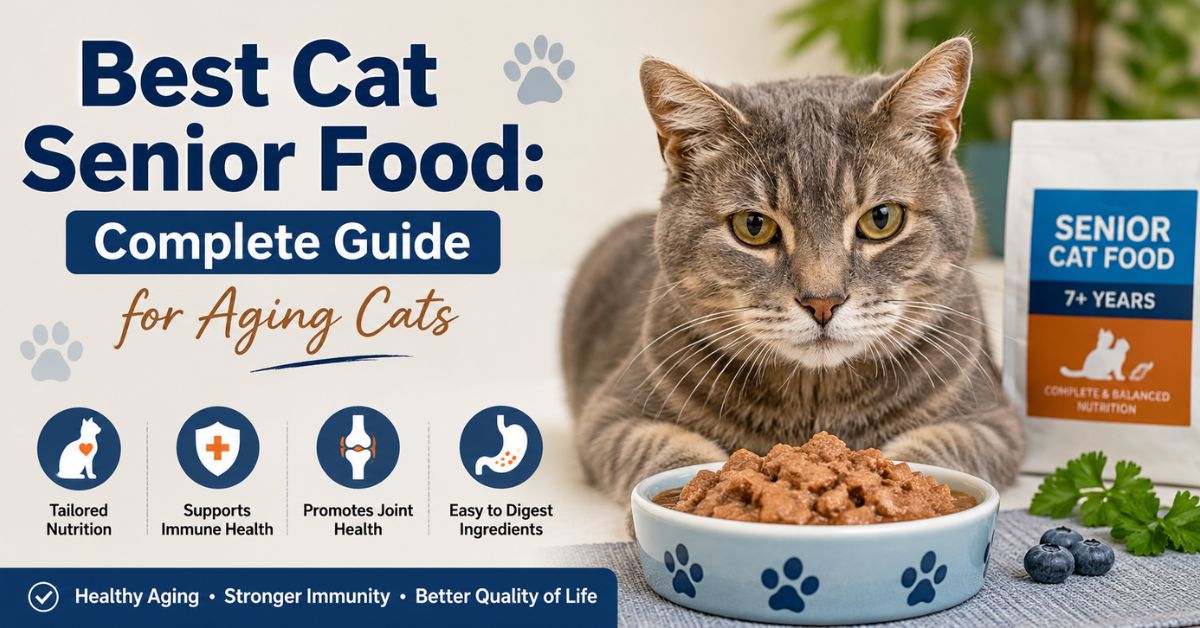
As cats grow older, their nutritional needs begin to change. Just like humans, senior cats require specialized diets to support their aging bodies, maintain healthy weight, and prevent age-related health issues. Choosing the right cat senior food can significantly improve your feline companion’s quality of life.
Many cat owners wonder when they should switch to senior food and what ingredients matter most. The answer depends on your cat’s age, activity level, and overall health. In general, most cats are considered seniors around 10 to 12 years of age.
This comprehensive guide explains everything you need to know about cat senior food, including nutritional requirements, benefits, ingredients to look for, feeding tips, and common mistakes to avoid.
Understanding Senior Cats and Their Nutritional Needs
A cat’s metabolism, digestion, and activity level naturally change with age. While some older cats become less active and gain weight, others may lose muscle mass and become underweight.
Senior cats often experience:
- Reduced energy levels
- Joint stiffness
- Dental issues
- Digestive sensitivity
- Kidney concerns
- Reduced immune function
- Changes in appetite
Because of these changes, feeding standard adult cat food may not always provide adequate nutrition.
Proper cat senior food is formulated to address these age-related challenges while supporting overall wellness.
When Should You Switch to Cat Senior Food?
There is no exact age that applies to every cat. However, most veterinarians recommend considering senior food when cats reach:
| Cat Age | Life Stage |
| 0–1 Year | Kitten |
| 1–7 Years | Adult |
| 7–10 Years | Mature Adult |
| 10+ Years | Senior |
| 15+ Years | Geriatric |
Some cats may benefit from senior nutrition earlier if they have specific health conditions or reduced activity levels.
A veterinarian should always be consulted before making major dietary changes.
Why Cat Senior Food Is Important
Senior cat formulas are designed to support healthy aging through targeted nutrition.
Benefits include:
- Supports healthy weight management
- Helps maintain lean muscle mass
- Promotes healthy digestion
- Supports kidney health
- Enhances immune function
- Provides joint support
- Improves coat and skin condition
A high-quality cat senior food can help your pet remain comfortable, active, and healthy throughout their golden years.
Key Nutrients in Cat Senior Food
Not all senior cat foods are created equal. Understanding the essential nutrients can help you make better choices.
High-Quality Protein
As carnivores, cats must consume animal protein to thrive.
Protein helps:
- Maintain muscle mass
- Support organ function
- Improve energy levels
- Promote healthy aging
Real meat can be found in foods such as:
- Chicken
- Turkey
- Salmon
- Tuna
- Duck
as the first ingredient.
Moderate Fat Content
Senior cats need enough fat for energy, but excessive fat can contribute to obesity.
Healthy fats support:
- Brain function
- Skin health
- Coat quality
- Energy production
Omega-3 fatty acids are particularly beneficial for older cats.
Fiber for Digestive Health
Aging cats may experience digestive issues, including constipation.
Fiber can help:
- Improve digestion
- Support gut health
- Promote regular bowel movements
- Reduce hairballs
Sources include:
- Beet pulp
- Pumpkin
- Pea fiber
- Psyllium
Taurine
The amino acid taurine is essential for cats.
It supports:
- Heart health
- Eye health
- Nervous system function
A deficiency can lead to serious health problems.
Vitamins and Antioxidants
Antioxidants help combat cellular damage associated with aging.
Important nutrients include:
- Vitamin E
- Vitamin C
- Selenium
- Beta-carotene
These nutrients help strengthen the immune system.
Joint Support Ingredients
Many senior cat foods contain ingredients that support mobility.
Common additions include:
- Glucosamine
- Chondroitin
- Omega-3 fatty acids
These nutrients may help reduce joint discomfort and stiffness.
Wet vs Dry Cat Senior Food
Many owners wonder whether wet or dry food is better for aging cats.
Wet Senior Cat Food
Advantages:
- Higher moisture content
- Easier to chew
- Supports hydration
- Beneficial for kidney health
Disadvantages:
- More expensive
- Spoils quickly after opening
Dry Senior Cat Food
Advantages:
- Convenient storage
- More affordable
- Easy portion control
Disadvantages:
- Lower moisture content
- May be difficult for cats with dental issues
Many veterinarians recommend a combination of both wet and dry cat senior food for balanced nutrition.
Ingredients to Look For in Cat Senior Food
Pay attention to the nutrition content of the ingredients on food labels.
Look for:
- Real animal protein
- Fish oil
- Omega-3 fatty acids
- Taurine
- Antioxidants
- Probiotics
- Vitamins and minerals
The first ingredient should ideally be a named protein source.
Examples include:
- Chicken
- Turkey
- Salmon
- Whitefish
Ingredients to Avoid
Certain ingredients may offer little nutritional benefit.
Try to avoid foods containing:
- Excessive fillers
- Artificial colors
- Artificial preservatives
- Large amounts of corn
- Excessive soy products
- Unspecified meat by-products
Reading ingredient labels carefully helps ensure you’re choosing quality cat senior food.
Common Health Issues in Senior Cats and Dietary Solutions
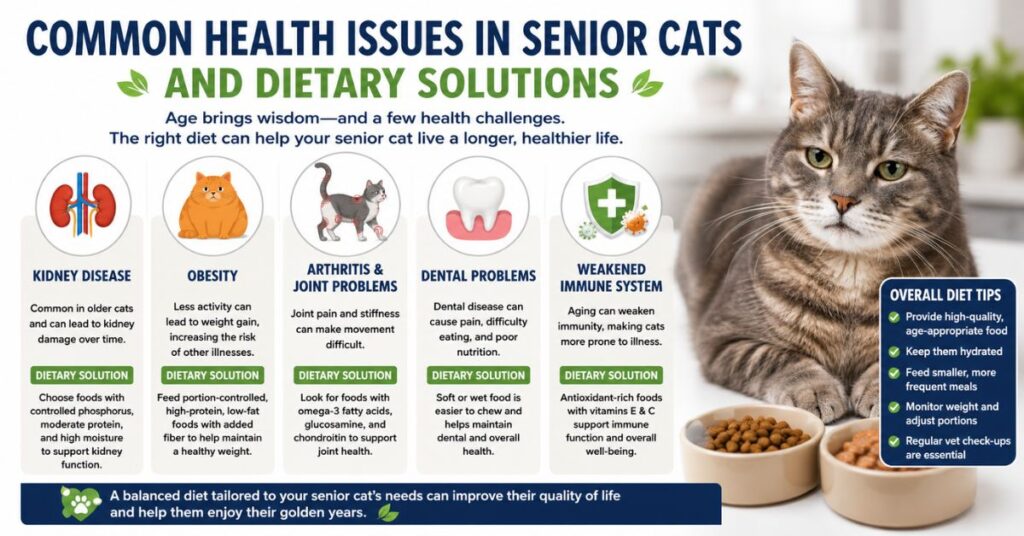
Kidney Disease
Cats with kidney disease are among the most common species.
Helpful dietary features include:
- Controlled phosphorus
- Moderate protein levels
- Increased moisture
Wet senior food is often recommended.
Obesity
Reduced activity can lead to weight gain.
Look for foods that provide:
- Controlled calories
- High protein
- Balanced fat content
Joints and organs are less stressed when their weight is maintained.
Arthritis and Joint Problems
Joint discomfort can make movement difficult.
Foods containing:
- Omega-3 fatty acids
- Glucosamine
- Chondroitin
may support mobility and comfort.
Dental Problems
Many older cats develop dental issues.
Signs include:
- Difficulty chewing
- Dropping food
- Reduced appetite
Soft wet food may be easier for these cats to eat.
How Much Cat Senior Food Should You Feed?
Feeding amounts vary depending on:
- Age
- Weight
- Activity level
- Health status
- Food type
General guidelines:
| Cat Weight | Daily Food Amount |
| 5–8 lbs | 150–200 calories |
| 8–10 lbs | 200–250 calories |
| 10–12 lbs | 250–300 calories |
| 12–15 lbs | 300–350 calories |
Always check manufacturer recommendations and consult your veterinarian for personalized advice.
Tips for Transitioning to Cat Senior Food
Sudden diet changes can upset your cat’s stomach.
Follow a gradual transition:
Days 1–3
75% old food, 25% new food
Days 4–6
50% old food, 50% new food
Days 7–9
25% old food, 75% new food
Day 10
100% new food
This approach helps minimize digestive discomfort.
Signs Your Senior Cat Likes Their New Food
Positive signs include:
- Consistent appetite
- Healthy stool quality
- Stable weight
- Improved energy
- Shiny coat
- Better hydration
Monitor your cat closely during the transition period.
Common Mistakes Cat Owners Make
Avoid these frequent mistakes:
- Feeding low-quality food
- Ignoring calorie intake
- Overfeeding treats
- Not monitoring weight
- Switching foods too quickly
- Assuming all senior cats need the same diet
Each cat is unique and may require individualized nutritional support.
Choosing the Best Cat Senior Food
When selecting the best cat senior food, consider:
- Age and health status
- Protein quality
- Moisture content
- Veterinary recommendations
- Ingredient quality
- Special health needs
The best choice is one that meets your cat’s nutritional requirements while supporting long-term health.
Conclusion
Providing the right cat senior food is one of the best ways to support your cat’s health as they age. Senior cats have unique nutritional requirements that differ from those of younger adults. A diet rich in high-quality protein, essential fatty acids, vitamins, and joint-supporting nutrients can help maintain mobility, muscle mass, and overall well-being.
By understanding your cat’s changing needs and choosing a high-quality senior diet, you can help them enjoy a healthier and more comfortable life. For more expert cat care tips, nutrition guides, and feline health advice, keep visiting KittyCareZone.com.
Most cats can begin transitioning to senior food between 10 and 12 years of age, although some may benefit earlier based on health needs.
Wet food often provides better hydration and is easier to chew, but many senior cats do well with a combination of wet and dry food.
Most senior cats benefit from two to four smaller meals daily rather than one large meal.
Some healthy seniors can, but specialized cat senior food is typically better suited to their changing nutritional requirements.
High-quality animal protein is one of the most important nutrients because it helps maintain muscle mass and overall health.

Ali Ahmad /Passionate writer sharing informative, engaging, and easy-to-read articles across different topics. Focused on delivering valuable content that helps readers learn, explore, and stay inspired every day.
2 thoughts on “Best Cat Senior Food: Complete Guide for Aging Cats”