

Introduction
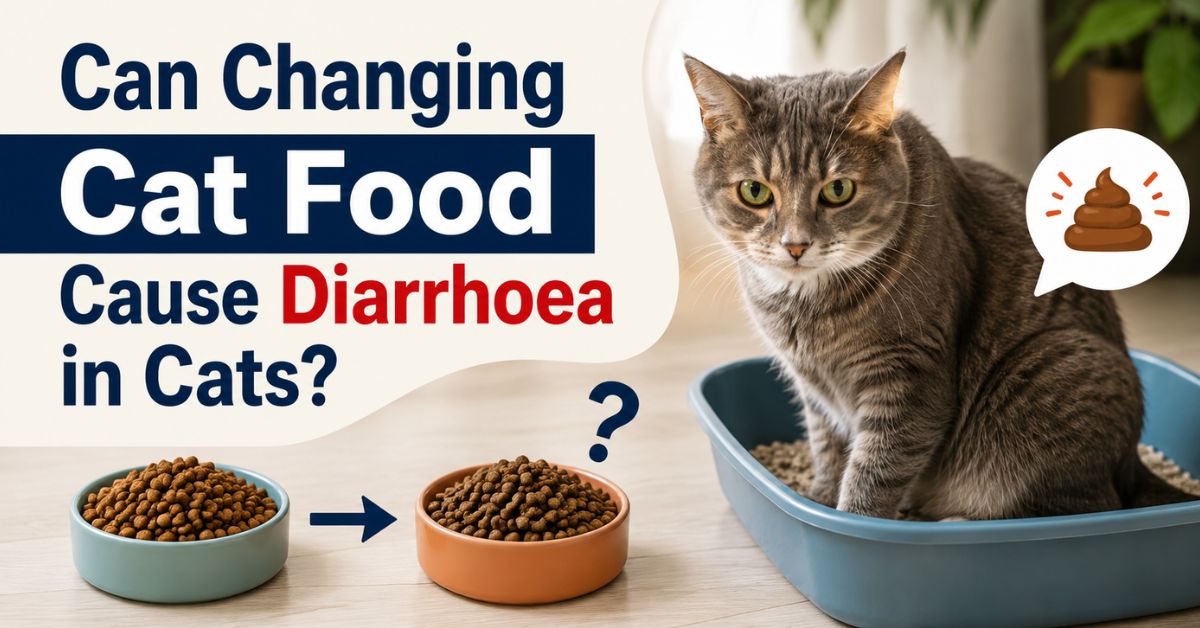
Many cat owners become worried when their furry friend suddenly develops digestive problems after trying a new diet. One of the most common questions pet parents ask is: can changing cat food cause diarrhoea?
The short answer is yes. Cats have sensitive digestive systems, and even a small dietary change can sometimes trigger stomach upset. While occasional loose stools may not always signal a serious problem, persistent diarrhoea should never be ignored.
In this guide, you will learn why changing cat food may cause diarrhoea, how to switch foods safely, warning signs to watch for, and practical ways to protect your cat’s digestive health. Whether you own a kitten or an adult cat, understanding proper food transitions can help prevent unnecessary discomfort.
Why Cats Have Sensitive Stomachs
Cats are creatures of habit. Their digestive systems adapt to a specific balance of nutrients, ingredients, and feeding routines. Sudden changes can disrupt the natural bacteria inside the gut, leading to digestive issues.
Several factors make cats more sensitive than other pets:
- Limited tolerance for sudden dietary changes
- Sensitive intestinal bacteria balance
- Food allergies or intolerances
- Stress-related digestive reactions
- Difficulty digesting unfamiliar proteins or ingredients
Because of this sensitivity, even premium cat foods can sometimes upset a cat’s stomach if introduced too quickly.
Can Changing Cat Food Cause Diarrhoea?
Yes, changing cat food can cause diarrhoea in many cats, especially if the transition happens suddenly.
When you abruptly replace your cat’s old food with a new formula, the digestive system may struggle to adjust. The stomach and intestines need time to adapt to new ingredients, nutrient levels, and protein sources.
As a result, your cat may experience:
- Loose stools
- Frequent bowel movements
- Gas
- Vomiting
- Loss of appetite
- Mild stomach discomfort
In most cases, mild diarrhoea caused by food changes improves within a few days when managed correctly. However, severe or long-lasting diarrhoea may require veterinary attention.
Common Reasons Food Changes Trigger Diarrhoea
Sudden Diet Transition
The most common cause is switching foods too quickly. Cats need gradual transitions so their digestive systems can adapt slowly.
For example, suddenly switching from chicken-based dry food to fish-based wet food can overwhelm the digestive tract.
Ingredient Differences
Different brands contain varying:
- Protein sources
- Fat levels
- Fiber content
- Artificial additives
- Dairy ingredients
- Fillers and preservatives
Some cats react poorly to certain ingredients, especially artificial flavors or rich fatty foods.
Food Allergies or Intolerances
Some cats develop sensitivities to specific ingredients such as:
- Beef
- Dairy
- Fish
- Chicken
- Grains
If diarrhoea continues after switching foods, your cat may have a food intolerance rather than simple digestive adjustment.
Rich or High-Fat Foods
Foods high in fat can upset a cat’s stomach quickly. Rich diets may overwhelm digestion and trigger loose stools.
This is especially common when introducing:
- Human food
- Treat-heavy diets
- Premium high-fat wet foods
Stress During Food Changes
Cats dislike sudden routine changes. Introducing a new diet can sometimes create anxiety, especially in nervous cats.
Stress itself may contribute to digestive upset and diarrhoea.
Signs Your Cat’s Diarrhoea Is Related to Food Changes
If the symptoms began shortly after changing food, the diet transition may be responsible.
Common signs include:
| Symptom | Possible Meaning |
| Loose stool after new food | Digestive adjustment |
| Mild vomiting | Sensitive stomach reaction |
| Increased gas | Ingredient intolerance |
| Refusing new food | Stress or dislike |
| Soft stool for 1–3 days | Temporary digestive upset |
| Persistent diarrhoea | Possible allergy or illness |
If symptoms worsen or continue beyond several days, consult your veterinarian.
How Long Does Diarrhoea Last After Changing Cat Food?
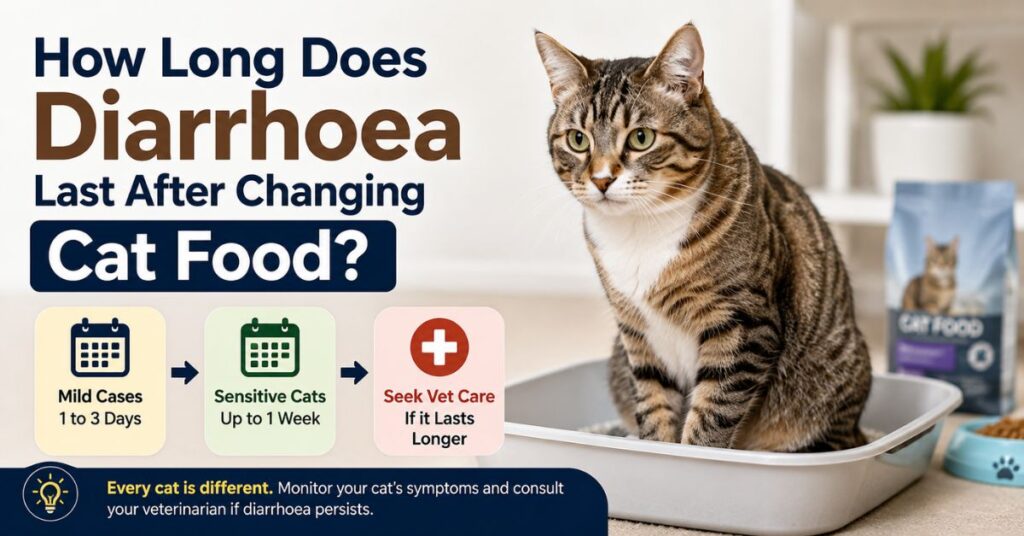
In mild cases, diarrhoea may last:
- 1 to 3 days during adjustment
- Up to 1 week in sensitive cats
However, diarrhoea lasting longer than a week is not considered normal.
Seek veterinary care if your cat experiences:
- Blood in stool
- Severe lethargy
- Weight loss
- Refusal to eat
- Continuous vomiting
- Dehydration
Kittens and senior cats are especially vulnerable to dehydration from diarrhoea.
How to Safely Change Cat Food
The safest way to prevent digestive upset is through a gradual transition.
Recommended 7-Day Food Transition Schedule
| Day | Old Food | New Food |
| 1–2 | 75% | 25% |
| 3–4 | 50% | 50% |
| 5–6 | 25% | 75% |
| 7 | 0% | 100% |
This gradual process allows gut bacteria to adjust naturally.
Tips to Prevent Diarrhoea During Food Changes
Introduce Food Slowly
Never switch foods overnight unless directed by a veterinarian.
Choose High-Quality Cat Food
Look for foods with:
- Real meat as the first ingredient
- Limited fillers
- No artificial colors
- Balanced nutrients
Higher-quality foods are usually easier to digest.
Avoid Multiple Changes at Once
Do not introduce:
- New treats
- Supplements
- Human foods
- Multiple food brands simultaneously
Identifying the trigger can be difficult when there are too many dietary changes.
Keep Fresh Water Available
Diarrhoea increases fluid loss. Fresh water helps prevent dehydration.
You can also encourage hydration with wet food if approved by your veterinarian.
Monitor Stool Consistency
Keep track of:
- Stool frequency
- Color
- Texture
- Presence of blood or mucus
This information can help your veterinarian diagnose the issue faster.
Wet Food vs Dry Food: Which Is Easier on the Stomach?
Both wet and dry foods can work well for cats, but some cats tolerate one better than the other.
Wet Food Benefits
- Higher moisture content
- Easier digestion for some cats
- Better hydration support
Dry Food Benefits
- Convenient storage
- Can support dental health
- Often less expensive
Cats with sensitive stomachs sometimes do better with limited-ingredient wet food diets.
When Diarrhoea May Not Be Related to Food Changes
Sometimes diarrhoea after changing food is only a coincidence. Other medical issues may be involved.
Possible causes include:
- Parasites
- Bacterial infections
- Viral illness
- Inflammatory bowel disease
- Stress
- Toxic ingestion
- Pancreatitis
If symptoms become severe, always seek professional veterinary advice.
Best Ingredients for Sensitive Cats
Cats with delicate digestion may benefit from foods containing:
- Pumpkin
- Probiotics
- Easily digestible proteins
- Limited ingredients
- Moderate fiber levels
Gentle protein options often include:
- Turkey
- Rabbit
- Duck
- Salmon
Avoid foods with excessive fillers or artificial preservatives.
Should You Stop the New Food Immediately?
Not always.
If diarrhoea is mild and your cat otherwise acts normal, slowing the transition may solve the problem.
However, stop the new food and contact your veterinarian if:
- Symptoms worsen
- Blood appears in stool
- Vomiting becomes frequent
- Your cat becomes weak or dehydrated
Professional guidance is important for persistent digestive problems.
Can Kittens Get Diarrhoea From Food Changes?
Yes, kittens are even more sensitive than adult cats.
Their digestive systems are still developing, which makes sudden dietary changes riskier.
Kittens can become dehydrated quickly, so persistent diarrhoea should always be taken seriously.
When changing kitten food:
- Transition slowly
- Avoid rich treats
- Monitor hydration carefully
- Consult a vet if symptoms continue
Natural Remedies That May Help Mild Diarrhoea
Always consult your veterinarian before trying home remedies.
Some gentle options include:
- Plain pumpkin puree
- Probiotic supplements
- Bland veterinary-approved diets
- Increased hydration
Never give human anti-diarrhoea medications to cats unless prescribed.
How Veterinarians Diagnose Food-Related Diarrhoea
Your veterinarian may:
- Review diet history
- Perform stool testing
- Check hydration status
- Recommend elimination diets
- Rule out infections or parasites
Keeping notes about food changes and symptoms can help speed diagnosis.
Long-Term Digestive Health Tips for Cats
Maintaining stable digestion involves consistency and quality nutrition.
Helpful habits include:
- Feeding on a regular schedule
- Avoiding sudden food switches
- Providing clean water daily
- Scheduling routine vet checkups
- Limiting table scraps
- Monitoring weight and stool quality
A healthy digestive system supports your cat’s overall wellbeing and energy levels.
Conclusion
So, can changing cat food cause diarrhoea? Absolutely. Cats often react to sudden dietary changes with digestive upset, especially when transitions happen too quickly. Fortunately, most mild cases improve with gradual food introduction, proper hydration, and careful monitoring.
Understanding your cat’s nutritional needs and digestive sensitivity can help you avoid future stomach problems. Always introduce new foods slowly and choose high-quality ingredients whenever possible.
For more expert cat health and nutrition guides, visit KittyCareZone.com and continue giving your feline companion the healthy, happy life they deserve.
Yes, sudden food changes are one of the most common causes of temporary diarrhoea in cats because the digestive system needs time to adjust.
Mild diarrhoea may last 1–3 days. If symptoms continue beyond a week, consult a veterinarian.
If symptoms are mild, slow the transition process. Severe diarrhoea, vomiting, or lethargy requires veterinary advice.
Gradually mix increasing amounts of new food with old food over 7–10 days to avoid digestive upset.
Yes, kittens have sensitive digestive systems and can easily develop diarrhoea from sudden diet changes.

Ali Ahmad /Passionate writer sharing informative, engaging, and easy-to-read articles across different topics. Focused on delivering valuable content that helps readers learn, explore, and stay inspired every day.
2 thoughts on “Can Changing Cat Food Cause Diarrhoea in Cats?”