

Introduction
Has your cat been experiencing vomiting, diarrhea, gas, or frequent stomach upset after meals? If so, you’re not alone. Many cat owners across the United States struggle to find the right diet for cats with digestive sensitivities.
A sensitive stomach can make mealtime stressful for both you and your feline companion. The good news is that choosing the right cat food for sensitive stomach problems can significantly improve your cat’s comfort, digestion, and overall health.
In this guide, you’ll learn what causes digestive sensitivity in cats, how to identify the right ingredients, what foods to avoid, and practical feeding strategies that can help your cat thrive.
Understanding Sensitive Stomachs in Cats
A sensitive stomach isn’t a disease itself. Instead, it’s a term used to describe digestive discomfort triggered by certain foods, ingredients, or underlying health conditions.
Some cats can eat almost anything without problems, while others react to even small dietary changes.
Common symptoms include:
- Frequent vomiting
- Soft stools or diarrhea
- Excessive gas
- Loss of appetite
- Burping after meals
- Stomach noises
- Weight loss in severe cases
If symptoms persist for more than a few days, consult your veterinarian to rule out medical conditions.
Common Causes of Digestive Sensitivity
Several factors can contribute to stomach issues in cats.
Food Intolerances
Some cats struggle to digest specific proteins, grains, dairy products, or artificial additives.
Unlike food allergies, intolerances typically affect digestion rather than causing skin problems.
Sudden Food Changes
Cats have sensitive digestive systems. Abruptly switching foods can upset the balance of gut bacteria and trigger digestive distress.
Low-Quality Ingredients
Cheap fillers, artificial preservatives, and by-products may be harder for some cats to digest.
Hairballs
Long-haired cats often swallow more fur during grooming, which can irritate the stomach.
Underlying Medical Conditions
Digestive disorders such as inflammatory bowel disease (IBD), pancreatitis, parasites, or gastrointestinal infections can mimic sensitive stomach symptoms.
Symptoms Your Cat May Need Sensitive Stomach Food
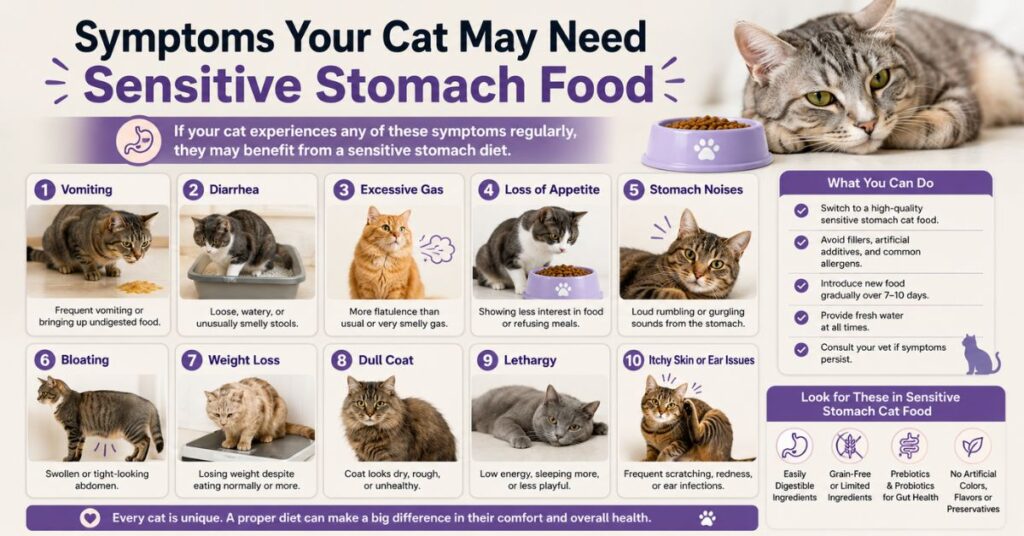
You may want to consider specialized nutrition if your cat experiences:
- Repeated vomiting after meals
- Chronic diarrhea
- Frequent stomach upset
- Refusal to eat certain foods
- Excessive flatulence
- Poor stool quality
- Weight fluctuations
These symptoms often improve when a cat is switched to a properly formulated cat food for sensitive stomach conditions.
What Makes Cat Food Easier to Digest?
Not all cat foods are created equal.
The best formulas typically contain ingredients designed to support digestive health while reducing irritation.
Highly Digestible Protein Sources
Cats are obligate carnivores and require animal protein.
Good options include:
- Chicken
- Turkey
- Salmon
- Whitefish
- Duck
- Rabbit
Single-protein formulas may be especially beneficial for sensitive cats.
Limited Ingredients
Foods with fewer ingredients reduce the risk of digestive reactions.
Many veterinarians recommend limited-ingredient diets for cats with recurring stomach issues.
Added Prebiotics and Probiotics
These beneficial compounds support healthy gut bacteria and improve digestion.
Benefits include:
- Better nutrient absorption
- Improved stool quality
- Reduced digestive upset
Moderate Fat Content
The fat in cats provides energy, but excessive fat can cause digestive problems.
Balanced fat levels are often easier on the stomach.
Natural Fiber Sources
Fiber supports digestive regularity and helps prevent both diarrhea and constipation.
Common sources include:
- Pumpkin
- Beet pulp
- Psyllium husk
- Sweet potatoes
Ingredients to Avoid
When shopping for sensitive stomach cat food, check labels carefully.
Some ingredients may contribute to digestive discomfort.
Artificial Colors
Artificial dyes provide no nutritional benefit and may irritate sensitive cats.
Excessive Fillers
Large amounts of corn, wheat, and soy may be difficult for some cats to digest.
Unspecified Meat By-Products
Named protein sources are generally preferable to vague ingredients.
Artificial Preservatives
Avoid products containing:
- BHA
- BHT
- Ethoxyquin
Many premium foods now use natural preservation methods.
Comparison Table: What to Look For vs What to Avoid
| Recommended Ingredients | Ingredients to Limit or Avoid |
| Named animal proteins | Artificial colors |
| Limited ingredient formulas | Excessive fillers |
| Prebiotics and probiotics | Artificial preservatives |
| Pumpkin and natural fiber | Unspecified meat by-products |
| Omega fatty acids | Excessively fatty formulas |
| Easily digestible carbohydrates | Large amounts of wheat or soy |
Dry Foods vs Wet Foods for Sensitive Stomachs
Many cat owners wonder which option is better.
The answer depends on your cat’s individual needs.
Benefits of Wet Food
Wet food offers:
- Higher moisture content
- Easier digestion
- Better hydration
- Stronger flavor appeal
Cats with recurring digestive problems often benefit from wet food diets.
Benefits of Dry Food
Dry food provides:
- Convenience
- Longer shelf life
- Cost-effectiveness
- Dental chewing benefits
Some premium dry foods are specifically formulated for digestive support.
Best Approach
Many veterinarians recommend combining both wet and dry food to balance hydration and convenience.
How to Transition to a New Cat Food
Switching foods too quickly can worsen digestive issues.
Follow this gradual transition schedule:
| Days | Old Food | New Food |
| 1–2 | 75% | 25% |
| 3–4 | 50% | 50% |
| 5–6 | 25% | 75% |
| 7+ | 0% | 100% |
This gradual approach allows your cat’s digestive system to adapt comfortably.
Feeding Tips for Cats with Sensitive Stomachs
Diet is only part of the solution.
These feeding practices can also help reduce digestive discomfort.
Serve Smaller Meals
An overly large meal can overwhelm a sensitive digestive system.
Offer:
- 3–4 smaller meals daily
- Consistent feeding times
Avoid Table Scraps
Human foods often contain ingredients that upset feline digestion.
Ensure Fresh Water Availability
Hydration supports digestive health and nutrient absorption.
Use Slow Feeders if Necessary
Some cats eat too quickly, leading to vomiting and stomach upset.
Slow-feed bowls can reduce this problem.
Monitor Treat Intake
It is recommended that treats do not exceed 10% of your cat’s daily calories.
When to See a Veterinarian
A sensitive stomach may occasionally indicate a more serious issue.
Contact your veterinarian if your cat experiences:
- Blood in stool
- Severe diarrhea
- Frequent vomiting
- Weight loss
- Lethargy
- Refusal to eat
- Signs of dehydration
Detecting complications early can improve outcomes.
Can Kittens Have Sensitive Stomachs?
Yes.
Kittens may experience digestive upset due to:
- Dietary transitions
- Parasites
- Food intolerance
- Immature digestive systems
Always choose kitten-specific formulas when feeding young cats.
A veterinarian can help determine the best diet if symptoms continue.
Supporting Digestive Health Long-Term
Managing digestive sensitivity is often a lifelong process.
Fortunately, many cats live perfectly healthy lives when provided with the proper nutrition.
Long-term digestive support includes:
- Consistent feeding schedules
- High-quality nutrition
- Routine veterinary care
- Stress reduction
- Proper hydration
- Gradual dietary changes
These habits help maintain a healthy digestive system and reduce future stomach problems.
Conclusion
Finding the right cat food for sensitive stomach issues can make a remarkable difference in your cat’s quality of life. By choosing highly digestible ingredients, avoiding common irritants, and following proper feeding practices, many digestive problems can be significantly reduced or even eliminated.
Every cat is unique, so patience and observation are essential when selecting the ideal diet. If symptoms continue despite dietary adjustments, consult your veterinarian for further evaluation.
At KittyCareZone.com, our goal is to help cat owners make informed decisions that support healthier, happier lives for their feline companions. With the right nutrition and care, your cat can enjoy comfortable digestion and better overall well-being for years to come.
The best cat food for sensitive stomach concerns typically contains highly digestible protein, limited ingredients, natural fiber, and digestive-support nutrients such as probiotics.
Vomiting can occur due to eating too quickly, food intolerance, hairballs, or digestive disorders. Persistent vomiting should be evaluated by a veterinarian.
Most cats with digestive sensitivities benefit from wet food because it is easier to digest and provides additional hydration.
Most cats show improvement within two to six weeks after transitioning to an appropriate diet.
Yes. Stress can affect digestion and may contribute to vomiting, diarrhea, or reduced appetite.

Ali Ahmad /Passionate writer sharing informative, engaging, and easy-to-read articles across different topics. Focused on delivering valuable content that helps readers learn, explore, and stay inspired every day.
1 thought on “Best Cat Food for Sensitive Stomach: Complete Guide for Healthier Digestion”