

Introduction
A munchkin kitten is one of the most adorable and unique cat breeds in the world. Known for their short legs, playful personality, and affectionate nature, these cats have quickly become popular among cat lovers in the USA. Despite their small appearance, munchkin cats are energetic, curious, and surprisingly agile.
If you are planning to adopt a munchkin kitten, it is important to understand their care needs, personality traits, health concerns, feeding habits, and grooming requirements. This detailed guide will help you learn everything you need to know before bringing one home.
Whether you are a first-time cat owner or an experienced pet parent, this article from KittyCareZone.com will help you provide the best possible care for your furry companion.
What Is a Munchkin Kitten?
A munchkin kitten is a cat breed recognized for its naturally short legs caused by a genetic mutation. Even though their legs are shorter than most cats, they are active, playful, and capable of running and jumping.
The breed was officially recognized in the 1990s and has gained popularity because of its unique appearance and lovable personality.
Physical Features of a Munchkin Kitten
Here are some common physical characteristics:
- Short legs
- Medium-sized body
- Round eyes
- Soft and silky coat
- Long tail
- Various coat colors and patterns
Munchkin cats can have either:
- Short hair
- Long hair
Both coat types are equally beautiful and require regular grooming.
Personality and Temperament of a Munchkin Kitten
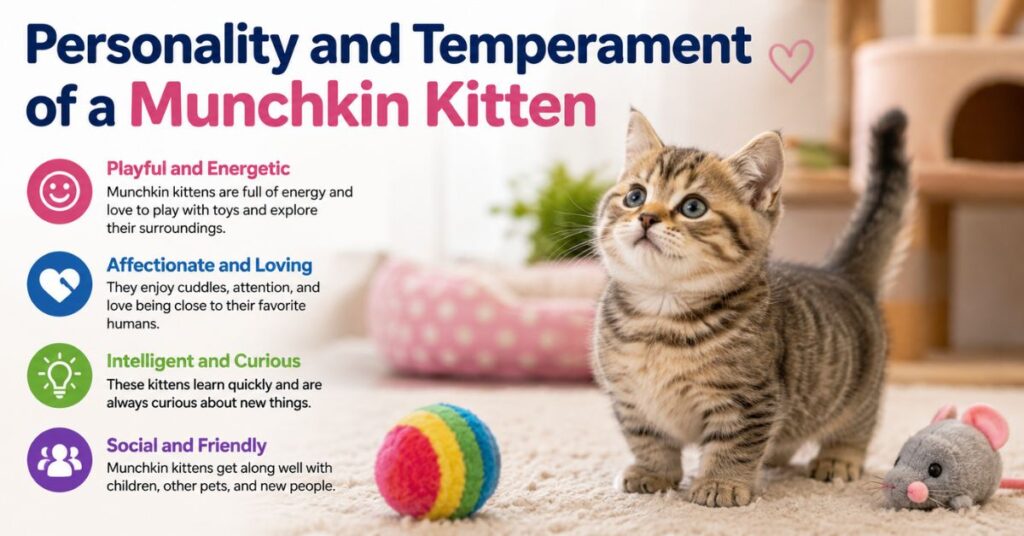
One reason many people love a munchkin kitten is its friendly and playful personality. These cats are social animals that enjoy interacting with humans and other pets.
Common Personality Traits
Playful and Energetic
Munchkin kittens love toys, climbing structures, and games. They remain playful even as adults.
Affectionate
They enjoy cuddling with their owners and often follow people around the house.
Intelligent
These kittens learn quickly and can even be trained to play fetch.
Social
Most munchkin cats get along well with:
- Children
- Dogs
- Other cats
Because of their friendly nature, they do not like being left alone for long periods.
Is a Munchkin Kitten Good for Families?
Yes, a munchkin kitten can be an excellent family pet. Their gentle and affectionate personality makes them ideal for households with children and other pets.
Why Families Love Munchkin Cats
| Feature | Benefit for Families |
| Friendly nature | Easy to bond with |
| Playful behavior | Great for children |
| Small size | Suitable for apartments |
| Social personality | Gets along with other pets |
| Moderate grooming needs | Easier maintenance |
However, children should always learn how to handle kittens gently and respectfully.
How to Care for a Munchkin Kitten
Proper care is essential to keep your munchkin kitten healthy and happy.
Provide a Safe Indoor Environment
Munchkin kittens are best kept indoors because:
- Indoor cats are safer from traffic
- They avoid predators
- Indoor living reduces disease exposure
Create a safe environment with:
- Scratching posts
- Cat trees
- Soft bedding
- Interactive toys
- Clean litter boxes
Best Diet for a Munchkin Kitten
Nutrition plays a major role in your kitten’s growth and development.
Choose High-Quality Kitten Food
A healthy diet should include:
- High animal protein
- Healthy fats
- Essential vitamins
- Taurine for heart and eye health
Avoid foods with:
- Excess fillers
- Artificial preservatives
- Too many carbohydrates
Feeding Schedule for Munchkin Kittens
| Age | Meals Per Day |
| 8–12 weeks | 4 meals |
| 3–6 months | 3 meals |
| 6–12 months | 2 meals |
Fresh water should always be available.
Grooming Needs of a Munchkin Kitten
The grooming needs of a munchkin kitten depend on coat length.
Short-Haired Munchkin Cats
- Brush once weekly
- Minimal shedding
- Easy maintenance
Long-Haired Munchkin Cats
- Brush 2–3 times weekly
- Prevent tangles and mats
- More seasonal shedding
Additional Grooming Tips
- Trim nails regularly
- Clean ears gently
- Brush teeth weekly
- Check eyes for discharge
Early grooming helps kittens become comfortable with handling.
Exercise and Playtime for Munchkin Kittens
Even with short legs, munchkin cats are active and playful.
Best Toys for Munchkin Kittens
Some great toy options include:
- Feather wands
- Puzzle feeders
- Cat tunnels
- Interactive laser toys
- Soft balls
Daily playtime helps:
- Prevent obesity
- Reduce boredom
- Improve mental stimulation
- Strengthen bonding
Every day, spend 20–30 minutes playing active games.
Common Health Issues in a Munchkin Kitten
Most munchkin kittens are healthy, but there are some health concerns related to their body structure.
Possible Health Conditions
Lordosis
A condition affecting the spine and chest muscles.
Pectus Excavatum
An abnormal chest shape that may affect breathing.
Arthritis
Some munchkin cats may develop joint issues later in life.
How to Keep Your Munchkin Kitten Healthy
- Schedule regular vet visits
- Maintain a healthy weight
- Feed balanced nutrition
- Encourage moderate exercise
- Monitor mobility changes
Genetic health risks can also be reduced by buying from a responsible breeder.
Are Munchkin Kittens Expensive?
Yes, a munchkin kitten can be costly compared to many other cat breeds.
Average Cost in the USA
Prices usually range between:
- $800 to $2,500+
The cost depends on:
- Breeder reputation
- Coat color
- Pedigree
- Location
- Vaccinations included
Remember that ongoing costs include:
- Food
- Vet care
- Grooming supplies
- Toys
- Pet insurance
How to Choose a Healthy Munchkin Kitten
Choosing the right kitten is extremely important.
Signs of a Healthy Kitten
Look for:
- Bright eyes
- Clean ears
- Healthy coat
- Active behavior
- Good appetite
Avoid kittens that appear:
- Lethargic
- Underweight
- Fearful
- Sickly
Questions to Ask the Breeder
Before adopting, ask:
- Are vaccinations completed?
- Has the kitten been dewormed?
- Are parents health-tested?
- Can you provide medical records?
- What food is the kitten eating?
A responsible breeder should answer all questions openly.
Training Tips for a Munchkin Kitten
Training a munchkin kitten is easier than many people expect.
Litter Box Training
Most kittens learn quickly if:
- The litter box is clean
- It is placed in a quiet area
- Positive reinforcement is used
Teaching Good Behavior
Reward good behavior with:
- Treats
- Praise
- Toys
Avoid punishment because it can create fear and anxiety.
Indoor vs Outdoor Life for Munchkin Kittens
Most veterinarians recommend keeping a munchkin kitten indoors.
Benefits of Indoor Living
- Longer lifespan
- Lower injury risk
- Protection from diseases
- Reduced exposure to parasites
If your cat enjoys outdoor time, consider:
- A secure catio
- Leash training
- Supervised outdoor play
Pros and Cons of Owning a Munchkin Kitten
Pros
- Extremely cute appearance
- Friendly personality
- Great with families
- Playful and entertaining
- Adaptable to apartment living
Cons
- Can be expensive
- Possible genetic health concerns
- Requires regular attention
- Ethical debates about breeding
Understanding both the advantages and disadvantages helps owners make informed decisions.
How Long Does a Munchkin Cat Live?
A healthy munchkin cat typically lives:
- 12 to 15 years
Some may live even longer with:
- Proper nutrition
- Regular vet care
- Healthy weight management
- Safe indoor living
Fun Facts About Munchkin Kittens
Here are some interesting facts about the munchkin kitten breed:
- They are sometimes called “sausage cats.”
- Their short legs come from a natural mutation.
- They can run surprisingly fast.
- Many enjoy sitting upright like rabbits.
- They are highly curious and intelligent.
These unique traits make munchkin cats unforgettable companions.
Conclusion
A munchkin kitten is a charming, playful, and affectionate companion that can bring joy to almost any household. Their unique appearance, loving nature, and energetic personality make them one of the most fascinating cat breeds today.
However, responsible ownership is essential. Providing high-quality food, regular veterinary care, proper grooming, and daily playtime will help your kitten thrive for many years.
If you are considering adopting a munchkin cat, always choose a reputable breeder or rescue organization that prioritizes feline health and welfare.
For more expert cat care guides, nutrition tips, and feline health articles, keep visiting KittyCareZone.com your trusted source for everything related to happy and healthy cats.
Most munchkin kittens are healthy, but they may be prone to certain spinal and joint conditions. Regular veterinary care is important.
Yes, they can jump and run well, although they may not jump as high as some long-legged breeds.
Yes, munchkin cats are generally affectionate, playful, and patient with children.
Young kittens usually need 3–4 meals daily, depending on their age and nutritional needs.
Absolutely. Their small size and adaptable personality make them excellent apartment pets.

Ali Ahmad /Passionate writer sharing informative, engaging, and easy-to-read articles across different topics. Focused on delivering valuable content that helps readers learn, explore, and stay inspired every day.
I think that everything posted was actually very reasonable.
However, what about this? suppose you were to
create a awesome headline? I ain’t saying your content isn’t good., however suppose
you added something that makes people desire more?
I mean Munchkin Kitten Care Guide for Happy Healthy Cats is a little plain.
You might peek at Yahoo’s front page and note how they write article titles to
grab people interested. You might try adding a
video or a related picture or two to get readers interested about what you’ve
written. Just my opinion, it could make your website a little livelier.
Only the best materials: https://karfaoqer.com
Hi there, I found your web site by way of Google while searching for
a related topic, your web site got here up,
it seems great. I have bookmarked it in my google bookmarks.
Hi there, simply was aware of your weblog via Google, and found that it’s really informative.
I am going to be careful for brussels. I’ll be grateful if you happen to proceed this in future.
Lots of other folks shall be benefited out of your writing.
Cheers!
New releases are here https://sapreqot.com
Читайте свежий материал: https://newsportal.kyiv.ua