

If you have recently noticed unusual behavior in your cat, you may be wondering how long is a cat pregnant and what changes to expect during pregnancy. Understanding feline pregnancy is important because it helps cat owners provide the right care, nutrition, and support during this special time.
Cats can become pregnant surprisingly quickly, and many first-time cat owners are not fully prepared for the journey. From recognizing early signs to preparing for kitten delivery, knowing the full pregnancy timeline can make the experience much easier and safer for both the mother cat and her kittens.
In this detailed guide, you will learn everything about how long is a cat pregnant, pregnancy stages, symptoms, nutrition tips, and what happens before birth.
How Long Is a Cat Pregnant?
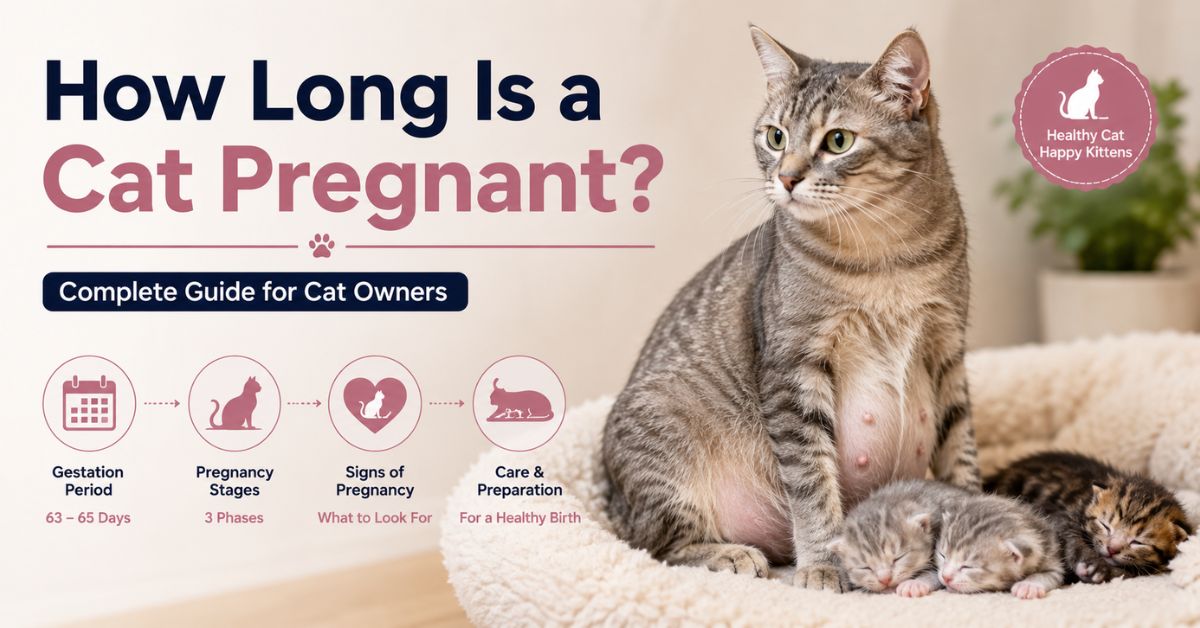
The average cat pregnancy lasts between 63 and 67 days, which is about 9 weeks. However, some cats may give birth slightly earlier or later depending on their breed, health, and litter size.
Most veterinarians consider a normal feline gestation period to be:
| Cat Pregnancy Stage | Duration |
| Early Pregnancy | Weeks 1–3 |
| Middle Pregnancy | Weeks 4–6 |
| Late Pregnancy | Weeks 7–9 |
| Average Total Gestation | 63–67 Days |
Some cats may deliver healthy kittens as early as 58 days or as late as 72 days. Still, births outside the normal range should be monitored carefully by a veterinarian.
Understanding the Cat Gestation Period
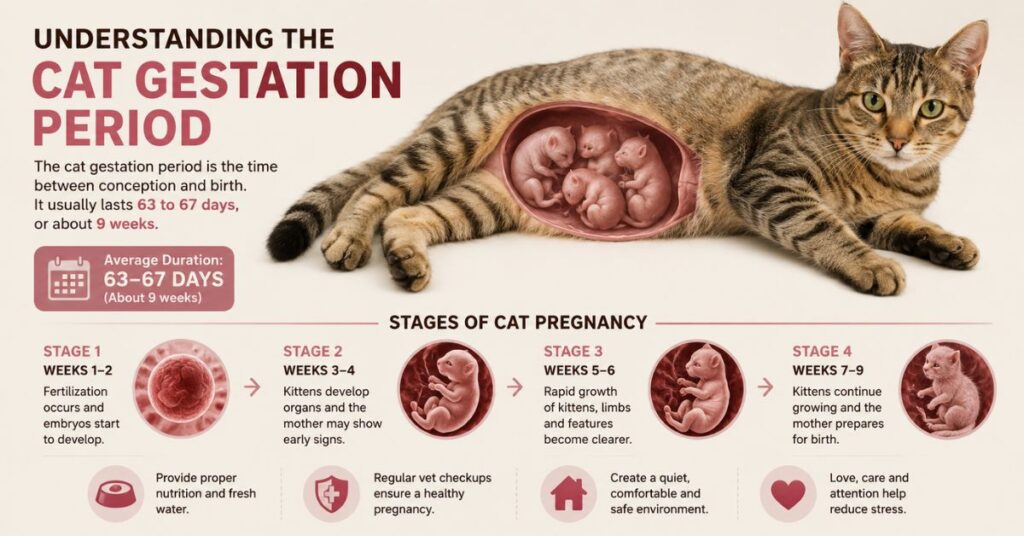
The term “gestation period” refers to the time between conception and birth. During this period, kittens grow rapidly inside the mother’s womb.
Unlike humans, cats experience a relatively short pregnancy. Because of this, physical and behavioral changes can happen quickly.
The answer to how long is a cat pregnant also depends on factors such as:
- Breed
- Age
- Overall health
- Number of kittens
- Nutrition quality
- Stress levels
For example, larger litters sometimes result in shorter pregnancies because the mother’s body reaches labor sooner.
Early Signs of Pregnancy in Cats
Many cat owners do not realize their cat is pregnant until several weeks have passed. Fortunately, there are common symptoms that can help you identify pregnancy early.
1. Pink and Enlarged Nipples
One of the first visible signs is “pinking up,” where the nipples become darker pink and slightly swollen.
This usually happens around the third week of pregnancy.
2. Increased Appetite
Pregnant cats often eat more because their bodies need extra nutrients for developing kittens.
3. Weight Gain
Gradual weight gain is normal during feline pregnancy. Most cats gain around 2–4 pounds depending on litter size.
4. Behavioral Changes
Your cat may become:
- More affectionate
- More tired than usual
- Less active
- Interested in nesting areas
5. Morning Sickness
Some pregnant cats experience mild vomiting during early pregnancy due to hormonal changes.
Week-by-Week Cat Pregnancy Timeline
Understanding the pregnancy timeline helps cat owners know what changes are normal.
Week 1–2: Fertilization and Early Development
During the first two weeks:
- Fertilized eggs travel to the uterus
- Hormonal changes begin
- Physical changes are minimal
At this stage, it is difficult to visually confirm pregnancy.
Week 3: Visible Pregnancy Signs Begin
By week three:
- Nipples become pinker
- Appetite increases
- Mild nausea may occur
Veterinarians can sometimes detect pregnancy through palpation.
Week 4–5: Rapid Kitten Growth
This is when the pregnancy becomes more noticeable.
Common Changes:
- Belly enlargement
- Weight gain
- Increased sleep
- Stronger appetite
An ultrasound can confirm pregnancy during this period.
Week 6–7: Advanced Pregnancy Stage
At this point:
- Kittens continue growing rapidly
- The cat’s abdomen becomes large
- Movement inside the belly may be visible
Your cat may also begin searching for quiet, safe nesting spots.
Week 8–9: Preparing for Birth
The final stage is critical.
Signs labor is approaching include:
- Restlessness
- Nesting behavior
- Drop in appetite
- Increased vocalization
- Milk production
Most cats give birth around day 63–67.
How to Care for a Pregnant Cat
Proper care is essential during pregnancy. If you are asking how long is a cat pregnant, you should also know how to support her health during those weeks.
Provide High-Quality Nutrition
Pregnant cats need more calories and protein than usual.
Best Diet Tips:
- Feed high-quality kitten food
- Offer frequent small meals
- Ensure fresh water is always available
Kitten food is often recommended because it contains:
- Higher protein
- More calories
- Essential nutrients
Create a Safe Environment
Stress can negatively affect pregnant cats.
Provide:
- Quiet sleeping areas
- Warm bedding
- Minimal household stress
- Separation from aggressive pets
Schedule Veterinary Checkups
Routine vet visits help monitor the pregnancy and identify possible complications early.
A veterinarian may perform:
- Ultrasound
- X-rays
- Weight checks
- Health evaluations
Avoid Harmful Medications
Never give medications without veterinary approval during pregnancy.
Some medicines can harm unborn kittens.
What to Feed a Pregnant Cat
Nutrition plays a major role in healthy kitten development.
Here is a simple feeding guide:
| Pregnancy Stage | Recommended Food |
| Early Pregnancy | Regular high-quality cat food |
| Mid Pregnancy | Transition to kitten food |
| Late Pregnancy | High-calorie kitten formula |
| Nursing Stage | Increased calorie intake |
Protein-rich foods help support both the mother and her growing kittens.
Common Problems During Cat Pregnancy
Most pregnancies are healthy, but complications can happen.
Warning Signs to Watch For
Contact a veterinarian if your cat experiences:
- Heavy bleeding
- Severe vomiting
- Extreme lethargy
- Difficulty breathing
- Labor lasting over 24 hours
- Strong-smelling discharge
These symptoms may indicate serious complications.
Preparing for Kitten Birth
As the due date approaches, prepare a nesting area for delivery.
Ideal Nesting Box Setup
Use:
- A cardboard box or pet bed
- Soft blankets or towels
- Quiet location away from noise
Keep the area warm and comfortable.
Signs Your Cat Is Going Into Labor
Many cat owners searching how long is a cat pregnant also want to know when labor begins.
Common Labor Signs:
- Pacing
- Meowing excessively
- Grooming frequently
- Refusing food
- Contractions
- Visible kitten movement
Labor usually happens in three stages and may last several hours.
How Many Kittens Can a Cat Have?
The average litter size is:
- 4 to 6 kittens
However, some cats may have:
- Only 1 kitten
- More than 10 kittens
First-time mothers often have smaller litters.
Can Cats Get Pregnant While Nursing?
Yes, cats can become pregnant again very quickly after giving birth.
Female cats may go into heat just weeks after delivery. This is why spaying is highly recommended if you do not plan to breed your cat.
Should You Spay Your Cat After Pregnancy?
Spaying helps prevent:
- Unwanted litters
- Certain cancers
- Uterine infections
- Overpopulation
Most veterinarians recommend spaying after kittens are fully weaned.
Indoor vs Outdoor Cat Pregnancy Risks
Outdoor cats face additional pregnancy risks such as:
- Disease exposure
- Injury
- Parasites
- Poor nutrition
Keeping pregnant cats indoors is safer and helps protect newborn kittens.
Emotional Changes During Pregnancy
Pregnant cats can behave differently emotionally.
Some become:
- More loving
- Clingy
- Protective
Others may prefer isolation and quiet spaces.
Every cat reacts differently during pregnancy.
When to Visit the Vet Immediately
Seek emergency veterinary care if:
- Labor lasts too long
- A kitten becomes stuck
- Your cat collapses
- She stops eating entirely
- Severe discharge appears
Quick treatment can save both the mother and kittens.
Conclusion
Understanding how long is a cat pregnant helps cat owners provide better care during every stage of pregnancy. Most cat pregnancies last around 63–67 days, with noticeable changes appearing week by week. From proper nutrition to preparing for labor, every step matters for the health of both the mother cat and her kittens.
By learning the signs of pregnancy and knowing what to expect, you can make the experience smoother and less stressful. For more trusted cat care guides, pregnancy tips, and feline health advice, keep visiting KittyCareZone.com
First-time cat pregnancies usually last around 63–67 days, similar to experienced mother cats.
Pregnancies longer than 70 days are uncommon and should be checked by a veterinarian.
You can estimate pregnancy stage through physical signs, belly size, nipple changes, and veterinary examinations.
Yes, pregnant cats often sleep more because their bodies are using extra energy for kitten development.
Provide a quiet environment, monitor the birth carefully, and contact a veterinarian if complications occur.

Ali Ahmad /Passionate writer sharing informative, engaging, and easy-to-read articles across different topics. Focused on delivering valuable content that helps readers learn, explore, and stay inspired every day.
1 thought on “How Long Is a Cat Pregnant? Complete Guide for Cat Owners”