

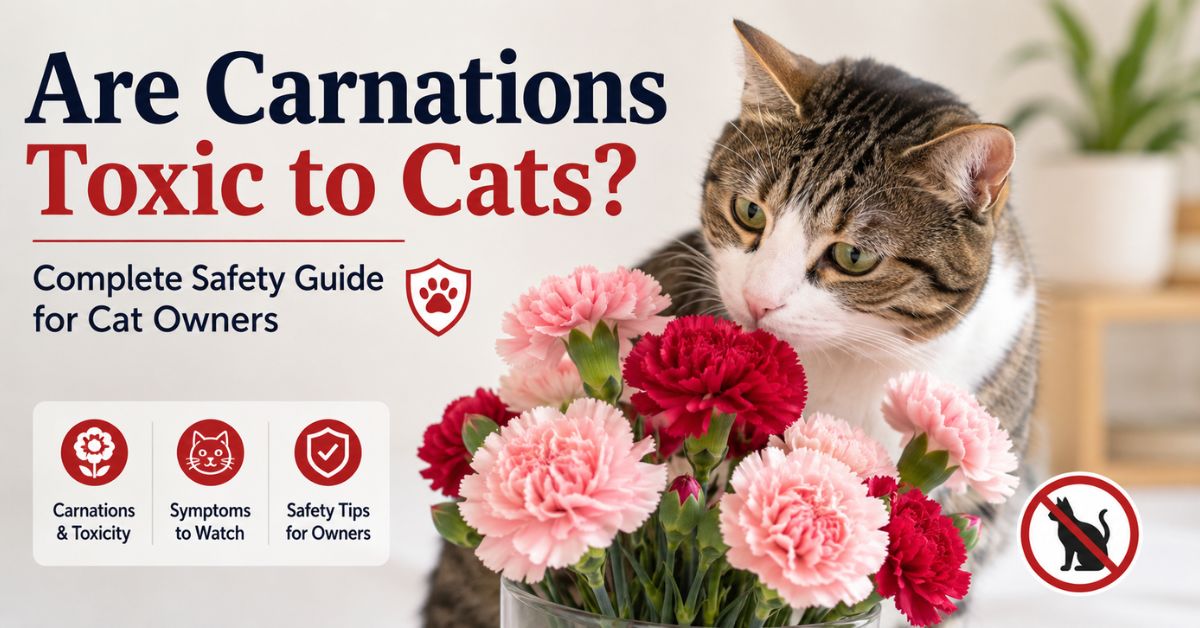
Flowers can brighten any home, but if you share your space with a cat, not every bouquet is safe. Many pet owners often ask, “are carnations toxic to cats?” The answer is yes carnations are mildly toxic to cats and can cause digestive upset and skin irritation.
Although carnations are not considered among the most dangerous flowers for felines, they can still lead to uncomfortable symptoms if your cat chews on the petals, leaves, or stems. Understanding the risks helps cat owners create a safer environment for curious pets.
In this detailed guide, you will learn everything about carnation toxicity in cats, common symptoms, treatment options, prevention tips, and safer flower alternatives for your home.
Are Carnations Toxic to Cats?
Yes, carnations are toxic to cats, according to pet safety experts and veterinary organizations. Carnations belong to the Dianthus plant family and contain natural compounds that may irritate a cat’s digestive system.
Most cases of carnation poisoning are mild. However, some cats are more sensitive than others, especially kittens, elderly cats, or cats with existing health conditions.
The toxic compounds are mainly found in:
- Petals
- Leaves
- Stems
- Plant sap
Even small amounts may trigger symptoms in sensitive cats.
Why Cats Are Attracted to Carnations
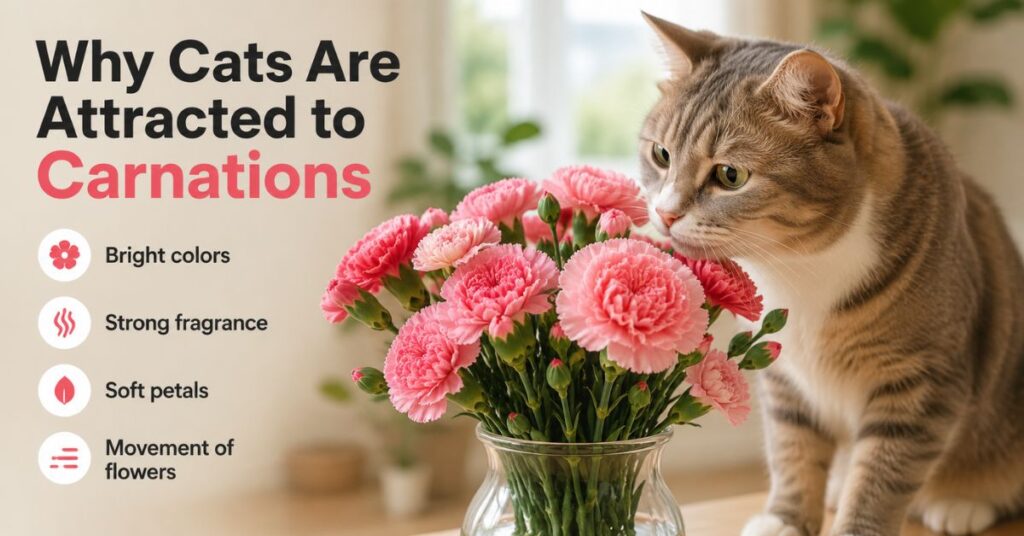
Cats are naturally curious animals. They often chew plants and flowers for entertainment, texture, or instinctive behavior.
Carnations may attract cats because of:
- Bright colors
- Soft petals
- Strong fragrance
- Movement of flowers in vases
Indoor cats especially tend to investigate houseplants due to boredom or lack of stimulation.
Symptoms of Carnation Poisoning in Cats
If your cat chews or eats part of a carnation, you may notice mild to moderate symptoms within a few hours.
Common Symptoms
| Symptom | Description |
| Vomiting | One of the most common signs |
| Diarrhea | Mild digestive upset |
| Drooling | Excess saliva after chewing |
| Loss of appetite | Temporary refusal to eat |
| Skin irritation | Especially around the mouth |
| Lethargy | Low energy or unusual tiredness |
Most symptoms improve within 24 hours, but severe reactions can occasionally happen.
How Toxic Are Carnations Compared to Other Flowers?
It is a real concern whether carnations are toxic to cats; however, carnations are considered mildly toxic compared to more dangerous flowers such as lilies.
Here is a quick comparison:
| Flower | Toxicity Level for Cats | Possible Effects |
| Carnations | Mild | Vomiting, diarrhea |
| Lilies | Extremely toxic | Kidney failure |
| Tulips | Moderate | Digestive issues |
| Daffodils | Moderate to severe | Heart problems |
| Roses | Generally safe | Minor stomach upset from thorns |
Carnations are less dangerous than lilies, but they still should not be accessible to cats.
What Makes Carnations Toxic to Cats?
The exact toxic substance in carnations is not fully understood. However, veterinarians believe the plant contains irritants that affect the gastrointestinal tract and skin.
These compounds may cause:
- Inflammation in the stomach
- Digestive discomfort
- Mouth irritation
- Mild dermatitis
Cats who consume large amounts are at greater risk.
What to Do If Your Cat Eats Carnations
If you suspect your cat has eaten carnations, stay calm and monitor symptoms closely.
Immediate Steps to Take
- Remove the flowers immediately.
- Check how much your cat consumed.
- Rinse your cat’s mouth gently with water if possible.
- Watch for vomiting or unusual behavior.
- Contact your veterinarian if symptoms appear severe.
Do not try to induce vomiting unless your vet specifically recommends it.
When to Call a Veterinarian
Mild cases usually resolve on their own, but veterinary care may be necessary if your cat experiences:
- Repeated vomiting
- Severe diarrhea
- Trouble breathing
- Extreme lethargy
- Refusal to eat for more than 24 hours
- Signs of dehydration
Kittens and senior cats may require faster medical attention because they are more vulnerable.
How Veterinarians Treat Carnation Toxicity
Treatment depends on the severity of symptoms and how much plant material the cat consumed.
Common Veterinary Treatments
- Physical examination
- Fluid therapy for dehydration
- Anti-nausea medication
- Activated charcoal in some cases
- Monitoring digestive health
Most cats recover quickly with supportive care.
How to Prevent Flower Poisoning in Cats
Prevention is the best approach when it comes to toxic plants.
Practical Safety Tips
Keep Flowers Out of Reach
Place bouquets on high shelves or in rooms your cat cannot access.
Choose Cat-Safe Flowers
Select flowers known to be non-toxic to cats whenever possible.
Avoid Floral Arrangements with Mixed Plants
Many bouquets contain hidden toxic flowers or greenery.
Provide Cat Grass
Safe grass alternatives can reduce your cat’s interest in chewing plants.
Train and Redirect
Use toys and enrichment activities to discourage plant chewing.
Safe Flower Alternatives for Cat Owners
If you love decorating with flowers, there are safer choices available.
Cat-Friendly Flowers
| Flower | Safe for Cats? |
| Roses | Yes |
| Orchids | Yes |
| Sunflowers | Yes |
| Snapdragons | Yes |
| Gerbera daisies | Yes |
Even safe flowers should still be monitored because excessive chewing may cause mild stomach upset.
Dangerous Flowers Cat Owners Should Avoid
Some flowers are far more dangerous than carnations.
Highly Toxic Flowers for Cats
- Lilies
- Oleander
- Azaleas
- Daffodils
- Tulips
- Hyacinths
- Chrysanthemums
Lilies are especially deadly and can cause kidney failure even in tiny amounts.
Are Carnations Toxic to Kittens?
Yes, kittens are at greater risk because their bodies are smaller and more sensitive.
Kittens also tend to explore their environment by chewing objects more frequently than adult cats.
If a kitten eats carnations, symptoms may appear faster and become more severe.
Can Cats Smell Toxic Flowers Safely?
Many cat owners wonder whether simply smelling carnations is dangerous.
Generally, smelling carnations is not harmful. Problems usually occur when cats chew or ingest plant material.
However, some cats may develop mild irritation from pollen or direct skin contact.
Indoor vs Outdoor Risks
Indoor cats are often more likely to chew houseplants due to boredom. Outdoor cats may encounter toxic plants in gardens or neighborhoods.
Indoor Risks
- Decorative bouquets
- Houseplants
- Holiday floral arrangements
Outdoor Risks
- Garden flowers
- Neighboring plants
- Wild plants
Supervising your cat’s environment is important in both situations.
Why Flower Safety Matters for Cat Owners
Cats cannot always distinguish between safe and dangerous plants. Even responsible pet owners may accidentally bring toxic flowers into the home.
Understanding plant toxicity helps prevent:
- Emergency vet visits
- Digestive illness
- Pain and discomfort
- Serious poisoning incidents
Creating a pet-safe home protects your cat’s long-term health and wellbeing.
Signs Your Cat May Have Chewed a Toxic Plant
Sometimes cat owners do not witness the incident directly.
Watch for these warning signs:
- Missing flower petals
- Chewed leaves
- Drooling near plants
- Vomit containing plant pieces
- Sudden digestive upset
Quick action can reduce complications.
Best Practices for Pet-Safe Home Decorating
You do not need to avoid flowers completely. Instead, focus on safer decorating habits.
Smart Decorating Tips
- Research every plant before buying
- Use hanging planters
- Avoid toxic holiday plants
- Inform guests about pet safety
- Keep emergency vet numbers accessible
Small precautions make a big difference.
Conclusion
So, are carnations toxic to cats? Yes, carnations are mildly toxic and can cause digestive upset, drooling, and irritation if eaten by cats. While they are not usually life-threatening, they still pose a health risk and should be kept out of your cat’s reach.
As a responsible pet owner, choosing cat-safe flowers and understanding toxic plant risks can help protect your furry companion from unnecessary illness. A little prevention goes a long way toward keeping your home both beautiful and safe.
For more expert cat care tips, trusted pet health guides, and feline safety advice, visit KittyCareZone.com.
No, smelling carnations is generally not dangerous. Toxicity usually happens when cats chew or eat the plant.
Your cat may experience vomiting, diarrhea, drooling, or mild skin irritation. Although most cases are mild, they should still be monitored.
No. Carnations are only mildly toxic, while lilies can cause severe kidney failure in cats.
Most mild symptoms improve within 24 hours. Severe symptoms require veterinary attention.
Roses, orchids, sunflowers, and snapdragons are generally considered safer flower options for cats.

Ali Ahmad /Passionate writer sharing informative, engaging, and easy-to-read articles across different topics. Focused on delivering valuable content that helps readers learn, explore, and stay inspired every day.
1 thought on “Are Carnations Toxic to Cats? Complete Safety Guide for Cat Owners”