

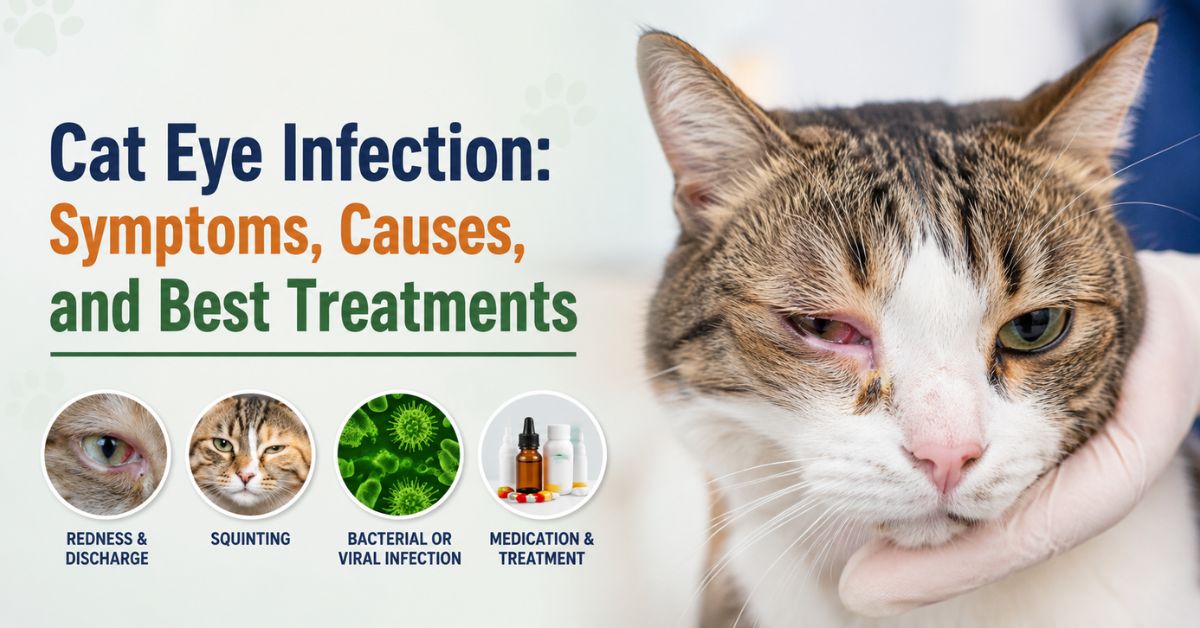
A cat eye infection is one of the most common health problems seen in cats of all ages. Whether you have a playful kitten or a senior cat, eye infections can develop suddenly and quickly become uncomfortable if left untreated. Cats rely heavily on their eyesight for daily activities, so protecting their eye health is extremely important.
Many cat owners notice symptoms like watery eyes, redness, swelling, or discharge but may not know what causes these issues. In some cases, the infection is mild and temporary. However, severe infections can lead to pain, vision loss, or even permanent damage if ignored.
In this complete guide, you will learn everything about cat eye infection, including symptoms, causes, treatment options, prevention tips, and when to visit a veterinarian.
What Is a Cat Eye Infection?
A cat eye infection occurs when bacteria, viruses, fungi, allergies, or irritants affect the eye or surrounding tissues. The infection may involve one eye or both eyes and can range from mild irritation to serious inflammation.
Eye infections in cats are commonly linked to:
- Upper respiratory infections
- Viruses like feline herpesvirus
- Injuries or scratches
- Allergies
- Foreign objects in the eye
Cats that spend time outdoors or live in multi-cat households may have a higher risk of developing infections.
Common Symptoms of Cat Eye Infection
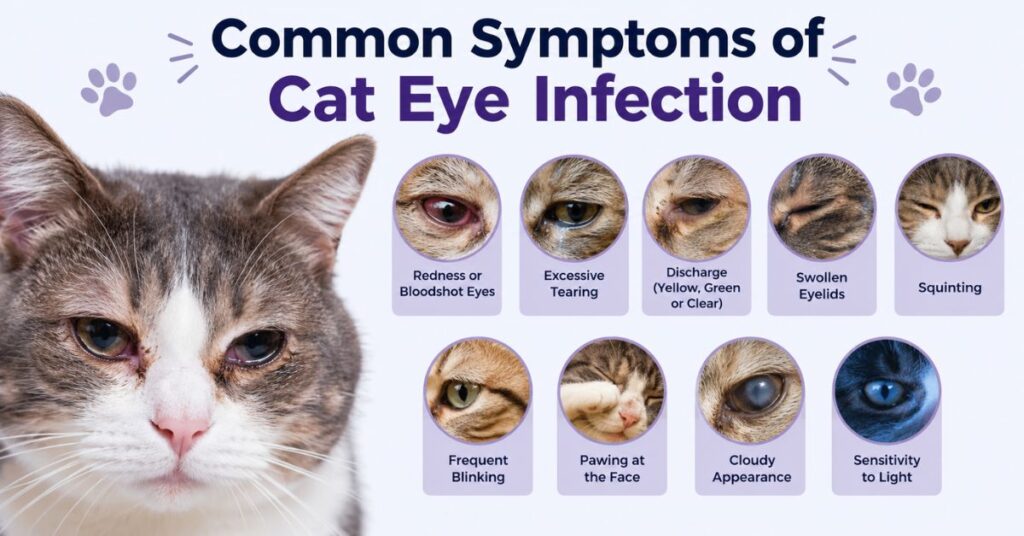
Recognizing the signs early can help prevent complications. Symptoms may vary depending on the cause and severity of the infection.
Visible Signs to Watch For
Common symptoms include:
- Red or bloodshot eyes
- Excessive tearing
- Yellow, green, or clear discharge
- Swollen eyelids
- Squinting
- Frequent blinking
- Cloudy appearance in the eye
- Pawing at the face
- Sensitivity to light
Some cats may also become less active or hide due to discomfort.
Behavioral Changes
A cat with an eye infection may:
- Avoid bright areas
- Become irritable
- Sleep more than usual
- Lose interest in playing
These subtle changes often indicate pain or irritation.
Main Causes of Cat Eye Infection
Several conditions can trigger a cat eye infection. Understanding the cause helps determine the proper treatment.
Viral Infections
Viruses are one of the leading causes of feline eye problems.
Feline Herpesvirus (FHV-1)
This highly contagious virus is a major cause of conjunctivitis and eye discharge in cats. Stress can reactivate symptoms even after recovery.
Calicivirus
Calicivirus may cause respiratory symptoms along with eye irritation and inflammation.
Bacterial Infections
Bacteria can infect the eye directly or develop after a viral infection weakens the immune system.
Common bacterial causes include:
- Chlamydia felis
- Mycoplasma
- Staphylococcus bacteria
Infections caused by bacteria often produce yellow or green discharge.
Allergies and Irritants
Dust, smoke, perfume, cleaning chemicals, or pollen can irritate your cat’s eyes and lead to inflammation.
Indoor cats can also experience irritation from:
- Scented litter
- Air fresheners
- Household sprays
Eye Injuries
Scratches from fights, sharp objects, or rough play can introduce bacteria into the eye.
Even a tiny scratch on the cornea can become infected quickly if untreated.
Blocked Tear Ducts
Blocked tear ducts can prevent normal drainage, causing watery eyes and increasing the risk of infection.
This issue is more common in flat-faced breeds such as Persians.
Types of Cat Eye Infections
Not all infections are the same. Some affect the eyelids while others impact deeper eye structures.
| Type of Infection | Description | Common Symptoms |
| Conjunctivitis | Inflammation of eye lining | Redness, discharge |
| Keratitis | Corneal inflammation | Cloudy eye, pain |
| Uveitis | Internal eye inflammation | Light sensitivity |
| Blepharitis | Eyelid inflammation | Swollen eyelids |
| Corneal Ulcer | Open sore on cornea | Squinting, tearing |
Understanding the type of infection helps veterinarians choose the right treatment.
How Veterinarians Diagnose Cat Eye Infection
A veterinarian usually performs a physical eye examination to identify the problem.
Diagnostic Tests May Include
- Eye stain test for ulcers
- Tear production testing
- Swab samples for bacteria
- Eye pressure measurement
- Blood tests if systemic illness is suspected
A precise diagnosis is crucial because treatment varies according to the underlying cause.
Best Treatments for Cat Eye Infection
Treatment depends on the underlying condition. Never use human eye medication on cats unless approved by a veterinarian.
Antibiotic Eye Drops or Ointments
Bacterial infections are often treated with prescription antibiotics.
Common options include:
- Terramycin ointment
- Chloramphenicol drops
- Gentamicin eye drops
Treatment usually lasts 7 to 14 days.
Antiviral Medications
Cats with feline herpesvirus may require antiviral treatment.
Veterinarians may recommend:
- Antiviral eye drops
- Oral antiviral medication
- Lysine supplements
Cleaning the Eye Safely
Gentle cleaning helps remove discharge and keeps the eye comfortable.
How to Clean Your Cat’s Eye
- Wash your hands first.
- Use a soft cotton pad.
- Moisten it with warm sterile saline.
- Wipe gently from inner to outer corner.
- Use a fresh pad for each eye.
Avoid rubbing the eye aggressively.
Pain and Inflammation Management
Some infections cause significant pain and swelling.
Your veterinarian may prescribe:
- Anti-inflammatory medication
- Lubricating eye drops
- Pain relief medication
When Surgery May Be Needed
Severe injuries, corneal ulcers, or chronic infections may require surgery.
Surgical treatment may include:
- Corneal repair
- Tear duct correction
- Removal of damaged tissue
Thankfully, most mild infections improve without surgery.
Home Care Tips for Cats With Eye Infections
Taking proper care of your cat can help it recover faster.
Keep the Environment Clean
Reduce dust and irritants inside your home.
Helpful tips include:
- Vacuum regularly
- Avoid cigarette smoke
- Use unscented litter
- Wash bedding often
Prevent Your Cat From Scratching the Eye
Cats may worsen irritation by pawing at the infected eye.
An Elizabethan collar may help prevent further injury.
Encourage Hydration and Nutrition
Good nutrition supports immune health and recovery.
Feed a balanced, high-quality diet and ensure fresh water is always available.
Can Cat Eye Infections Spread?
Some infections are contagious to other cats.
Highly Contagious Conditions
The following can spread between cats:
- Feline herpesvirus
- Chlamydia felis
- Calicivirus
If you have multiple cats:
- Separate infected cats temporarily
- Wash hands after handling
- Clean shared bowls and bedding
Are Cat Eye Infections Dangerous to Humans?
Most feline eye infections are not dangerous to humans. However, some bacterial infections may rarely spread through close contact.
Practicing good hygiene reduces the risk significantly.
How to Prevent Cat Eye Infection
Prevention is always better than treatment.
Schedule Regular Vet Checkups
Routine exams help detect early eye problems before they worsen.
Keep Vaccinations Updated
Vaccines protect against common viral causes of eye infections.
Core vaccines may reduce the risk of:
- Feline herpesvirus
- Calicivirus
Maintain a Stress-Free Environment
Stress weakens the immune system and may trigger flare-ups in cats carrying herpesvirus.
Ways to reduce stress include:
- Consistent routines
- Quiet sleeping areas
- Interactive playtime
- Multiple litter boxes in multi-cat homes
Watch for Early Symptoms
Early treatment often prevents serious complications.
Contact your veterinarian if symptoms last more than 24 to 48 hours.
When to See a Veterinarian Immediately
Seek urgent veterinary care if your cat experiences:
- Severe swelling
- Eye completely closed
- Bloody discharge
- Cloudy or blue eye appearance
- Sudden vision changes
- Extreme pain
Delaying treatment could lead to permanent damage.
Long-Term Outlook for Cats With Eye Infections
Most cats recover fully when treated early. Mild infections may clear within a week, while chronic viral infections may require long-term management.
Some cats experience recurring symptoms throughout life, especially those with feline herpesvirus. Proper care and regular veterinary monitoring can greatly improve quality of life.
Conclusion
A cat eye infection should never be ignored because even minor symptoms can quickly become serious without treatment. Recognizing the warning signs early and seeking veterinary care can protect your cat’s vision and overall health.
From viral infections to allergies and injuries, many conditions can affect feline eyes. Fortunately, with proper treatment, cleaning, and preventive care, most cats recover well and return to their normal happy lives.
At KittyCareZone.com, we are dedicated to helping cat owners provide the best possible care for their feline companions through trusted, practical, and easy-to-understand information.
A cat eye infection can be caused by viruses, bacteria, allergies, injuries, or irritants such as dust and smoke.
Some mild cases improve naturally, but many infections require veterinary treatment to prevent complications or vision loss.
An infected eye may appear red, watery, swollen, cloudy, or produce yellow or green discharge.
Cat conjunctivitis can range from mild to severe. Untreated cases may lead to pain, corneal damage, or chronic eye problems.
Yes, indoor cats can develop eye infections from viruses, allergies, irritants, or accidental injuries.

Ali Ahmad /Passionate writer sharing informative, engaging, and easy-to-read articles across different topics. Focused on delivering valuable content that helps readers learn, explore, and stay inspired every day.
1 thought on “Cat Eye Infection: Symptoms, Causes, and Best Treatments”