

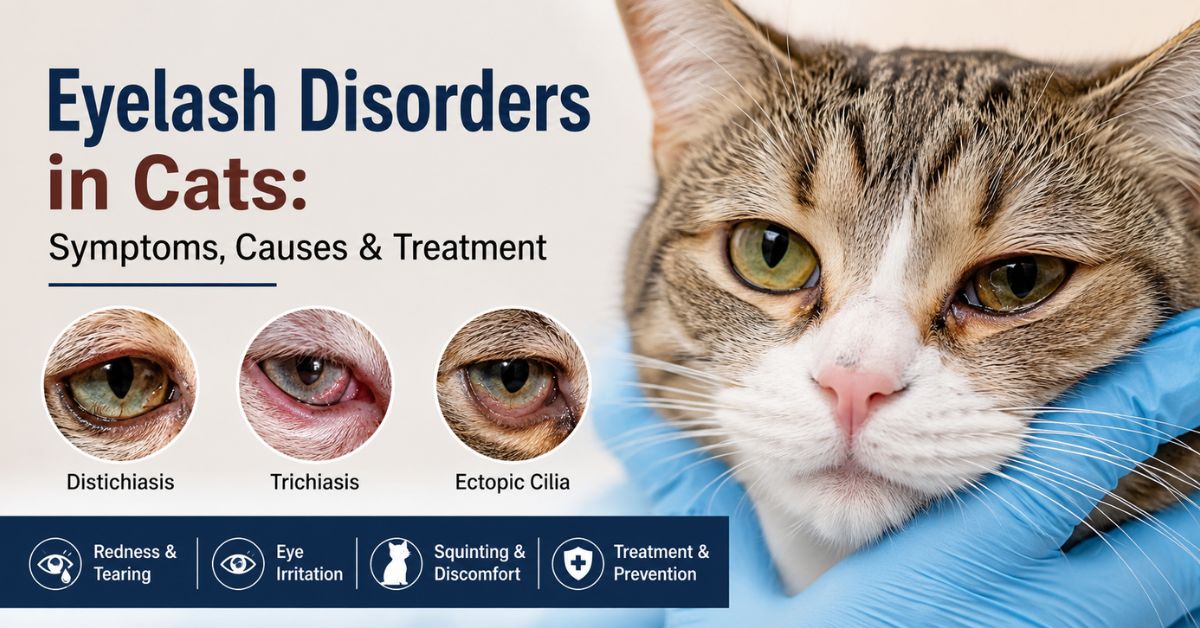
Cats are known for their sharp vision and expressive eyes. However, many cat owners do not realize that eyelash-related problems can seriously affect a cat’s eye health and comfort. Eyelash Disorders in Cats may sound uncommon, but they can lead to irritation, pain, infections, and even vision damage if left untreated.
Understanding these conditions can help cat owners recognize early warning signs and seek proper veterinary care before the issue becomes severe. In this guide, we will explore the causes, symptoms, diagnosis, treatment, and prevention of eyelash disorders in cats.
What Are Eyelash Disorders in Cats?
Eyelash Disorders in Cats refer to abnormal growth or positioning of eyelashes that irritate the surface of the eye. Healthy cats should not rub their eyelashes against their corneas. However, certain conditions cause lashes or surrounding hair to touch the eye constantly.
This repeated friction can lead to:
- Eye redness
- Excessive tearing
- Corneal ulcers
- Pain and discomfort
- Eye infections
These disorders may affect one or both eyes and can occur in cats of any breed or age.
Common Types of Eyelash Disorders in Cats
Several eyelash-related conditions can affect felines. Each one has different causes and severity levels.
Distichiasis in Cats
Distichiasis occurs when extra eyelashes grow from abnormal locations along the eyelid margin. These lashes may rub against the eye and cause irritation.
Although more common in dogs, cats can also develop this condition.
Symptoms of Distichiasis
- Watery eyes
- Frequent blinking
- Squinting
- Eye redness
- Pawing at the face
In mild cases, cats may not show obvious signs. Severe cases can damage the cornea over time.
Trichiasis in Cats
Trichiasis happens when normal facial hair or eyelashes grow inward toward the eye. Instead of growing outward, the hairs continuously rub the eye surface.
Flat-faced cat breeds may be more prone to this problem because of their facial structure.
Common Signs
- Chronic eye irritation
- Tear staining
- Sensitivity to light
- Corneal scratches
- Eye discharge
Without treatment, trichiasis may lead to long-term eye damage.
Ectopic Cilia
Ectopic cilia are abnormal eyelashes that grow through the inner eyelid surface. This condition is rare in cats but extremely painful when it occurs.
The hairs directly contact the cornea, causing severe irritation.
Symptoms Include
- Sudden eye pain
- Excessive tearing
- Corneal ulcers
- Constant squinting
- Difficulty opening the eye
This condition usually requires surgical treatment.
Causes of Eyelash Disorders in Cats
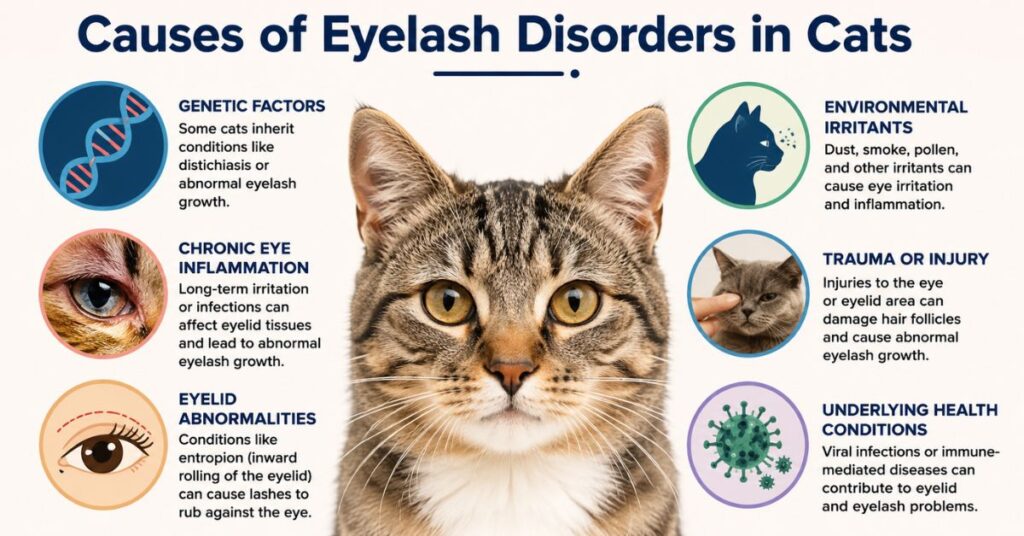
There are several possible causes of Eyelash Disorders in Cats. Some are inherited, while others develop due to injury or inflammation.
Genetic Factors
Some cats are naturally predisposed to abnormal eyelash growth. Breed structure and facial anatomy may increase the risk.
Flat-faced breeds such as Persians often experience eye-related issues because of their shortened facial structure.
Chronic Eye Inflammation
Long-term eye irritation or infections may affect eyelid tissues and alter hair growth patterns.
Conditions like conjunctivitis can contribute to abnormal lash positioning over time.
Eyelid Abnormalities
Structural eyelid issues such as entropion can force lashes inward. In entropion, the eyelid rolls inward toward the eye.
This condition often worsens irritation and discomfort.
Trauma or Injury
Injuries near the eye area may damage hair follicles or eyelid tissues, leading to unusual eyelash growth.
Scarring from surgery or accidents can also contribute to these disorders.
Symptoms of Eyelash Disorders in Cats
Recognizing symptoms early is essential for protecting your cat’s vision and comfort.
Here are the most common signs of Eyelash Disorders in Cats:
| Symptom | What It May Indicate |
| Excessive tearing | Eye irritation or pain |
| Squinting | Corneal discomfort |
| Redness | Inflammation |
| Pawing at eyes | Irritation or itching |
| Eye discharge | Infection or irritation |
| Cloudy eye surface | Corneal damage |
| Frequent blinking | Eye sensitivity |
| Light sensitivity | Pain or ulcers |
If your cat shows any of these symptoms consistently, veterinary evaluation is important.
How Veterinarians Diagnose Eyelash Disorders
A veterinarian usually performs a full eye examination to diagnose eyelash problems.
Physical Eye Examination
The vet carefully examines the eyelids, eyelashes, and eye surface using magnification and specialized lighting.
This helps identify abnormal lash growth.
Fluorescein Stain Test
A special dye may be applied to detect corneal ulcers or scratches caused by rubbing eyelashes.
Damaged areas become visible under blue light.
Tear Production Testing
Some cats with eye disorders may also suffer from dry eye conditions.
Testing tear production helps determine overall eye health.
Treatment Options for Eyelash Disorders in Cats
Treatment depends on the severity and type of eyelash disorder.
Lubricating Eye Drops
Mild irritation may improve with veterinary-approved lubricating eye drops.
These drops reduce friction and keep the eye moist.
Epilation (Hair Removal)
In some cases, the veterinarian may remove irritating eyelashes manually.
However, lashes often grow back, making this a temporary solution.
Cryotherapy
Cryotherapy freezes abnormal hair follicles to prevent regrowth.
This method is commonly used for recurring distichiasis cases.
Surgical Correction
Severe conditions such as ectopic cilia or entropion may require surgery.
Surgical treatment usually offers the best long-term results for serious eyelash disorders.
Recovery After Treatment
Most cats recover well after proper treatment. Recovery time depends on the procedure performed and the severity of the condition.
Tips for Smooth Recovery
- Use medications exactly as prescribed
- Prevent eye rubbing with an e-collar if needed
- Keep the eye area clean
- Attend follow-up appointments
- Monitor for recurring symptoms
Quick treatment often prevents permanent eye damage.
Can Eyelash Disorders in Cats Be Prevented?
Some genetic eyelash disorders cannot be fully prevented. However, cat owners can lower the risk of complications through proper eye care.
Prevention Tips
Regular Eye Checks
Examine your cat’s eyes regularly for redness, discharge, or excessive tearing.
Groom Long Facial Hair
Long facial fur can irritate the eyes, especially in Persian or Himalayan cats.
Careful grooming helps reduce irritation.
Treat Eye Infections Early
Prompt treatment of conjunctivitis or eye injuries can prevent long-term eyelid complications.
Schedule Routine Vet Visits
Routine veterinary exams help identify eye problems before they become severe.
Breeds More Prone to Eye and Eyelash Problems
Some cat breeds may have a higher risk of eyelash and eyelid disorders because of facial anatomy.
Higher-Risk Breeds
- Persian cats
- Himalayan cats
- Exotic Shorthair cats
- Scottish Fold cats
Flat-faced breeds often experience tear overflow and eye irritation due to shallow eye sockets.
Complications of Untreated Eyelash Disorders
Ignoring Eyelash Disorders in Cats can lead to serious complications.
Possible Risks
- Corneal ulcers
- Chronic eye pain
- Eye infections
- Vision impairment
- Permanent corneal scarring
Early diagnosis greatly improves treatment success and protects your cat’s eyesight.
Home Care Tips for Cats With Eye Problems
Although veterinary care is essential, supportive home care also helps.
Helpful Home Care Practices
- Keep bedding clean and dust-free
- Avoid smoke or strong chemicals near cats
- Gently clean discharge using a soft damp cloth
- Prevent rough play during recovery
- Follow all medication schedules carefully
Never use human eye medications unless prescribed by a veterinarian.
When to See a Veterinarian
Some eye symptoms require immediate professional attention.
Contact your vet if your cat experiences:
- Persistent squinting
- Swollen eyes
- Thick eye discharge
- Sudden eye cloudiness
- Bleeding near the eye
- Signs of severe pain
Eye problems can worsen quickly, so fast treatment is important.
Conclusion
Eyelash Disorders in Cats may seem minor at first, but they can seriously impact your cat’s comfort and vision if ignored. Early symptoms such as watery eyes, squinting, and redness should never be overlooked. With proper diagnosis and treatment, most cats recover successfully and return to living comfortable, healthy lives.
Regular eye checks, proper grooming, and routine veterinary care are the best ways to protect your feline companion from long-term complications. At KittyCareZone.com, we are committed to helping cat owners provide the best care possible for their beloved pets.
Eyelash Disorders in Cats can be caused by genetics, eyelid abnormalities, chronic inflammation, injuries, or abnormal hair growth patterns.
Yes, many eyelash disorders cause discomfort or pain because hairs rub against the cornea and irritate the eye surface.
Most eyelash disorders require veterinary treatment. Without treatment, symptoms may worsen and lead to eye damage.
Persian, Himalayan, and Exotic Shorthair cats are more prone to eye and eyelash problems due to their facial structure.
Not always. Mild cases may improve with lubricating drops or hair removal, but severe conditions often require surgery for long-term relief.

Ali Ahmad /Passionate writer sharing informative, engaging, and easy-to-read articles across different topics. Focused on delivering valuable content that helps readers learn, explore, and stay inspired every day.
1 thought on “Eyelash Disorders in Cats: Symptoms, Causes & Treatment”