

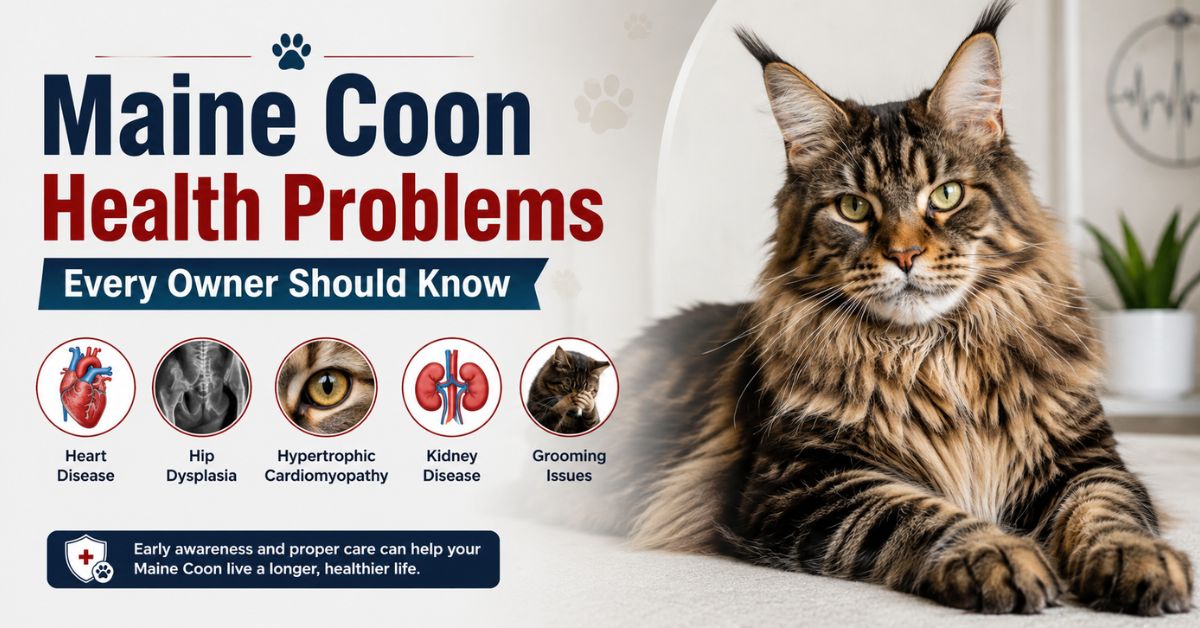
If you share your home with one of these gentle giants, you already know Maine Coons are unlike any other cat. They’re big, they’re friendly, and they follow you from room to room like a furry shadow. But that impressive size and easygoing personality come with a few health considerations that every owner should understand.
Knowing the common Maine Coon health problems ahead of time isn’t about worrying it’s about being prepared. Early detection and simple daily habits can make a real difference in how long and how well your cat lives. In this guide, we’ll walk through the most common conditions, the warning signs to watch for, and practical steps you can take to protect your cat’s health.
Why Maine Coons Are Prone to Certain Health Issues
Maine Coons are one of the largest domestic cat breeds, with males often weighing between 13 and 18 pounds. That size doesn’t happen overnight these cats take three to five years to reach full maturity, which is much longer than most breeds.
This slower growth, combined with their genetic background, means their bones, joints, and heart have to work harder over time. Add in the fact that Maine Coons were bred for generations with a relatively limited gene pool in some bloodlines, and you get a breed that’s wonderful in temperament but genetically predisposed to a handful of specific conditions.
Understanding these Maine Coon health issues helps you ask the right questions at the vet and catch problems before they become serious.
Common Maine Coon Health Problems
1. Hypertrophic Cardiomyopathy (HCM)
Hypertrophic cardiomyopathy is the single most significant health concern in this breed. It’s a heart condition where the walls of the heart muscle thicken, making it harder for the heart to pump blood efficiently.
HCM is partly hereditary in Maine Coons, and a specific genetic mutation has been identified in some lines. However, not every cat with the gene develops severe symptoms, and not every case is genetic.
Warning signs of HCM include:
- Lethargy or reduced activity
- Rapid or labored breathing
- Loss of appetite
- Fainting or collapse
- Sudden hind-leg weakness or paralysis (a medical emergency)
Because HCM can be silent for years, annual heart screenings with an ultrasound (echocardiogram) are strongly recommended, especially for cats over four years old.
2. Hip Dysplasia
Given their large frame, Maine Coons carry more weight on their joints than smaller breeds. Hip dysplasia occurs when the hip joint doesn’t form correctly, leading to friction, discomfort, and eventually arthritis.
Signs to watch for include:
- Reluctance to jump or climb
- A noticeable limp or altered gait
- Stiffness after resting
- Decreased activity or playfulness
Keeping your cat at a healthy weight is one of the simplest ways to reduce stress on the hips and slow the progression of joint problems.
3. Spinal Muscular Atrophy (SMA)
Spinal muscular atrophy is a genetic condition unique to the Maine Coon breed. It affects the nerve cells that control muscle movement in the hind legs, leading to muscle weakness and an unusual, wobbly gait.
The good news is that SMA isn’t painful and doesn’t shorten a cat’s lifespan. Affected cats simply need a safe, low-jump environment and regular monitoring. Reputable breeders now test for the SMA gene, so asking about genetic testing before adopting a kitten is a smart move.
4. Polycystic Kidney Disease (PKD)
Polycystic kidney disease causes fluid-filled cysts to develop in the kidneys over time, gradually reducing kidney function. It’s inherited and tends to show up in cats around seven years of age or older, though it can appear earlier.
Symptoms often include:
- Increased thirst and urination
- Weight loss
- Vomiting
- Poor coat condition
Ultrasound screening can detect PKD early, allowing for a management plan that includes diet changes and supportive care.
5. Obesity
Because Maine Coons are naturally large, owners sometimes don’t notice when their cat is carrying extra weight. Obesity puts additional strain on the heart, joints, and organs, worsening many of the conditions mentioned above.
Portion control, quality nutrition, and daily play sessions go a long way in preventing this entirely avoidable problem.
6. Dental Disease
Like most cats, Maine Coons are susceptible to periodontal disease, tartar buildup, and gum inflammation. Left untreated, dental issues can lead to pain, tooth loss, and even affect the heart and kidneys through bacterial spread.
Routine dental checkups and at-home brushing can prevent most dental complications before they start.
Table: Common Maine Coon Health Problems at a Glance
| Health Condition | Typical Age of Onset | Key Warning Signs | Recommended Screening |
| Hypertrophic Cardiomyopathy (HCM) | 2–6 years, can occur anytime | Lethargy, labored breathing, fainting | Annual echocardiogram |
| Hip Dysplasia | Any age, worsens with age | Limping, reluctance to jump | X-ray, physical exam |
| Spinal Muscular Atrophy (SMA) | 3–4 months | Wobbly gait, hind-leg weakness | Genetic testing |
| Polycystic Kidney Disease (PKD) | 7+ years | Excess thirst, weight loss | Kidney ultrasound |
| Obesity | Any age | Reduced mobility, visible weight gain | Regular weigh-ins |
| Dental Disease | 3+ years | Bad breath, drooling, reduced appetite | Annual dental exam |
How to Keep Your Maine Coon Healthy
Schedule Regular Vet Visits
Annual checkups (or twice yearly for senior cats) allow your vet to catch subtle changes before they become emergencies. Don’t skip bloodwork and heart screenings simply because your cat “seems fine.”
Feed a Balanced, Age-Appropriate Diet
High-quality cat food formulated for large breeds supports joint health and maintains a healthy weight. Avoid overfeeding treats, and always provide fresh water to support kidney function.
Encourage Daily Movement
Interactive toys, climbing trees, and short play sessions keep joints flexible and prevent obesity two birds, one stone.
Know Your Cat’s Family History
If you adopted from a breeder, ask about genetic testing for HCM and SMA. This information can guide your vet’s screening schedule.
Watch for Behavioral Changes
Cats are experts at hiding pain. A change in appetite, litter box habits, or general activity level is often the first clue that something’s wrong.
Conclusion
Maine Coons bring so much joy, personality, and companionship into a home that it’s easy to forget how important preventive care really is. Understanding the common Maine Coon health problems from heart disease to joint issues gives you the power to act early and give your cat the best possible quality of life.
Regular vet visits, a balanced diet, and close attention to behavior changes are your best tools for keeping your gentle giant thriving for years to come. For more expert guides on cat health, nutrition, and behavior, keep exploring KittyCareZone.com your trusted resource for happier, healthier cats.
Hypertrophic cardiomyopathy (HCM) is widely considered the most common and serious of all Maine Coon health problems, affecting a notable percentage of the breed.
Most Maine Coons live between 12 and 15 years, and with proactive health management, many reach their late teens.
Some genetic conditions can’t be fully prevented, but early screening, a healthy weight, and good nutrition significantly reduce the severity and impact of many issues.
Some genetic conditions can’t be fully prevented, but early screening, a healthy weight, and good nutrition significantly reduce the severity and impact of many issues.
Heart and kidney screenings are typically recommended starting around one to two years old, with annual monitoring afterward.

Ali Ahmad /Passionate writer sharing informative, engaging, and easy-to-read articles across different topics. Focused on delivering valuable content that helps readers learn, explore, and stay inspired every day.