

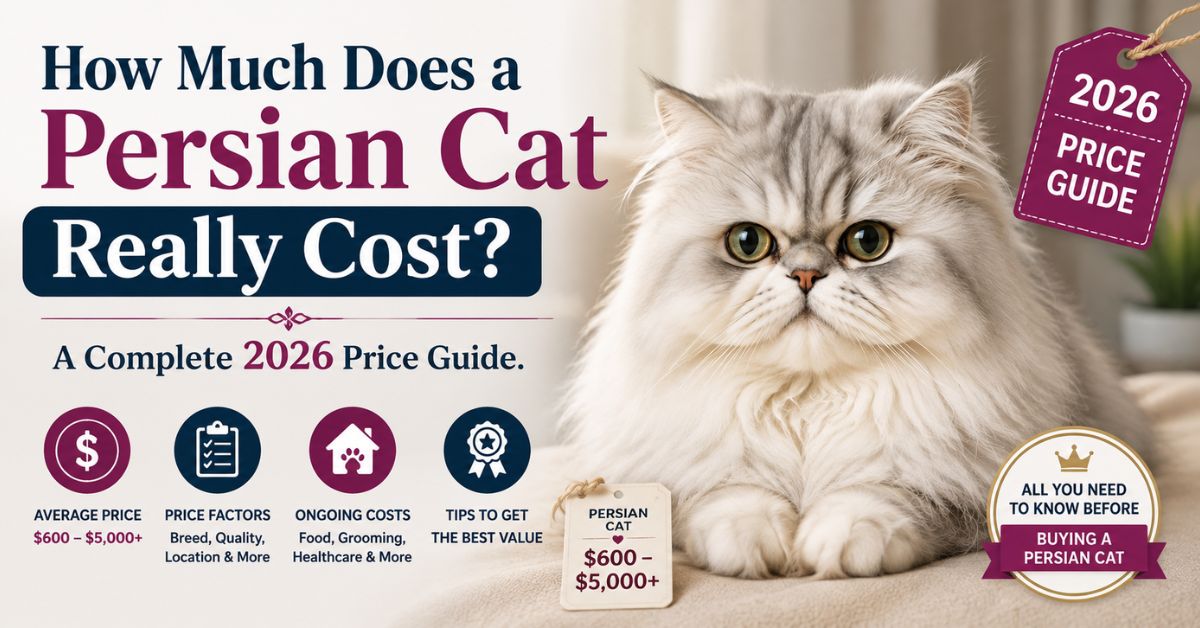
If you’ve fallen in love with those flat faces, silky coats, and calm personalities, you’re probably asking the same question every future Persian owner asks: what is the actual persian cat cost, from the day you bring one home to years down the road?
The honest answer is that a Persian cat costs a lot more than the sticker price on the kitten itself. Between grooming, health care, food, and unexpected vet visits, this breed comes with a long-term financial commitment that many new owners underestimate.
In this guide, we’ll break down every dollar you can expect to spend, from adoption fees to lifetime care, so you can budget realistically before falling for those big, round eyes.
Why Persian Cat Cost Varies So Much
Not all Persian cats are priced the same. The persian cat cost you’ll see quoted online can range from a few hundred dollars to well over $5,000, and the difference usually comes down to a handful of factors.
- Breeder reputation and bloodline quality
- Coat color and pattern rarity (solid colors are common; chinchilla or tortoiseshell can cost more)
- Whether the kitten is “pet quality” or “show quality”
- Registration papers from associations like TICA or CFA
- Geographic location and local demand
- Whether you’re buying from a breeder or adopting from a rescue
Because of this range, it’s important to look beyond the initial price tag and think about the full picture of ownership.
Persian Cat Price: Breeder vs. Adoption
Buying From a Breeder
A reputable, health-tested breeder typically charges between $1,000 and $3,500 for a pet-quality Persian kitten. Show-quality kittens with championship bloodlines can climb past $5,000.
While that number might seem steep, a good breeder usually includes:
- First vaccinations
- Deworming treatment
- A health guarantee
- Early socialization
- Registration paperwork
Cheaper kittens advertised for $300–$600 are often a red flag. These usually come from unregulated breeding operations, sometimes called kitten mills, where genetic testing and proper care are skipped entirely. This can lead to higher vet bills later, especially for a breed already prone to health issues.
Adopting a Persian Cat
Adoption is the more budget-friendly route. Rescue organizations and shelters that specialize in purebred cats often charge adoption fees between $75 and $400. This fee usually covers spaying or neutering, vaccinations, and a microchip.
Persian-specific rescues do exist across the United States, and adult Persians in particular are often surrendered simply because owners underestimated the grooming commitment, not because anything is wrong with the cat.
Initial Setup Costs
Once you’ve covered the upfront persian cat cost, there’s a second wave of spending before your kitten even settles in. Here’s what most new owners need to buy right away.
| Item | Estimated Cost (USD) |
| Litter box and litter | $30 – $60 |
| Food and water bowls | $10 – $25 |
| Cat bed | $20 – $50 |
| Scratching post | $25 – $70 |
| Carrier | $30 – $60 |
| Initial vet exam | $50 – $150 |
| Grooming tools (brush, comb) | $30 – $80 |
| Toys | $15 – $40 |
| Estimated Total | $210 – $535 |
These are one-time costs, but they add up quickly, especially since Persians need specific grooming tools that other breeds don’t require.
Ongoing Monthly Expenses
This is where the true long-term persian cat cost becomes clear. Persians are a higher-maintenance breed, and their flat-faced structure and long coat create ongoing needs that shorthaired cats simply don’t have.
Grooming Costs
Persian cats have thick, long coats that mat easily if not brushed daily. Many owners choose professional grooming every 4–6 weeks, which typically runs $50 to $100 per session. Skipping this can lead to painful mats and skin issues.
Food Costs
High-quality cat food suited for Persians, especially formulas that support coat health and digestion, generally costs $30 to $60 per month.
Litter and Supplies
Because of their facial structure, Persians can struggle with certain litter types getting stuck in their fur. Budget around $15 to $25 monthly for litter and general supplies.
Veterinary Care
Routine checkups, flea prevention, and dental care average $20 to $40 monthly when spread across the year, not including emergencies.
Here’s a simple monthly snapshot:
| Category | Monthly Estimate (USD) |
| Food | $30 – $60 |
| Litter and supplies | $15 – $25 |
| Grooming (averaged) | $40 – $90 |
| Preventive vet care | $20 – $40 |
| Total Monthly Average | $105 – $215 |
Health-Related Costs Specific to Persians
Persian cats are prone to certain health conditions because of their brachycephalic (flat-faced) build and long coat. Understanding these ahead of time helps you plan for the less predictable side of persian cat cost.
- Polycystic Kidney Disease (PKD) – genetic screening and monitoring can add $200–$500 periodically
- Breathing difficulties – linked to their flattened face, sometimes requiring specialist visits
- Eye discharge and tear duct issues – regular cleaning needed to prevent infection
- Dental problems – due to their jaw shape, often requiring more frequent cleanings
- Skin and coat issues – matting can cause irritation if grooming is neglected
Pet insurance is worth considering for this breed. Monthly premiums typically range from $25 to $50, which can significantly offset the cost of unexpected treatment.
Lifetime Cost of Owning a Persian Cat
Persian cats often live 12 to 17 years with good care. When you combine the purchase price, setup costs, and monthly expenses over that lifespan, total ownership cost typically lands between $15,000 and $25,000, and that’s before factoring in emergency medical care.
It sounds like a lot, but breaking it into monthly numbers makes it far more manageable, and most owners say the companionship is worth every dollar.
Tips to Manage Persian Cat Cost Without Cutting Corners
You don’t have to overspend to keep a Persian healthy and happy. A few smart habits go a long way.
- Learn to brush your cat yourself daily to reduce professional grooming frequency
- Buy litter and food in bulk from trusted retailers
- Schedule preventive vet visits instead of waiting for problems
- Consider pet insurance early, before pre-existing conditions apply
- Ask breeders about genetic testing history to avoid costly hereditary issues later
Small, consistent habits like these can meaningfully lower your overall persian cat cost over the years without compromising your cat’s wellbeing.
Final Thoughts
Understanding the full persian cat cost before bringing one home helps you avoid financial surprises and gives your new companion the care they truly deserve. From the initial purchase or adoption fee to daily grooming and lifetime vet care, this breed asks for a real commitment, but for most owners, that gentle, affectionate personality makes it worthwhile.
If you’re planning to welcome a Persian cat into your life, KittyCareZone.com will continue to bring you practical, honest guides to help you budget wisely and care for your cat the right way, every step of the journey.
A pet-quality Persian kitten from a reputable breeder usually costs between $1,000 and $3,500, while show-quality kittens can exceed $5,000.
Yes, adoption fees typically range from $75 to $400 and often include spaying or neutering, vaccinations, and a microchip.
Grooming is usually the largest recurring cost, since professional sessions every few weeks can run $50 to $100 each.
Persians are prone to specific issues like polycystic kidney disease, breathing difficulties, and eye discharge due to their flat-faced structure, which can raise long-term vet costs.
Given the breed’s predisposition to genetic and respiratory conditions, pet insurance, typically $25 to $50 per month, can help offset unexpected veterinary expenses.

Ali Ahmad /Passionate writer sharing informative, engaging, and easy-to-read articles across different topics. Focused on delivering valuable content that helps readers learn, explore, and stay inspired every day.