

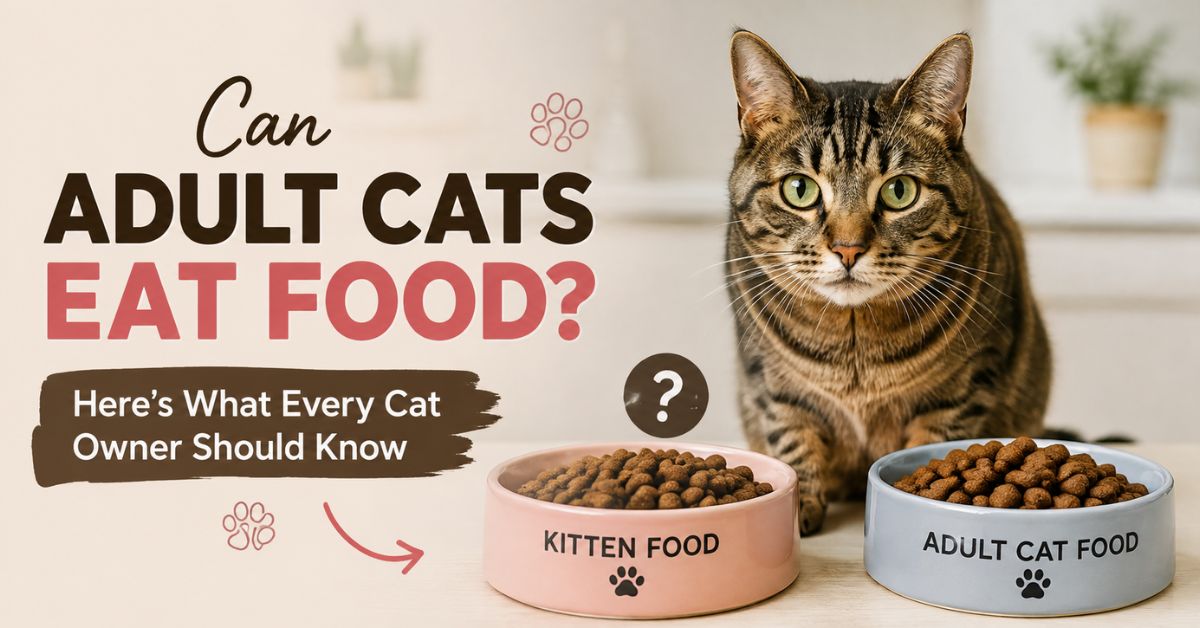
If you’ve ever run out of your cat’s regular food and reached for a leftover bag of kitten kibble, you’ve probably asked yourself: can adult cats eat food? It’s a more common question than you’d think, especially in multi-cat households where kittens and grown cats share a home.
The short answer is yes, an adult cat can eat kitten food occasionally without any major harm. But should it become a regular part of their diet? That’s a different story entirely.
In this guide, we’ll break down exactly what happens when adult cats eat kitten food, why it matters, and what you should feed your feline friend instead for long-term health.
Why This Question Matters So Much
Cat nutrition isn’t one-size-fits-all. Kittens and adult cats have very different nutritional needs, and understanding those differences is key to keeping your cat healthy at every life stage.
Many pet parents assume that “cat food is cat food,” but that assumption can lead to unintended health issues over time. Knowing whether adult cats can eat food helps you make smarter feeding choices, especially during transitions, emergencies, or multi-pet feeding situations.
What Makes Kitten Food Different From Adult Cat Food?
Kitten food is formulated specifically to support rapid growth, development, and high energy needs during the first year of a cat’s life. Adult cat food, on the other hand, is designed to maintain a healthy weight and support a slower metabolism.
I’ve compared them quickly to help clarify things.
Kitten Food vs. Adult Cat Food: Key Differences
| Nutrient/Feature | Kitten Food | Adult Cat Food |
| Calories | Higher (supports rapid growth) | Moderate (maintenance level) |
| Protein | Higher percentage | Balanced, moderate percentage |
| Fat Content | Higher (for energy) | Lower to prevent weight gain |
| DHA | Added for brain and eye development | Minimal or none |
| Calcium & Phosphorus | Higher (for bone growth) | Lower, balanced levels |
| Ideal Life Stage | Birth to 12 months | 1 year and older |
As you can see, kitten food is essentially a calorie-dense, nutrient-packed formula built for a growing body. That’s exactly why it can cause problems when fed long-term to a fully grown cat.
So, Can Adult Cats Eat Kitten Food Safely?
Occasionally, yes. If your adult cat eats a few bites of kitten food from your other pet’s bowl, there’s no need to panic. One meal or even a few days won’t cause serious harm.
However, making kitten food a regular part of an adult cat’s diet is where the real concerns begin.
Short-Term Feeding: Generally Safe
A one-time snack or short-term feeding (a day or two) is unlikely to cause any noticeable issues. Most healthy adult cats can handle the extra calories and protein without immediate problems.
Long-Term Feeding: Not Recommended
Feeding kitten food to an adult cat consistently can lead to several health concerns over time, including:
- Unwanted weight gain due to excess calories and fat
- Obesity-related issues, such as joint stress and diabetes risk
- Nutrient imbalances, since adult cats don’t need the same growth-supporting nutrients
- Kidney strain from consistently higher protein and mineral intake
- Digestive upset, especially in senior or sensitive cats
Simply put, an adult cat’s body isn’t built to process kitten-level nutrition on a daily basis.
When It Might Actually Be Okay
There are a few specific situations where feeding kitten food to an adult cat isn’t just harmless, it can actually be helpful.
Underweight or Recovering Cats
If your vet has confirmed that your adult cat is underweight or recovering from an illness, surgery, or malnutrition, kitten food’s higher calorie content may be recommended temporarily to help them regain weight and strength.
Nursing or Pregnant Cats
Pregnant and nursing mother cats have increased energy and nutritional demands similar to kittens. Vets often recommend kitten food or a specially formulated food during this period to support both the mother and her litter.
Senior Cats With Specific Health Needs
In rare cases, a vet might suggest a calorie-dense diet for senior cats struggling to maintain weight. However, this should always be a guided decision, not a random substitution.
Signs Your Adult Cat Shouldn’t Be Eating Kitten Food
Watch for these warning signs if your adult cat has been eating kitten food regularly:
- Noticeable weight gain over a few weeks
- Reduced activity or lethargy
- Vomiting or loose stools
- Excessive thirst or urination
- Dull coat despite a rich diet
If you spot any of these symptoms, it’s time to switch back to age-appropriate food and consult your veterinarian.
How to Transition Back to Adult Cat Food
If your cat has been accidentally eating kitten food for a while, don’t switch abruptly. A sudden diet change can upset their stomach.
- Mix a small amount of adult food with the kitten food for the first two to three days.
- Gradually increase the ratio of adult food over the next week.
- Monitor your cat’s stool, appetite, and energy levels throughout the switch.
- Consult your vet if your cat shows resistance or digestive issues.
This slow transition approach helps your cat’s digestive system adjust comfortably.
Tips for Multi-Cat Households With Kittens and Adults
Feeding kittens and adult cats separately can feel like a juggling act, but it’s essential for long-term health. Here are a few practical tips:
- Feed kittens and adult cats in separate rooms or at different times.
- Use elevated feeding stations to prevent food-sharing between pets.
- Choose an “all life stages” formula only if recommended by your vet.
- Monitor feeding time closely until kittens are weaned onto solid, age-appropriate meals.
A little structure during feeding time goes a long way in preventing accidental overfeeding.
What Vets Generally Recommend
Most veterinarians agree that while an occasional bite of kitten food won’t harm an adult cat, it shouldn’t replace a properly balanced adult formula. Every cat is different, so if you’re unsure about your cat’s specific dietary needs, a quick check-in with your vet is always the safest route.
Conclusion
Understanding your cat’s nutritional needs at every life stage is one of the simplest ways to support their long-term health. While an occasional nibble of kitten food won’t harm your adult cat, making it a habit isn’t the best choice for their wellbeing.
For more expert-backed, easy-to-understand guides on cat nutrition, behavior, and care, KittyCareZone.com is here to help you make informed, confident decisions for your feline companion.
No, it’s not recommended. Daily kitten food consumption can lead to weight gain and nutrient imbalances in adult cats over time.
A single meal or occasional bite typically won’t cause immediate harm, but regular feeding isn’t ideal for long-term health.
In some cases, yes. Vets may recommend it temporarily for underweight or recovering cats, but this should always be under veterinary guidance.
One week likely won’t cause lasting harm in a healthy cat, but it’s best to transition back to adult food gradually and watch for any digestive changes.
It’s best to feed them separately to avoid cross-feeding, unless your vet has approved an “all life stages” formula for your household.

Ali Ahmad /Passionate writer sharing informative, engaging, and easy-to-read articles across different topics. Focused on delivering valuable content that helps readers learn, explore, and stay inspired every day.