

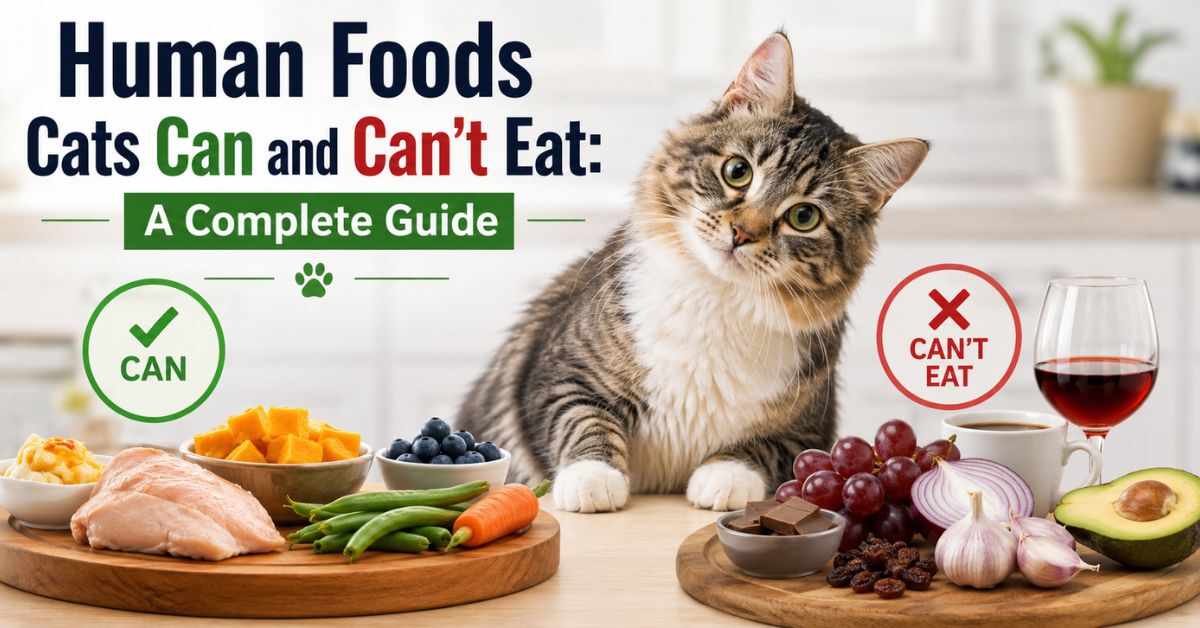
If your cat stares at you while you’re eating dinner, you may wonder whether sharing a small bite is safe. Understanding human foods cats can and can’t eat is important because some everyday foods are harmless in tiny amounts, while others can cause serious health problems.
Cats are obligate carnivores, meaning their bodies are designed to get most of their nutrition from animal-based foods. A complete and balanced cat food should remain the foundation of their diet. However, certain human foods can occasionally work as small treats.
The tricky part is knowing the difference between a safe snack and a potentially toxic food. Ingredients such as onions, garlic, chocolate, alcohol, and some artificial sweeteners can be dangerous for cats.
In this guide, you’ll learn which foods are generally safe, which ones should stay off your cat’s plate, how much is appropriate, and what to do if your cat accidentally eats something potentially harmful.
Important: This article provides general cat-care information. If your cat eats a potentially toxic food or develops concerning symptoms, contact your veterinarian or an animal poison-control service promptly.
Why Can’t Cats Eat Everything Humans Eat?
Cats have different nutritional requirements from humans.
Their digestive systems and metabolism are adapted primarily to animal-based nutrition. They need nutrients such as taurine, arachidonic acid, and preformed vitamin A that are naturally obtained from animal tissues or appropriately supplemented in complete cat foods.
That doesn’t mean every human food is dangerous. It simply means that human foods shouldn’t replace a nutritionally complete feline diet.
There are also foods that humans tolerate easily but cats cannot process safely. Some can irritate the digestive system, while others can damage red blood cells, affect the nervous system, or cause other serious complications.
Therefore, when offering your cat a bite from your plate, the safest approach is to keep portions tiny and choose simple, unseasoned foods.
Human Foods Cats Can Eat Safely
Several common foods can be suitable for cats when they’re prepared properly and offered in moderation.
1. Cooked Chicken
Plain, fully cooked chicken is one of the simplest human foods you can offer a cat.
Remove the bones, skin, and heavy seasoning before serving. Avoid chicken cooked with onion, garlic, sauces, or excessive salt.
A small piece of plain boiled or baked chicken can make an occasional high-protein treat.
2. Cooked Turkey
Plain cooked turkey can also be appropriate for cats.
Choose unseasoned meat and remove all bones. Turkey prepared for Thanksgiving or other holidays may contain salt, butter, garlic, onion, gravy, or other ingredients that aren’t suitable for cats.
Think simple rather than heavily prepared.
3. Cooked Eggs
Fully cooked eggs can provide protein and may be offered occasionally.
Serve them plain without butter, salt, pepper, cheese, or other seasonings. Avoid raw eggs because raw animal products can carry harmful bacteria, and feeding raw foods also has additional food-safety considerations.
4. Cooked Fish
Some cats love fish, and plain cooked fish can be an occasional treat.
Good preparation matters. Remove bones carefully and don’t add salt, butter, sauces, garlic, or onion.
Fish should complement your cat’s normal diet rather than become a major part of it.
5. Plain Pumpkin
Plain pumpkin can be suitable for some cats in small quantities.
Make sure you’re using plain pumpkin rather than pumpkin pie filling. Pie filling can contain sugar, spices, and other ingredients that aren’t appropriate for cats.
Because digestive problems can have many causes, don’t rely on pumpkin as a treatment for persistent vomiting or diarrhea. Contact your veterinarian if symptoms continue or become severe.
6. Certain Vegetables
Some cats can safely nibble on small amounts of plain, cooked vegetables.
Examples include:
- Cooked carrots
- Green beans
- Peas
- Plain cooked pumpkin
- Small amounts of cooked sweet potato
Cats don’t need vegetables to meet their basic nutritional requirements, so these should be considered occasional extras rather than dietary staples.
7. Small Amounts of Certain Fruits
Some cats can tolerate tiny portions of fruits such as:
- Blueberries
- Strawberries
- Seedless watermelon
- Cantaloupe
- Apples without seeds or core
Fruit contains natural sugars, so portions should remain small.
Also, individual cats can react differently. If a new food causes vomiting, diarrhea, gas, or another unusual reaction, stop offering it.
Quick Guide to Safe Human Foods for Cats
| Human Food | Generally Safe? | How to Serve It |
| Plain cooked chicken | Yes | Boneless, unseasoned, small pieces |
| Plain cooked turkey | Yes | Remove bones and seasoning |
| Fully cooked egg | Yes | Plain and in small portions |
| Plain cooked fish | Yes | Boneless and unseasoned |
| Pumpkin | Yes | Plain, small amount |
| Green beans | Yes | Plain and cooked |
| Carrots | Yes | Cooked and chopped |
| Blueberries | Generally | Tiny portion |
| Seedless watermelon | Generally | Small pieces, no seeds |
| Plain rice | Generally | Small amount, fully cooked |
“Generally safe” does not mean every cat should eat these foods. Your cat’s age, health, allergies, weight, and individual tolerance all matter.
Human Foods Cats Should Not Eat
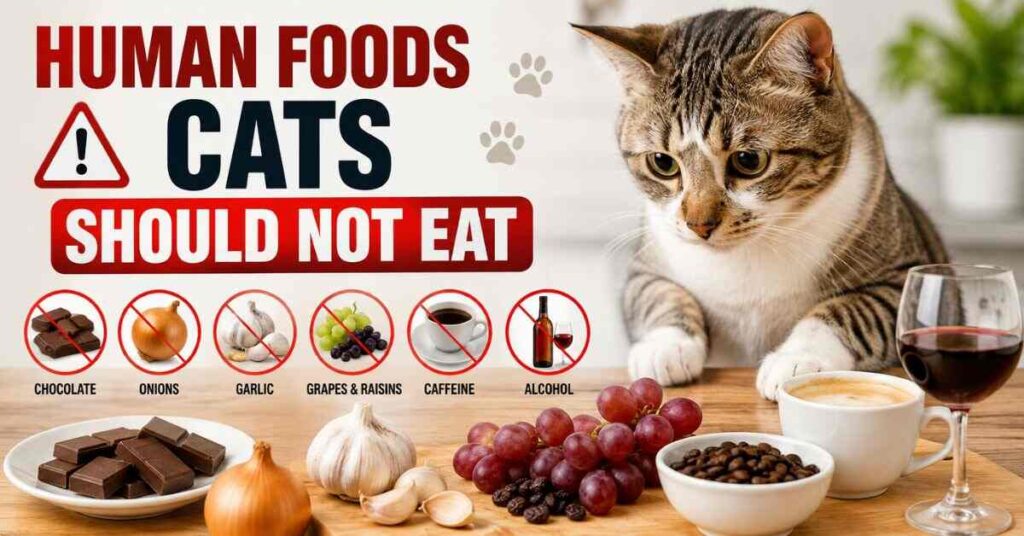
Knowing human foods cats can and can’t eat also means understanding the foods that should be avoided completely or kept away from cats.
1. Onions and Garlic
Onions, garlic, chives, and related allium plants can be harmful to cats.
The problem isn’t limited to raw vegetables. Concentrated forms such as garlic powder and onion powder can also be found in sauces, seasonings, soups, gravies, baby foods, and prepared meats.
Because these ingredients can be hidden in processed foods, always check ingredients before sharing human food with your cat.
2. Chocolate
Chocolate should never be intentionally fed to cats.
Chocolate contains compounds such as theobromine and caffeine that can be toxic to pets. Dark chocolate and baking chocolate are particularly concerning because they can contain higher concentrations of these compounds.
If your cat eats chocolate, don’t wait for symptoms to appear before seeking veterinary advice.
3. Alcohol
Alcohol is dangerous for cats.
Beer, wine, liquor, and foods or drinks containing alcohol should be kept away from pets. Cats are much smaller than humans, so even relatively small exposures can be serious.
4. Caffeinated Drinks
Coffee, tea, energy drinks, and other caffeinated products aren’t appropriate for cats.
It is possible for caffeine to affect the nervous system and cardiovascular system. Keep coffee grounds, tea bags, energy drinks, and caffeinated beverages out of your cat’s reach.
5. Grapes and Raisins
Grapes and raisins are best kept completely away from cats.
Although the exact risk and individual sensitivity can vary, there are reports of serious kidney problems in pets after exposure. Since it’s impossible to predict which animals will become seriously ill, avoiding them is the best course of action.
6. Xylitol-Containing Products
Xylitol is an artificial sweetener found in some sugar-free products.
It is especially well known for causing serious poisoning in dogs. The effects and risk profile in cats aren’t as well established, but because cats don’t need xylitol-containing human foods and products can contain multiple potentially harmful ingredients, these products should be kept away from pets.
7. Raw Meat and Raw Eggs
Raw animal products can carry bacteria such as Salmonella and other pathogens.
While some cat owners choose raw feeding under veterinary guidance, casually giving a cat raw meat or raw eggs from your kitchen isn’t the same as following a carefully formulated diet.
If you want to feed a homemade or raw diet, discuss nutritional balance and food safety with a veterinarian or qualified veterinary nutrition professional.
8. Cooked Bones
Never give your cat cooked bones.
Cooking can make bones brittle, increasing the possibility of splintering. Bone fragments can cause choking, mouth injuries, gastrointestinal obstruction, or internal damage.
Even if your cat loves chewing on them, cooked bones aren’t worth the risk.
9. Very Salty Foods
Cats don’t need salty snacks.
Processed meats, chips, heavily salted leftovers, and other high-sodium foods can provide unnecessary amounts of salt and may contribute to health problems.
A tiny accidental lick isn’t necessarily an emergency, but salty human snacks shouldn’t become regular cat treats.
10. Fatty or Greasy Foods
Foods containing lots of fat can cause digestive upset.
Greasy leftovers may lead to vomiting, diarrhea, or other gastrointestinal problems. They also add unnecessary calories, which can contribute to weight gain.
What About Milk and Dairy?
The image of a cat happily drinking a bowl of milk is common, but many adult cats don’t digest lactose well.
After kittens are weaned, their ability to digest lactose can decrease. As a result, regular cow’s milk may cause digestive upset, including loose stools and gas.
Some cats tolerate small amounts of dairy better than others, but there’s no nutritional need to give your cat milk.
You should always give your cat water as its primary drink.
Can Cats Eat Human Food Every Day?
It’s better to think of human food as an occasional treat rather than part of your cat’s everyday diet.
Treats and extras should not displace a complete and balanced cat food. Too many additional calories can also contribute to obesity.
If you regularly share food with your cat, consider setting aside a tiny portion before adding salt, seasoning, sauces, butter, or other ingredients.
This makes it easier to offer something appropriate without accidentally giving your cat a seasoned version of the same meal you’re eating.
How Much Human Food Can a Cat Eat?
Portion size matters.
Cats are small compared with humans, so what seems like a tiny amount to you may represent a significant number of calories for your cat.
A useful rule is to keep treats and other extras limited and make the majority of your cat’s calories come from their complete, balanced diet.
For example, instead of giving your cat an entire piece of chicken, offer a few small, bite-sized pieces.
Always consider your cat’s:
- Body weight
- Age
- Activity level
- Overall diet
- Health conditions
- Treat intake
- Individual food tolerance
If your cat is overweight, diabetic, has kidney disease, urinary problems, food allergies, or another medical condition, ask your veterinarian before introducing new foods.
How to Introduce a New Human Food
Even a food that’s generally considered safe can upset an individual cat’s stomach.
Introduce new foods gradually.
Follow these simple steps:
- Choose one simple, safe ingredient.
- Make sure it is fully cooked if cooking is required.
- Remove bones, seeds, cores, and unsafe parts.
- Avoid salt, spices, sauces, butter, and seasoning.
- Give only a very small amount.
- Watch your cat for digestive or behavioral changes.
- Don’t introduce several new foods at the same time.
If your cat develops vomiting, diarrhea, weakness, difficulty breathing, tremors, seizures, or another concerning symptom, contact a veterinarian promptly.
What Should You Do If Your Cat Eats Something Toxic?
Accidents happen. A curious cat may steal food from a countertop or lick something from a plate.
If you suspect your cat has eaten a potentially toxic food, take the situation seriously.
First, identify exactly what your cat ate and approximately how much. Keep the packaging or ingredient list if available.
Then contact your veterinarian or an appropriate animal poison-control service for specific advice.
Don’t attempt to make your cat vomit unless a veterinary professional specifically tells you to do so. Vomiting some substances can cause further damage.
Watch for Warning Signs
Potential poisoning or serious food reactions may cause:
- Vomiting
- Diarrhea
- Excessive drooling
- Loss of appetite
- Weakness
- Tremors
- Unusual behavior
- Difficulty walking
- Breathing problems
- Seizures
- Collapse
Some toxins may cause delayed symptoms, so a cat appearing normal immediately after exposure doesn’t necessarily mean everything is fine.
Human Foods vs. Complete Cat Food
Human foods can be useful as occasional treats, but they aren’t designed to meet all of a cat’s nutritional needs.
A quality complete cat food is formulated to provide essential nutrients in appropriate amounts.
For example, simply feeding chicken or fish every day isn’t enough to create a balanced feline diet. Cats require specific vitamins, minerals, amino acids, fatty acids, and other nutrients.
That’s why homemade diets should be formulated carefully rather than based on a few ingredients that seem healthy.
Common Mistakes Cat Owners Make
Even well-meaning owners can accidentally give cats inappropriate foods.
Here are some mistakes to avoid:
Giving Seasoned Meat
Plain chicken may be appropriate, but chicken covered in garlic, onion, sauces, or excessive salt is a different story.
Sharing Food From the Dinner Table
Table scraps often contain multiple ingredients, making it difficult to know exactly what your cat consumed.
Assuming “Natural” Means Safe
Natural foods aren’t automatically safe for cats. Some plants and foods can be toxic despite being completely natural.
Giving Too Many Treats
Even safe foods can contribute to weight gain when offered in excessive quantities.
Ignoring Ingredient Labels
A food that looks harmless may contain onion powder, garlic powder, sweeteners, or other ingredients you didn’t expect.
A Simple Rule for Sharing Human Food With Cats
Before giving your cat anything from your plate, ask yourself three questions:
Is it plain?
Avoid sauces, seasonings, marinades, and spice blends.
Is it known to be safe for cats?
If you’re unsure, don’t offer it until you’ve checked with a reliable veterinary source.
Does my cat actually need it?
Human food should be an optional treat, not a replacement for nutritionally complete cat food.
When in doubt, sticking with your cat’s regular diet is the safest choice.
Conclusion
Understanding human foods cats can and can’t eat can help you make safer choices when your cat begs for a bite of your meal. Plain cooked chicken, turkey, eggs, and certain other foods can be suitable occasional treats, while chocolate, onions, garlic, alcohol, caffeine, grapes, raisins, and other risky foods should stay away from your cat.
The most important rule is simple: keep human food occasional, plain, and appropriately portioned. Your cat’s complete and balanced feline diet should remain the foundation of their nutrition.
Final Thought
Every cat is different, too. If your cat has a health condition, food sensitivity, or special dietary needs, talk with your veterinarian before introducing new foods.
For more practical, trustworthy information about cat nutrition, health, behavior, and everyday care, keep exploring KittyCareZone.com.
Cats can generally have small amounts of plain, fully cooked chicken, turkey, fish, and egg. Some cats can also tolerate small portions of plain pumpkin or certain vegetables and fruits. Human foods should remain occasional treats rather than dietary staples.
Important foods and substances to keep away from cats include onions, garlic, chocolate, alcohol, caffeine, grapes, raisins, and foods containing potentially harmful ingredients. Cooked bones should also never be given to cats.
Yes. Plain, fully cooked chicken can be an appropriate occasional treat for many cats. Remove bones and avoid seasoning, sauces, onion, garlic, excessive salt, and fatty skin.
Many adult cats have difficulty digesting lactose, so regular cow’s milk can cause digestive upset. Cats don’t need milk as part of a healthy diet. Fresh water is the best everyday drink.
If your cat eats a potentially toxic food, identify the food and estimated amount consumed and contact your veterinarian or an animal poison-control service promptly. Don’t induce vomiting unless specifically instructed by a veterinary professional.

Ali Ahmad /Passionate writer sharing informative, engaging, and easy-to-read articles across different topics. Focused on delivering valuable content that helps readers learn, explore, and stay inspired every day.
1 thought on “Human Foods Cats Can and Can’t Eat: A Complete Guide”