

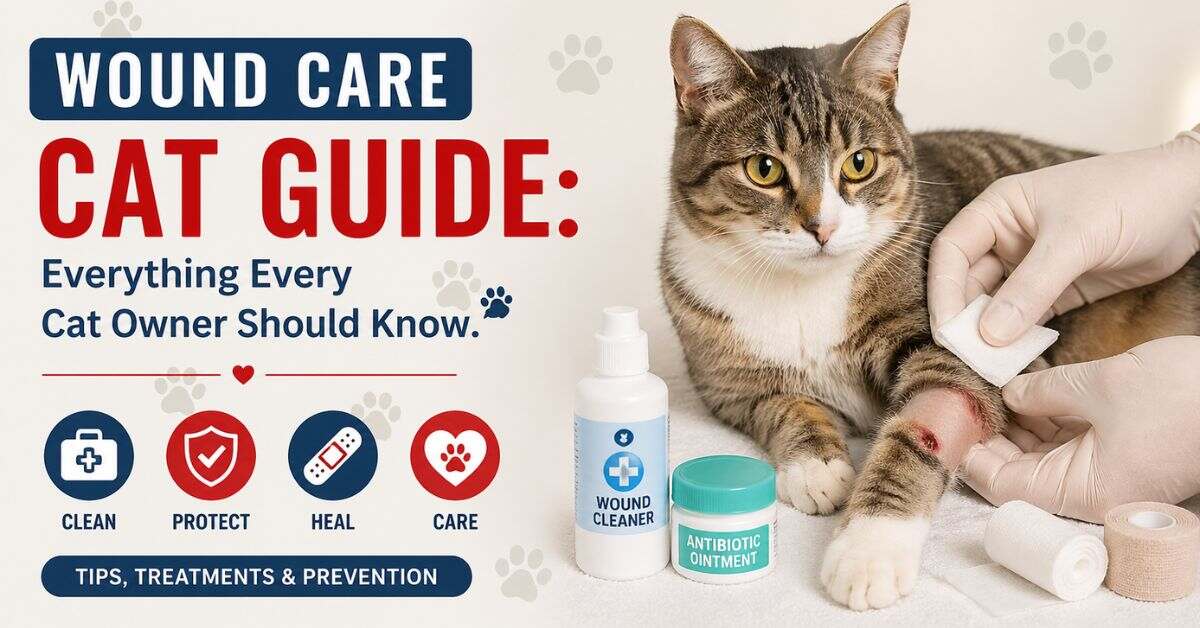
Introduction
Caring for a cat means being ready for the unexpected. Even the most cautious indoor cats can get scratched, cut, or injured. Whether it’s from a playful mishap, a fight with another pet, or an outdoor adventure, wounds are a common issue for cat owners.
Understanding proper wound care cat techniques can make a huge difference in your pet’s recovery. Quick, correct action helps prevent infection, reduces pain, and speeds up healing.
In this guide, you’ll learn how to treat minor wounds at home, recognize serious injuries, and provide the best care possible for your feline friend.
Why Proper Wound Care for Cats Matters
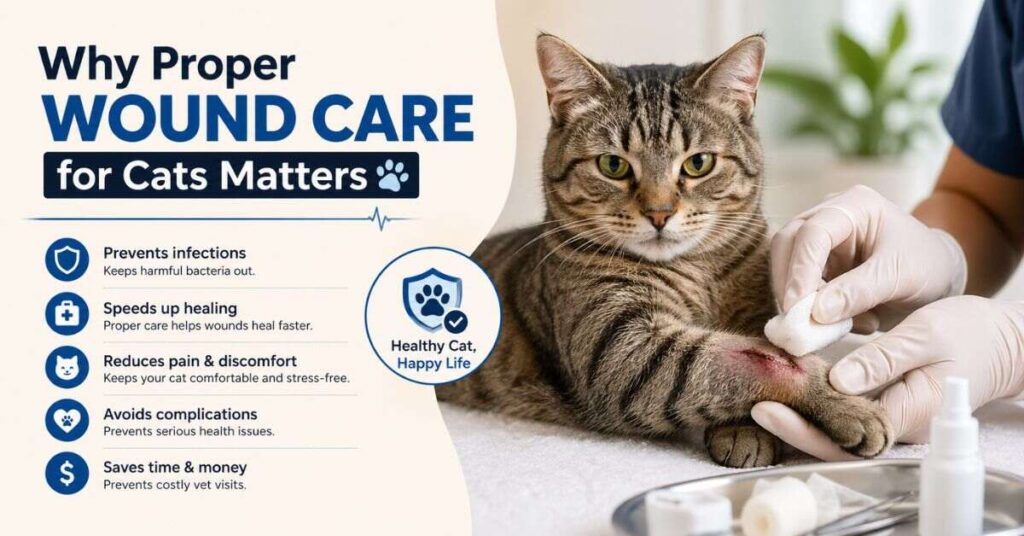
Cats are masters at hiding pain. A small wound may look harmless but can quickly turn into a serious infection if ignored.
Proper wound care cat practices help:
- Prevent bacterial infections
- Reduce inflammation and pain
- Speed up healing
- Avoid costly vet visits
- Keep your cat comfortable and stress-free
In the U.S., many vet visits are related to untreated wounds especially abscesses from bites or scratches.
Common Types of Cat Wounds
Not all wounds are the same. Identifying the type helps you decide the right treatment.
1. Cuts and Lacerations
These are caused by sharp objects like glass or metal.
2. Scratches
Often from other cats or rough play.
3. Bite Wounds
Very common and dangerous. They may look small but often lead to infection.
4. Abscesses
Swollen, pus-filled infections under the skin.
5. Burns or Chemical Injuries
Less common but require immediate attention.
How to Assess a Cat’s Wound
Before starting any wound care cat routine, take a moment to evaluate the injury.
Check for:
- Bleeding (light or heavy)
- Swelling or redness
- Discharge (pus or fluid)
- Foul smell
- Pain or sensitivity
- Behavioral changes (hiding, aggression)
If the wound looks deep or infected, skip home care and contact a vet immediately.
Step-by-Step Wound Care for Cats at Home
For minor wounds, you can safely treat your cat at home using these steps.
Step 1: Stay Calm and Secure Your Cat
Wrap your cat gently in a towel to prevent scratching or biting.
Step 2: Stop the Bleeding
Apply gentle pressure with a clean cloth or gauze.
Step 3: Clean the Wound
Use:
- Warm water or saline solution
- Avoid hydrogen peroxide or alcohol (can damage tissue)
Step 4: Disinfect Safely
Use pet-safe antiseptics recommended by vets.
Step 5: Apply a Light Dressing (If Needed)
For larger wounds, loosely cover with sterile gauze.
Step 6: Prevent Licking
Use an Elizabethan collar (cone) if your cat keeps licking the wound.
Recommended Supplies for Cat Wound Care
Having a small pet first aid kit at home is always a smart move.
Basic Supplies Include:
- Sterile gauze pads
- Saline solution
- Pet-safe antiseptic
- Clean towels
- бин (bandage wrap)
- Scissors
- Elizabethan collar
Quick Comparison: Home Care vs Vet Care
| Condition Type | Home Care Suitable | Vet Visit Needed |
| Small cuts/scratches | ✅ Yes | ❌ No |
| Minor bleeding | ✅ Yes | ❌ No |
| Deep wounds | ❌ No | ✅ Yes |
| Bite wounds | ❌ No | ✅ Yes |
| Swelling/pus | ❌ No | ✅ Yes |
| Continuous bleeding | ❌ No | ✅ Yes |
Signs of Infection You Should Never Ignore
Even with proper wound care cat practices, infections can develop.
Watch for:
- Redness spreading around the wound
- Warm or swollen skin
- Yellow or green discharge
- Bad odor
- Fever or lethargy
If you notice any of these, contact your veterinarian right away.
When to Take Your Cat to the Vet
Some situations require professional care no exceptions.
Go to the vet if:
- The wound is deep or large
- Bleeding doesn’t stop within 5–10 minutes
- Your cat was bitten by another animal
- There are signs of infection
- Your cat is in severe pain
- The wound is near the eyes or joints
Do’s and Don’ts of Cat Wound Care
✅ Do:
- Clean wounds gently
- Use vet-approved antiseptics
- Monitor healing daily
- Keep the wound dry
❌ Don’t:
- Use human medications
- Apply alcohol or hydrogen peroxide
- Ignore bite wounds
- Let your cat lick excessively
How Long Does It Take for a Cat’s Wound to Heal?
Healing time depends on the severity of the wound.
- Minor cuts: 3–7 days
- Moderate wounds: 1–2 weeks
- Severe injuries: Several weeks (with vet care)
Consistency in wound care cat routines plays a big role in faster recovery.
Tips to Speed Up Healing
Want your cat to recover faster? These tips help a lot.
- Keep your cat indoors during healing
- Provide a clean resting area
- Ensure proper nutrition (high-protein diet)
- Keep stress levels low
- Follow a regular cleaning routine
Preventing Future Injuries
Prevention is always better than treatment.
Simple ways to protect your cat:
- Keep sharp objects out of reach
- Trim your cat’s nails regularly
- Supervise outdoor time
- Avoid aggressive pet interactions
- Maintain a safe home environment
Real-Life Example
Imagine your indoor cat sneaks outside and returns with a small scratch. It looks harmless, so you ignore it. Within two days, it becomes swollen and filled with pus an abscess.
This is a classic example of why proper wound care cat action matters. Early cleaning could have prevented infection and saved a vet visit.
Conclusion
Taking care of your cat’s wounds doesn’t have to be overwhelming. With the right knowledge and tools, you can handle minor injuries confidently and know when it’s time to seek professional help.
Proper wound care cat practices not only protect your pet from infections but also ensure faster healing and better overall health.
At KittyCareZone.com, our goal is to help you become a more confident and informed cat owner. By staying prepared and proactive, you can give your feline companion the safe, healthy life they deserve.
No, it’s not recommended unless advised by a vet. Some ingredients can be harmful if ingested.
Only if necessary. Small wounds heal better when exposed to air, but larger ones may need light bandaging.
Licking is natural but excessive licking delays healing. Use a cone if needed.
Use warm water or saline solution. Avoid harsh chemicals like alcohol or peroxide.
Yes. They often lead to infections and abscesses. Always consult a vet.

Ali Ahmad /Passionate writer sharing informative, engaging, and easy-to-read articles across different topics. Focused on delivering valuable content that helps readers learn, explore, and stay inspired every day.
1 thought on “Wound Care Cat Guide: Everything Every Cat Owner Should Know”