

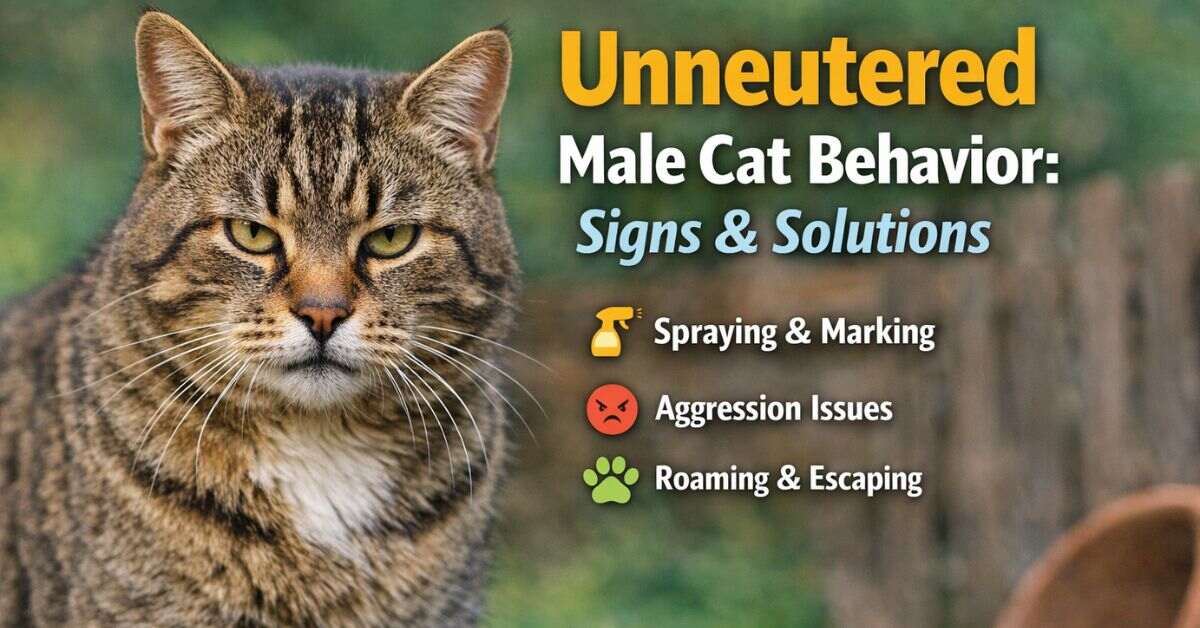
Introduction
If you’ve ever lived with an unneutered male cat, you already know it’s not always smooth sailing. From loud yowling at night to unexpected spraying around the house, these behaviors can confuse and frustrate even experienced pet owners.
Understanding unneutered male cat behavior is the first step toward managing it effectively. These behaviors are not random they’re driven by natural instincts like mating, territory marking, and dominance.
In this guide, we’ll break down why intact male cats behave the way they do, what signs to watch for, and how you can handle these challenges like a pro especially if you’re a cat owner in the U.S. dealing with indoor or outdoor cats.
What Is Unneutered Male Cat Behavior?

Unneutered male cats (also known as tomcats) have active reproductive hormones, especially testosterone. This hormone influences many of their actions.
Key Traits Include:
- Strong territorial instincts
- Increased aggression
- Desire to roam
- Urine spraying
- Loud vocalization
These behaviors are completely natural but can become problematic in a home environment.
Common Signs of Unneutered Male Cat Behavior
1. Urine Spraying
One of the most noticeable signs of unneutered male cat behavior is spraying.
Instead of urinating normally, your cat may:
- Spray vertical surfaces like walls or furniture
- Use small amounts of urine
- Target doors or windows
This is a way of marking territory, not a litter box issue.
2. Aggression Toward Other Cats
Unneutered males are more likely to:
- Fight with other cats
- Display dominance behaviors
- Scratch or bite during conflicts
This can be especially problematic in multi-cat households.
3. Roaming and Escaping
Intact male cats often try to escape the house.
Why?
- They’re searching for female cats in heat
- They want to expand their territory
This increases the risk of:
- Injuries
- Getting lost
- Exposure to diseases
4. Loud Yowling
Ever heard your cat crying loudly at night?
That’s not random it’s mating behavior.
Unneutered males:
- Vocalize loudly to attract females
- Become more active at night
5. Mounting Behavior
Even without a female cat present, unneutered males may:
- Mount objects
- Attempt to mount other pets
This is driven by hormonal urges.
Why Do These Behaviors Happen?
At the core of unneutered male cat behavior is biology.
Hormonal Influence
Testosterone drives:
- Mating instincts
- Territorial marking
- Competitive aggression
Natural Survival Instincts
In the wild, male cats must:
- Compete for mates
- Defend territory
- Prove dominance
Your house cat still carries these instincts.
Comparison: Neutered vs Unneutered Male Cat Behavior
| Behavior Type | Unneutered Male Cat | Neutered Male Cat |
| Spraying | Very common | Rare |
| Aggression | High | Reduced |
| Roaming | Frequent | Minimal |
| Vocalization | Loud & frequent | Calm |
| Territorial Marking | Strong | Mild |
| Health Risks | Higher | Lower |
Problems Caused by Unneutered Male Cat Behavior
1. Household Damage
Spraying can ruin:
- Furniture
- Carpets
- Curtains
The smell is strong and difficult to remove.
2. Increased Vet Costs
Unneutered cats are more likely to:
- Get injured in fights
- Contract infections
3. Stress in Multi-Cat Homes
Aggression can lead to:
- Constant tension
- Injuries between pets
- Behavioral issues in other cats
4. Risk of Overpopulation
If your cat gets outside, it can contribute to unwanted litters an ongoing issue in many U.S. communities.
How to Manage Unneutered Male Cat Behavior
If neutering isn’t immediately an option, there are still ways to manage behavior.
1. Provide Enough Stimulation
Bored cats act out more.
Try:
- Interactive toys
- Puzzle feeders
- Daily play sessions
2. Use Enzyme Cleaners
To stop repeat spraying:
- Clean areas with enzyme-based cleaners
- Remove odor completely
Cats return to places that smell like urine.
3. Limit Outdoor Access
Keep your cat indoors or:
- Use a cat harness
- Create a secure outdoor enclosure
4. Reduce Stress
Stress can worsen unneutered male cat behavior.
Helpful steps:
- Maintain a routine
- Provide hiding spots
- Avoid loud environments
5. Separate from Other Cats if Needed
If aggression becomes serious:
- Provide separate feeding areas
- Use gradual introductions
Should You Neuter Your Male Cat?
Let’s be direct neutering is the most effective solution.
Benefits of Neutering:
- Reduces spraying
- Decreases aggression
- Prevents roaming
- Improves overall behavior
- Lowers risk of certain diseases
Most U.S. veterinarians recommend neutering around 4–6 months of age.
Real-Life Example
Imagine this:
A pet owner in Texas notices their male cat suddenly spraying and trying to escape. After neutering, within a few weeks:
- Spraying stopped
- Aggression reduced
- The cat became calmer and more affectionate
This is a common outcome.
Practical Tips for Cat Owners
- Start training early
- Keep litter boxes clean
- Provide vertical spaces like cat trees
- Use pheromone diffusers
- Monitor behavior changes
Conclusion
Living with an intact male cat can be challenging, but understanding unneutered male cat behavior makes all the difference. These behaviors are not your cat being “bad” they’re simply acting on natural instincts.
While management strategies can help, neutering remains the most effective long-term solution for a calmer, healthier, and happier cat.
If you’re serious about improving your cat’s behavior and creating a peaceful home, take the right steps early. For more expert cat care guides and practical tips, keep visiting KittyCareZone.com your trusted partner in raising happy, healthy cats.
Most male cats begin showing unneutered male cat behavior around 5–6 months of age when they reach sexual maturity.
In most cases, yes especially if done early. However, older cats may take time to adjust.
It can be. Aggression may lead to injuries to other pets or even humans if not managed properly.
Yes. Even indoor cats can spray, yowl, and show territorial aggression due to hormonal instincts.
Behavior usually improves within a few weeks, but full changes may take 1–2 months.
Behavioral management can help, but it won’t eliminate hormone-driven actions completely.

Ali Ahmad /Passionate writer sharing informative, engaging, and easy-to-read articles across different topics. Focused on delivering valuable content that helps readers learn, explore, and stay inspired every day.
1 thought on “Unneutered Male Cat Behavior: Signs & Solutions”