

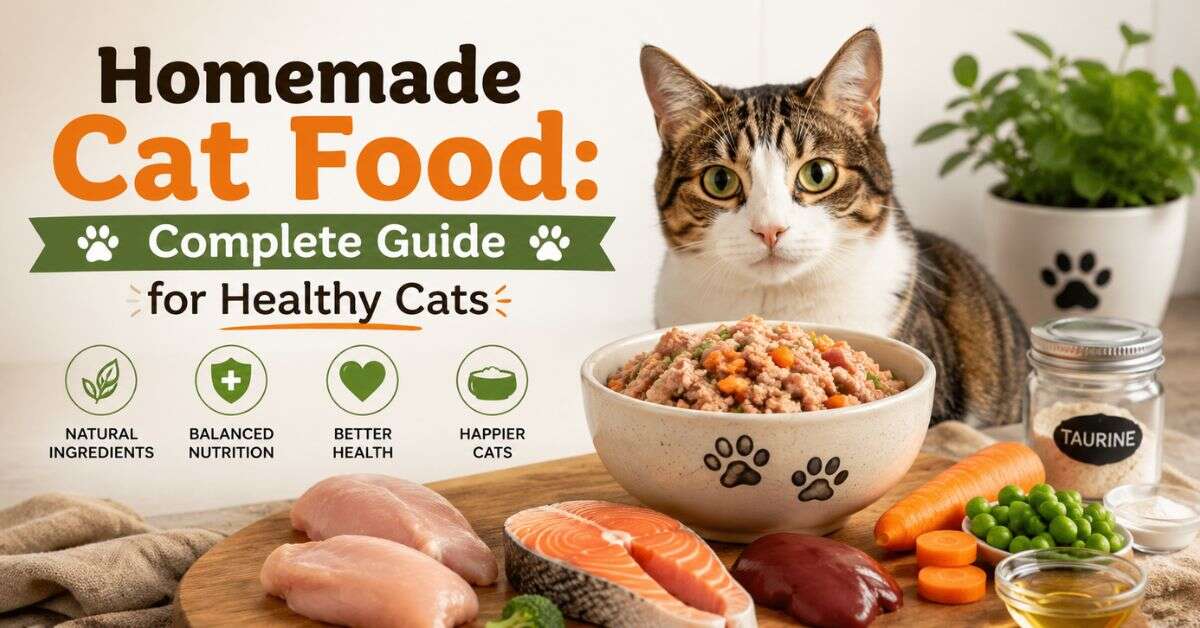
Many cat owners are becoming more interested in preparing homemade cat food for their furry companions. With growing concerns about commercial pet food ingredients, recalls, and dietary sensitivities, homemade meals seem like an appealing option.
However, creating a balanced diet for cats is not as simple as cooking meat and serving it in a bowl. Cats have unique nutritional requirements that must be met to maintain optimal health.
This complete guide will help you understand the benefits, risks, ingredients, recipes, and feeding tips for homemade cat food so you can make informed decisions for your feline friend.
Why Cat Owners Choose Homemade Cat Food
Many pet parents decide to prepare meals at home because they want more control over what their cats eat.
Common reasons include:
- Avoiding artificial additives and preservatives
- Managing food allergies or sensitivities
- Improving ingredient quality
- Supporting specific health conditions
- Providing fresher meals
- Building confidence in food sourcing
When done correctly, homemade cat food can be a nutritious option that supports overall feline wellness.
Understanding a Cat’s Nutritional Needs
Before preparing meals at home, it is important to understand that cats are obligate carnivores.
This means they require nutrients found primarily in animal-based foods.
Essential nutrients include:
Protein
Protein is the foundation of a cat’s diet. It supports:
- Muscle maintenance
- Tissue repair
- Immune function
- Healthy skin and coat
Good protein sources include:
- Chicken
- Turkey
- Beef
- Rabbit
- Duck
- Fish
Taurine
Taurine is one of the most important nutrients for cats.
A deficiency can lead to:
- Heart disease
- Vision problems
- Reproductive issues
Since taurine occurs naturally in animal tissues, it must be included in any homemade cat food plan.
Healthy Fats
Cats need fats for energy and nutrient absorption.
Healthy fat sources include:
- Chicken fat
- Fish oil
- Salmon oil
Vitamins and Minerals
Cats require balanced levels of:
- Calcium
- Phosphorus
- Zinc
- Iron
- Vitamin A
- Vitamin D
- B vitamins
A nutritional imbalance can lead to serious health problems over time.
Benefits of Homemade Cat Food
Better Ingredient Control
The foods your cat eats are all known to you.
This can be especially helpful if your cat has allergies or dietary sensitivities.
Fewer Artificial Additives
Homemade meals typically contain fewer preservatives, artificial colors, and fillers than some commercial products.
Customized Nutrition
You can tailor meals to suit your cat’s age, weight, and health needs.
Potentially Better Palatability
Fresh food has an appealing aroma and texture that cats love.
Risks of Homemade Cat Food
While there are benefits, there are also significant risks.
Nutritional Deficiencies
One of the biggest concerns is creating meals that lack essential nutrients.
Improper diets can cause:
- Weak bones
- Heart problems
- Vision loss
- Poor growth in kittens
Incorrect Calcium-to-Phosphorus Ratio
Cats need a proper balance between calcium and phosphorus for bone health.
Too much or too little can create long-term issues.
Food Safety Concerns
Improper handling can increase the risk of:
- Bacterial contamination
- Foodborne illness
- Spoilage
Time and Cost
Preparing balanced meals regularly requires planning, effort, and quality ingredients.
Homemade Cat Food vs Commercial Cat Food
| Feature | Homemade Cat Food | Commercial Cat Food |
| Ingredient Control | High | Moderate |
| Convenience | Low | High |
| Customization | High | Limited |
| Nutritional Balance | Requires Planning | Usually Complete |
| Cost | Varies | Varies |
| Preparation Time | High | Minimal |
Both options can work well when chosen and managed properly.
Best Ingredients for Homemade Cat Food
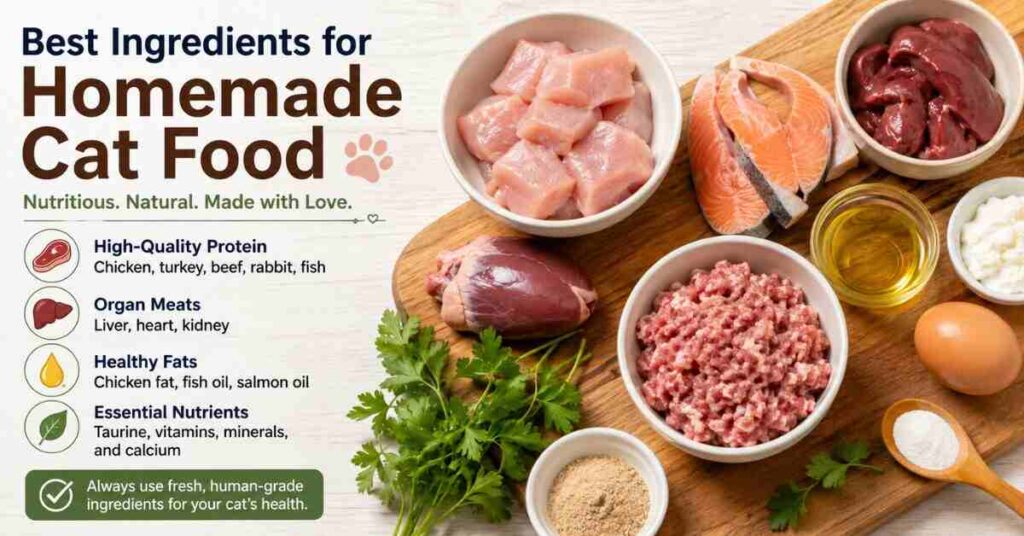
Choosing high-quality ingredients is essential.
Protein Sources
Recommended options:
- Chicken breast
- Turkey meat
- Lean beef
- Rabbit meat
- Organ meats
- Salmon
Organ Meats
Organs provide important nutrients.
Examples include:
- Liver
- Heart
- Kidney
Heart tissue is particularly valuable because it contains taurine.
Supplements
Veterinary nutritionists often recommend supplements to ensure complete nutrition.
These may include:
- Taurine supplements
- Calcium supplements
- Fish oil
- Vitamin complexes
Always consult a veterinarian before adding supplements.
Ingredients Cats Should Never Eat
Some human foods can be dangerous or toxic.
Avoid:
- Onions
- Garlic
- Chocolate
- Grapes
- Raisins
- Alcohol
- Xylitol
- Excess salt
- Caffeine
Small amounts can cause serious health problems.
Easy Homemade Cat Food Recipe
You can start with this basic recipe.
Ingredients
- 2 pounds cooked chicken thighs
- 2 ounces chicken liver
- 1 cup water
- Taurine supplement (as recommended by a veterinarian)
- Calcium supplement
- Fish oil capsule
Directions
- Cook the chicken thoroughly.
- Chop the meat and liver into small pieces.
- Blend with water if a softer texture is desired.
- Add supplements according to veterinary guidance.
- Mix thoroughly.
- Store portions in airtight containers.
Storage Tips
- Refrigerate for up to 3 days.
- Freeze extra portions for future use.
- Thaw safely in the refrigerator.
What is the recommended amount of homemade cat food to feed?
Feeding amounts depend on:
- Age
- Weight
- Activity level
- Health status
General guidelines:
| Cat Weight | Daily Food Amount |
| 5–7 lbs | 4–5 oz |
| 8–10 lbs | 5–7 oz |
| 11–14 lbs | 7–9 oz |
| 15+ lbs | 9–11 oz |
These are general estimates. Your veterinarian can provide a personalized feeding plan.
Transitioning Your Cat to Homemade Food
Cats can be sensitive to dietary changes.
A gradual transition helps avoid digestive upset.
/Week 1
- 75% current food
- 25% homemade food
/Week 2
- 50% current food
- 50% homemade food
Week 3
- 25% current food
- 75% homemade food
Week 4
- 100% homemade food
Monitor your cat’s:
- Appetite
- Energy levels
- Stool quality
- Weight
Contact your veterinarian if you notice concerns.
Homemade Cat Food for Kittens
Kittens have higher nutritional requirements than adult cats.
They need:
- More protein
- More calories
- Balanced calcium levels
- Essential vitamins and minerals
Homemade diets for kittens should only be created with veterinary guidance to support healthy growth and development.
Homemade Cat Food for Senior Cats
Senior cats often benefit from specialized nutrition.
A veterinarian may recommend adjustments for:
- Kidney health
- Weight management
- Joint support
- Digestive comfort
A customized Natural cat food plan may help address age-related needs.
Common Mistakes to Avoid
Many well-meaning cat owners make avoidable errors.
Feeding Only Muscle Meat
Cats need more than protein alone.
They require:
- Taurine
- Calcium
- Vitamins
- Minerals
Ignoring Supplements
Many homemade recipes found online are incomplete.
Always verify nutritional adequacy.
Using Unsafe Ingredients
Avoid toxic foods and seasonings.
Skipping Veterinary Advice
Professional guidance helps prevent deficiencies and health complications.
Signs Your Cat’s Diet May Be Unbalanced
Watch for symptoms such as:
- Weight loss
- Poor coat condition
- Lethargy
- Digestive issues
- Muscle weakness
- Vision changes
Take immediate action if you notice any of these signs.
Homemade cat food: Is it right for your cat?
The answer depends on your:
- Time commitment
- Budget
- Nutritional knowledge
- Access to quality ingredients
For some owners, homemade meals provide peace of mind and customization. For others, high-quality commercial food may be a more practical choice.
The most important factor is ensuring your cat receives complete and balanced nutrition.
Conclusion
Your cat will appreciate the benefits of homemade food, which can be prepared at home. It allows you to control ingredients, customize meals, and provide fresh nutrition. However, cats have complex dietary requirements that must be carefully balanced to avoid deficiencies and health issues.
To ensure your cat receives a complete diet, consult your veterinarian or a veterinary nutritionist.
With proper planning and guidance, homemade cat food can become a safe and healthy part of your cat’s lifestyle. For more expert cat care tips, nutrition advice, and feline health guides, keep visiting KittyCareZone.com.
Not necessarily. Homemade cat food can be healthy when properly balanced, but poorly formulated recipes may cause nutritional deficiencies.
Yes, cats can eat homemade meals daily if the diet is nutritionally complete and approved by a veterinarian.
Taurine is one of the most critical nutrients because cats cannot produce enough of it on their own.
No. Chicken alone does not provide all the nutrients cats need for long-term health.
Most homemade cat food stays fresh for up to 3 days in the refrigerator and several months in the freezer when stored properly.

Ali Ahmad /Passionate writer sharing informative, engaging, and easy-to-read articles across different topics. Focused on delivering valuable content that helps readers learn, explore, and stay inspired every day.
1 thought on “Homemade Cat Food: Complete Guide for Healthy Cats”